
Most marketing teams treat event data the way they treat receipts: something you file away after the fact. But that mindset leaves serious revenue on the table. Event data is not a post-event reporting tool. It is a live, dynamic intelligence engine that can reshape your strategy before, during, and long after the experience ends. The brands winning in experiential marketing right now are not just collecting data. They are acting on it in real time, feeding it into their broader marketing ecosystems, and using it to predict what their audiences will want next. This guide breaks down exactly how to do that.
Table of Contents
- What is event data and why does it matter in marketing?
- From insight to action: How event data transforms experiential marketing
- Best practices for collecting, analyzing, and leveraging event data
- Integrating event data across your marketing ecosystem
- The overlooked opportunities most brands miss with event data
- Transform your next event with King Sixteen
- Frequently asked questions
Key Takeaways
| Point | Details |
|---|---|
| Event data unlocks personalization | Using real-time event data empowers marketers to tailor experiences and increase engagement. |
| Integration drives effectiveness | Connecting event data across channels maximizes its marketing impact and ROI. |
| Best practices reduce wasted effort | Clear KPIs, quality collection, and privacy safeguards make event data more useful. |
| Most brands underutilize event insights | Ongoing analysis and cross-functional data use reveal deeper audience trends and greater opportunities. |
What is event data and why does it matter in marketing?
Event data is every measurable signal generated when a person interacts with your brand experience. That includes the moment someone checks in at the door, how long they linger at a product display, what they tap in your event app, and what they post on social media afterward. As Forbes notes, "event data captures every interaction at a brand experience, from check-ins to content shares."
Think of event data in three categories:
- Physical data: Foot traffic patterns, attendance counts, dwell time at activations, and RFID-tracked movement through a space.
- Digital data: App engagement, QR code scans, social shares, hashtag volume, and online registration behavior.
- Hybrid data: Combining physical and digital signals to build a complete picture of attendee behavior across both environments.
Here is a quick look at how these data types compare:
| Data type | Source examples | Primary value |
|---|---|---|
| Physical | Check-ins, RFID, foot traffic | Spatial and attendance insights |
| Digital | App usage, social shares, scans | Engagement and content performance |
| Hybrid | Cross-channel behavioral mapping | Full-funnel audience intelligence |
What makes this valuable is the shift it enables. When you build your experiential marketing strategies on real interaction data rather than gut instinct, you move from reactive to proactive. You stop guessing what resonated and start knowing. That precision is what separates brands that generate buzz from brands that generate revenue.
"The brands that treat event data as a strategic asset, not just a reporting checkbox, are the ones building lasting audience relationships." — Forbes Communications Council
From insight to action: How event data transforms experiential marketing
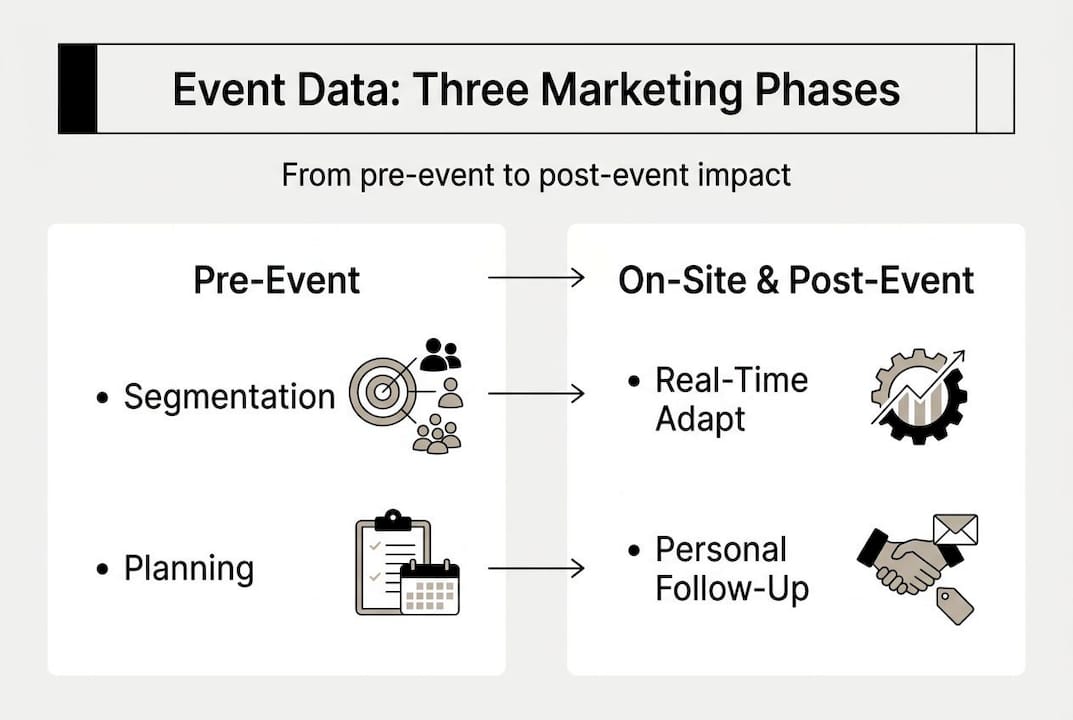
With the building blocks understood, let's look at the real-world impact on marketing strategy. The most effective brands use event data across three distinct phases, and each phase has its own set of levers.
Phase 1: Pre-event optimization
Before anyone walks through the door, your registration and RSVP data tells a story. Use it to segment your audience, send personalized invites based on past behavior, and tailor promotional messaging to specific attendee profiles. If you know a segment of your list attended a product demo last year, lead with something new.
Phase 2: On-site real-time adaptation
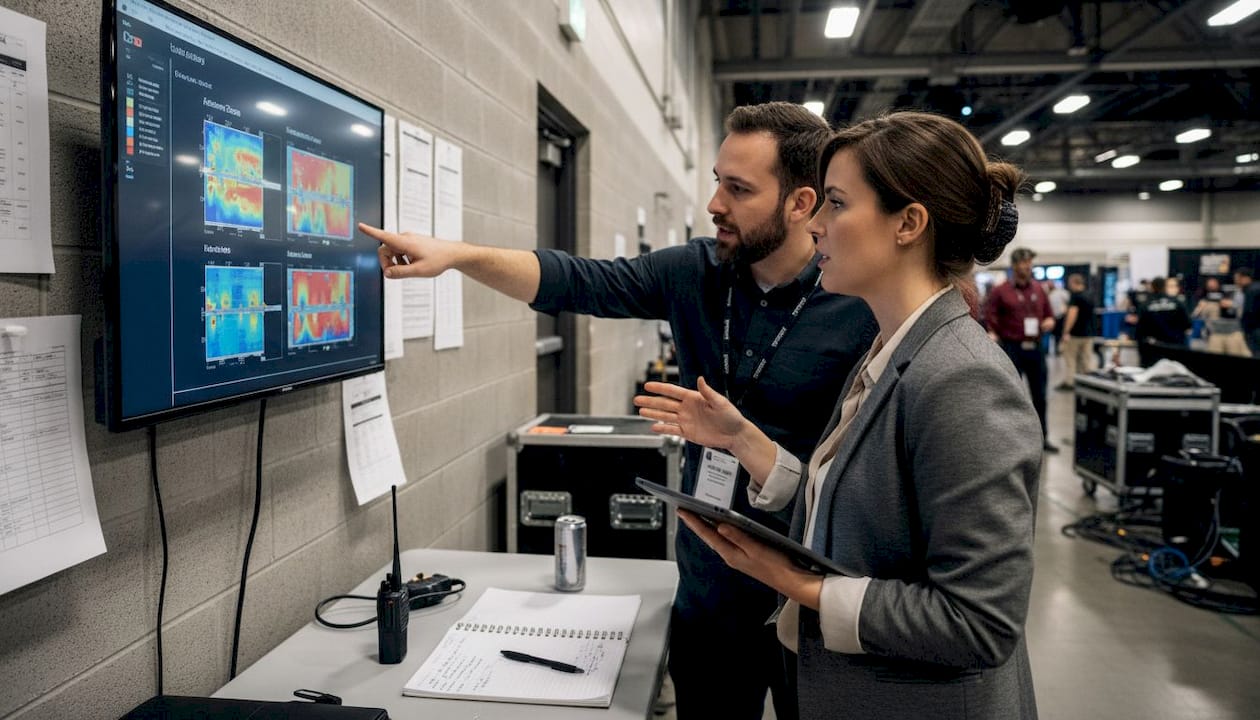
This is where most brands underperform. Real-time dashboards let you see which activations are drawing crowds and which are dead zones. You can redeploy staff, adjust programming, or push a targeted notification to attendees within minutes. Geo frame marketing takes this further by capturing device signals from attendees in and around your event footprint, giving you behavioral data you can act on immediately.
Phase 3: Post-event nurture
This is where data-driven brands extend the event's life. Segment attendees by what they engaged with, then trigger personalized follow-up sequences. Retarget non-converters with content tied to what they actually saw. Benchmark performance against previous events to sharpen your next execution.
As Adweek reports, brands using event data see increased engagement, stronger lead qualification, and higher post-event conversions.
| Phase | Data inputs | Key action |
|---|---|---|
| Pre-event | Registration, past behavior | Segmentation and personalized outreach |
| On-site | Real-time traffic, app usage | Dynamic experience adjustment |
| Post-event | Engagement scores, session data | Targeted nurture and retargeting |
Pro Tip: Integrate your event data directly with your CRM and marketing automation platform before the event starts. Waiting until after means you lose the window for real-time personalization, which is where the biggest conversion gains live. Check out event service insights to see how this integration can be structured.
Best practices for collecting, analyzing, and leveraging event data
Collecting massive amounts of data is not enough. How you collect it, and what you do with it, determines whether it becomes a strategic asset or just noise.
Start by defining your KPIs before a single attendee registers. Are you measuring brand sentiment, lead quality, product interest, or session engagement? Each goal requires different data points, and chasing all of them equally leads to analysis paralysis.
Here are the collection methods that consistently deliver the most actionable results:
- RFID and NFC badges: Track movement, session attendance, and interaction with physical brand assets in real time.
- Event apps: Capture session preferences, networking activity, content downloads, and in-app survey responses.
- Check-in systems: Validate attendance data and trigger personalized welcome sequences automatically.
- On-site surveys: Gather qualitative sentiment at the peak of attendee engagement, not days later when memory fades.
- Social listening tools: Monitor hashtag performance and audience-generated content for reach and sentiment data.
As HBR highlights, effective data collection and analysis are crucial for extracting actionable insights. That means building your collection infrastructure around your goals, not around what is easiest to measure.
Stat callout: 81% of marketers believe event data improves campaign personalization, yet most still rely on post-event surveys as their primary source. The gap between belief and practice is where your competitive advantage lives.
Privacy is non-negotiable. Be transparent about what you are collecting and why. Use clear opt-ins, publish your data policies, and store attendee information securely. Attendees who trust your data practices engage more openly, which means better data for you.
Pro Tip: Set your KPIs before you design your data collection plan. If you cannot explain how a specific data point will influence a decision, do not collect it. Lean on event technology services to build a collection framework that matches your strategic goals from day one.
Integrating event data across your marketing ecosystem
The true potential of event data is realized when it stops living in a silo and starts powering every layer of your brand's marketing engine. One event can generate enough behavioral intelligence to fuel months of targeted content, sales outreach, and loyalty programming.
Here is how integration works in practice:
- Map interactions to nurture campaigns. Attendees who visited your product demo zone get a different follow-up sequence than those who spent time at your brand story installation. Behavior at the event predicts purchase intent better than almost any other signal.
- Feed engagement data into your content engine. Which sessions drew the most attendance? Which topics generated the most app interaction? Use those signals to prioritize your content calendar and personalize what each segment sees next.
- Align event insights with sales automation. Pass high-engagement attendee profiles directly to your sales team with context: what they saw, how long they stayed, and what they clicked. That context shortens sales cycles significantly.
- Connect event data to loyalty initiatives. Reward attendees based on their level of participation, not just their presence. Tiered recognition based on engagement depth builds stronger brand affinity than a blanket thank-you email.
You can also amplify reach by connecting event data to your social media amplification strategy, using real-time engagement signals to identify your most active brand advocates and prioritize their content.
As MarTech Series notes, integrated event data helps align sales, marketing, and customer experience for greater business impact.
"The brands that connect their event data to the rest of their marketing stack do not just measure success. They manufacture it." — MarTech Series
The overlooked opportunities most brands miss with event data
Here is the uncomfortable truth: most brands collect good data and then do almost nothing interesting with it. They pull an attendance report, note the lead count, and move on to planning the next event. That is not a data strategy. That is scorekeeping.
The real opportunity is in behavioral prediction. When you layer multiple events' worth of interaction data together, patterns emerge. You start to see which audience segments consistently engage with specific content types, which product categories drive the longest dwell times, and which attendee profiles convert fastest after the event. That is the foundation of a genuine audience intelligence model, not just event metrics.
We have seen brands with strong automotive event launches use post-event behavioral data to reshape their entire next campaign's targeting strategy, cutting cost-per-acquisition significantly because they stopped guessing who their best prospects were.
The other missed opportunity is qualitative data. Quantitative signals tell you what happened. Qualitative signals tell you why. Combining both gives you the full story. Ask your team: what is the bigger narrative inside this data? That question, asked consistently, is what separates brands that grow from brands that plateau.
Transform your next event with King Sixteen
If you are serious about turning event interactions into measurable marketing outcomes, the strategy and the execution both have to be airtight. That is exactly where we come in.
At King Sixteen, our experiential marketing expertise is built around creating experiences that generate real data and real results, not just great photos. From the moment we start designing your event to the post-activation debrief, data strategy is woven into every decision. Our event services cover everything from technology integration and on-site analytics to post-event reporting frameworks that actually inform your next move. If you are ready to stop leaving insights on the table, let's talk.
Frequently asked questions
What are the main types of event data used in marketing?
Marketers use physical, digital, and hybrid event data, covering attendance, engagement, app activity, and social sharing, to inform strategy. Each type captures a different layer of attendee behavior and serves a distinct strategic purpose.
How does event data improve ROI from experiential marketing?
Event data allows precise targeting, real-time adaptation, and personalized follow-ups, boosting engagement and conversion rates. Brands using event data consistently see stronger lead qualification and higher post-event conversions than those relying on general audience assumptions.
What are best practices for integrating event data with other marketing channels?
Integrate event data with CRM, content systems, and sales tools to personalize campaigns and sync strategies across the funnel. Integrated event data aligns sales, marketing, and customer experience for measurably greater business impact.
How can brands ensure event data privacy and compliance?
Brands should collect data transparently and use opt-ins, clear privacy policies, and secure storage to protect attendee information. Following sound analytics practices builds attendee trust and improves the quality of data you collect over time.