Coordinating experiential marketing activations that combine creative, fabrication, installation, and technology integration under one accountable partner is consistently blocked by vendors who only cover a single stage or require multiple contracts. Most large agencies either limit their scope to design or event management without handling physical buildout and on-site execution, while manufacturers rarely offer brand-driven strategy or turnkey logistics. This comparison lets you match agencies and manufacturers that deliver end-to-end experiential marketing programs so you can select a partner aligned with your rollout scale, process needs, and brand storytelling goals.
Table of Contents
- King Sixteen
- MadeFirst
- Axis Display Group
- Integrated Display Group
- crux-retail.com
- Frank Mayer
- Comparative Analysis
King Sixteen
At a Glance
King Sixteen lists high-profile clients like Porsche, Audi, Ray-Ban, Fossil, the Natural Diamonds Council, and Churchill Downs, which signals consistent experience on luxury and automotive launches. Their pitch is a turnkey model that bundles creative, fabrication, and on-site production under one lead.
Core Features
- Event production and management delivered from concept through on-site execution.
- Talent booking and staffing for red carpet, VIP, and experiential roles.
- Digital advertising and geo frame marketing to drive attendance and local awareness.
- Custom fabrication and venue sourcing for branded environments and set pieces.
- VIP experiences and private events with dedicated guest services.
Key Differentiator
Over two decades of industry experience paired with a deliberate, disruptive approach to experiential marketing and event production. That tenure shows up in vendor networks, permit handling, and repeat briefs for large-scale automotive and luxury activations.
Pros
- Trusted by leading brands. Multiple marquee clients suggest repeatable processes for complex rollouts and cross-vendor coordination.
- Turnkey delivery model reduces vendor handoffs by bundling design, fabrication, AV, logistics, and staffing under one program lead.
- Creative plus operational muscle. The team handles both chapter-level concepts and the gritty on-site sequencing that makes an activation run on schedule.
- Strong client testimonials. External praise emphasizes reliability and the ability to deliver high-attention events for premium brands.
- Scales to large projects. The agency shows capability for automotive debuts, trade shows, and multi-day conferences where permits, talent, and production timelines collide.
Cons
- Pricing and packaged rates are not published, so procurement conversations require scope calls and bespoke estimates.
Who It's For
Heads of Marketing, SVPs, producers, and founders at established brands that need a full-service partner for high-visibility launches, experiential campaigns, or private galas. Best fit for teams that want a single vendor to manage creative and logistics for premium activations.
Unique Value Proposition
A longstanding vendor network plus an in-house fabrication capability lets King Sixteen compress timelines that usually expand when multiple contractors are involved. For teams juggling procurement and internal stakeholders, that single-accountability model reduces coordination burden and shortens decision cycles.
Real World Use Case
A luxury car brand hires King Sixteen to debut a new model. The agency sources a waterfront venue, builds a branded drive loop, books talent and press seating, runs geo-targeted ads to drive attendance, and manages on-site logistics for media and VIPs.
Pricing
King Sixteen does not publish standard fees; projects are quoted per scope. Expect bespoke estimates typical of agency-led experiential work for luxury and automotive clients rather than off-the-shelf package pricing.
Website: https://kingsixteen.com
MadeFirst
At a Glance
MadeFirst operates full-service design, fabrication, logistics, and installation out of dedicated facilities in Nashville and Los Angeles, letting teams scale physical builds without stitching vendors together. The shop handles TV and film sets, trade show booths, retail pop-ups, and large festival environments with an emphasis on custom scenic work.
Core Features
- Full-service conception and fabrication of experiential environments covering design, CAD, and 3D rendering through shop build and installation.
- Custom stages, TV and film set pieces, and themed scenic elements tailored to production specs and sightline requirements.
- Retail and pop-up store design that integrates brand signaling with modular build systems for reuse and transport.
- Trade show booth manufacturing with crate-ready components and logistics planning for national tours.
- Event props, promotional vehicles, and large-scale scenic installations for festivals, awards, and sports events.
Key Differentiator
MadeFirst packages in-house design, fabrication, logistics, and installation under one roof, which shortens handoffs and reduces rework risk. Their dual-location footprint in Nashville and Los Angeles supports quick prototype runs in one facility while staging and final assembly happen in the other.
Pros
- End-to-end service removes the single-source coordination burden for agencies. You hand them concept and they return install-ready elements.
- Deep experience across entertainment and experiential work means production-friendly details are baked into builds, not added later.
- Flexible collaboration models let you plug MadeFirst into an agency-led creative or hand over a full production package.
- The team has executed touring and site-specific builds for high-visibility activations, which shows they understand repeatability and transit constraints.
- Shop capacity supports large-scale manufacturing, so complex multi-piece displays and scenic rigs are feasible without outsourcing core fabrication.
Cons
- No publicly available pricing; most projects require a scoped proposal which can slow initial vendor comparisons.
- Third-party user reviews are not easily found, so independent sentiment and post-install support records are unclear.
- Supply chain and material choices combined with project complexity can extend lead times compared with off-the-shelf display vendors.
When It May Not Fit
If you need a quick, low-cost countertop display or a templated trade show shell, MadeFirst’s custom focus and shop overhead will be overkill. Small single-item orders with tight same-month turnarounds may be outside their sweet spot.
Who It's For
Brands, marketing agencies, event producers, and entertainment companies that plan large experiential activations or production-driven sets and are prepared to budget for custom fabrication, logistics, and professional installation.
Real World Use Case
An agency hires MadeFirst to design and build a branded pop-up for a national music festival. MadeFirst produces the concept, fabricates modular wall panels in Nashville, ships staged crates, and performs on-site install and strike in Los Angeles for the following tour date.
Pricing
Pricing is not publicly listed. Projects are quoted individually and reflect scope, materials, fabrication complexity, engineering, and installation logistics. Expect formal estimates after a site survey and design scoping conversation.
Website: https://madefirst.com
Axis Display Group
At a Glance
Since 2010 Axis Display Group has combined design, manufacturing, and installation to deliver turnkey retail environments at scale. The firm emphasizes modular systems and branded storytelling to keep visual identity consistent across multiple locations.
Core Features
- Custom retail display design and manufacturing tailored to a brand’s visual and operational needs.
- Modular and scalable fixture systems that simplify rollouts and reduce repeat engineering for multi-site installs.
- Interactive digital and physical experiences including kiosks, touchpoints, and integrated signage.
- Branded environments and storytelling zones that guide customer flow and product discovery.
- Integrated signage and wayfinding solutions aligned with store operations and merchandising plans.
Key Differentiator
Axis’s offering is a single partner model that spans concept through post-install support. That end to end responsibility lowers coordination overhead for marketing and store operations teams, especially on national or regional rollouts where consistency and timing matter.
Pros
- Deep expertise in retail environment design. The team marries fabrication know-how with visual merchandising sensibilities so displays read well and survive daily retail wear.
- Ability to scale. Modular fixtures mean a proven prototype can be replicated across dozens of locations without reengineering each site.
- Strategic, customer-centric thinking. Design choices are tied to shopper behavior rather than decoration alone, which helps conversion in high-traffic environments.
- Full-service delivery from design to installation and support. That reduces vendor management for your procurement and operations leads.
- Focus on brand storytelling makes the installations feel curated rather than templated, which benefits flagship and specialty stores.
Cons
- Pricing transparency is limited. Axis issues custom quotes, so budget planning requires an early scoping conversation.
- No published third-party reviews are available to independently verify user satisfaction or post-install performance.
- Bespoke scope can drive higher costs compared with off-the-shelf fixtures, especially for small runs.
- Primary focus is medium to large programs, so single-location projects may receive less favorable cost dynamics.
When It May Not Fit
If you run a single boutique or a pop-up with a tight capex budget, Axis’s model may overdeliver and overspend for what you need. Teams that need a one-off, low-cost fixture or a rapid prototype on a shoestring will likely find modular catalog vendors more economical.
Who It's For
Mid-sized to large retail brands, national chains, and flagship stores that need a unified look across many locations. Marketing heads and visual merchandise leads who prioritize brand storytelling and operational repeatability will get the most value.
Real World Use Case
A brand partnered with Axis to roll out custom fixtures, digital signage, and interactive product stations across 40 stores. Axis handled concepting, prototype testing, manufacturing, logistics, and installation, delivering consistent brand presentation and a single point of contact for store teams.
Pricing
Axis issues custom quotes based on project scope. Pricing is typically shaped for large or multi-location rollouts and varies with complexity, materials, and installation logistics. Expect to budget for design, tooling or prototyping, and per-location installation fees.
Website: https://axisdisplaygroup.com
Integrated Display Group
At a Glance
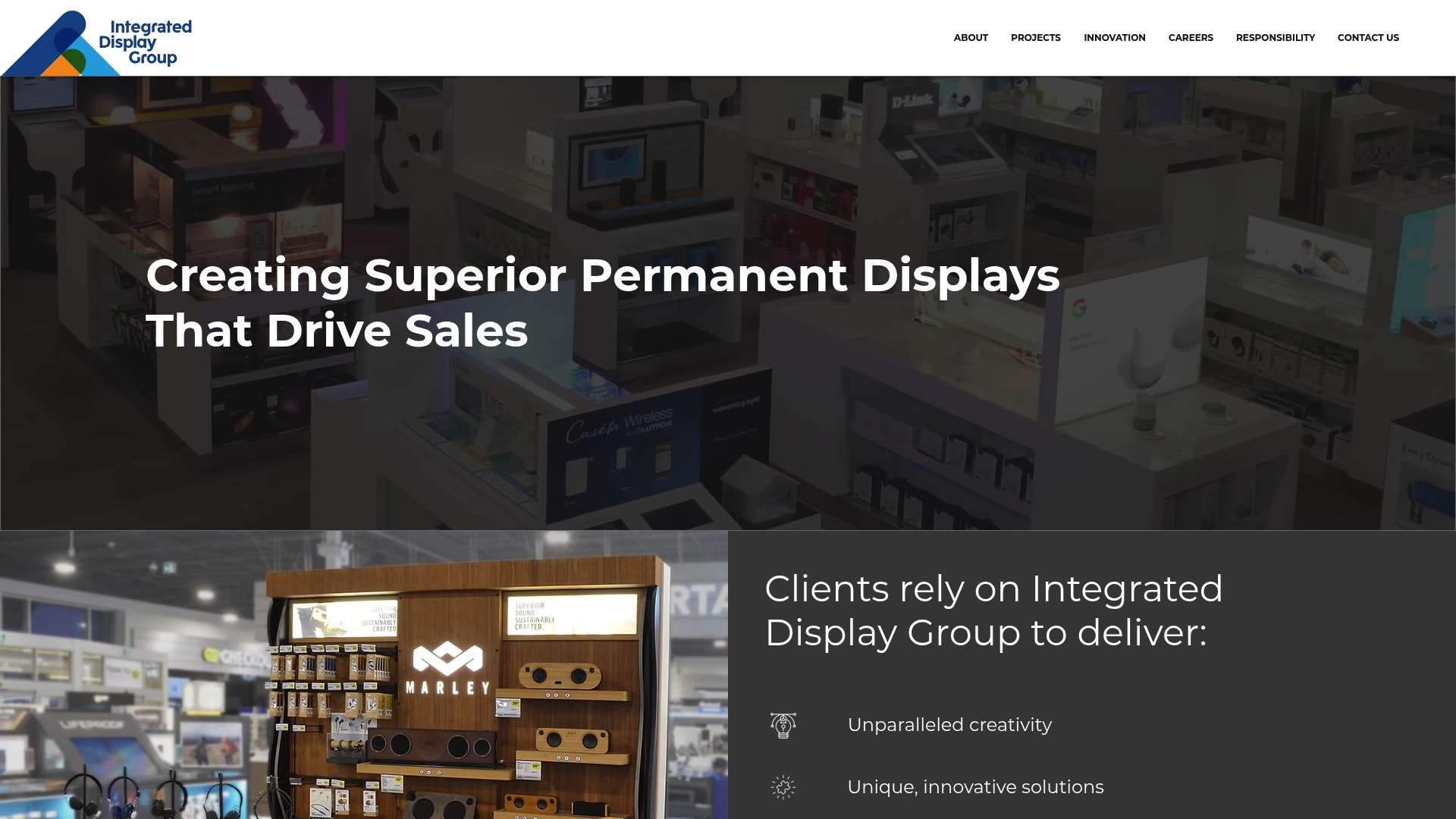
End-to-end manufacturing and professional installation for permanent retail displays, including integrated lighting and multimedia, is the core of Integrated Display Group. The firm operates primarily in North America with offices in Toronto and New York and focuses on translating brand strategy into physical fixtures.
Core Features
- Customized permanent retail displays tailored to product assortments and floor plans.
- Advanced technological integration such as embedded lighting, touchscreen multimedia, and AV components for experiential zones.
- Full-service manufacturing plus on-site installation and project management to handle permitting, shipping, and store fit.
- Design work driven by shopper research and merchandising strategy to align displays with retail KPIs.
Key Differentiator
IDG pairs technical systems integration with merchandise-first design and shopper insight to build fixtures that do more than look good. Their approach deliberately links visual merchandising choices to measurable retail goals so displays are assessed against sales and engagement, not just aesthetics.
Pros
- Strong hardware and build standards. Their manufacturing and installation background reduces on-shelf surprises and warranty callbacks for complex fixtures.
- Technology-forward options. Integrated lighting and multimedia let you create immersive product zones without managing multiple vendors.
- Brand-first design process. The team frames display concepts around shopper behavior, which shortens rounds of revision during approvals.
- Experience with large global accounts. Working with major brands gives them a library of tested solutions for flagship and chain rollouts.
- Turnkey project management. One vendor handling design, fabrication, and install simplifies scheduling across store networks.
Cons
- No public rate card. Specific pricing details are not published, so budget planning requires a consultation and scope definition.
- Tailored toward larger rollouts. Smaller brands seeking inexpensive off-the-shelf solutions may find the approach too costly.
- Modular options appear limited. Clients wanting rapid, small-batch iterations or temporary pop-ups may find fewer flexible choices.
When It May Not Fit
If your program needs low-cost, off-the-shelf fixtures or single-store pop-ups with a one- or two-week turnaround, IDG’s bespoke manufacturing model is a poor match. Rapid prototyping at low volume is not their sweet spot.
Who It's For
Large retail brands, category managers, and store design teams that require high-quality permanent fixtures with integrated tech. Best for retailers planning multi-store rollouts, product launches, or immersive brand zones across North America.
Real World Use Case
A consumer electronics chain engaged IDG for a nationwide rollout of branded demo islands. IDG led brand consultation, designed fixtures with embedded lighting and screens, manufactured kits, and coordinated installation, leaving the retailer with consistent, tech-enabled zones that improved product visibility and shopper dwell time.
Pricing
Pricing is custom and not publicly disclosed. Projects are scoped and quoted per brief, with cost drivers including materials, embedded electronics, tooling, and installation scale.
Website: https://integrateddisplay.com
crux-retail.com
At a Glance
Crux Retail says its proprietary PEAK Method is the spine of every engagement, guiding projects from strategy through deployment. The firm has specialized in custom retail displays since 2011 and focuses on design, engineering, and manufacturing for national and international rollouts.
Crux aims for bold visual storytelling and craftsmanship rather than off-the-shelf shelving or simple fixtures.
Core Features
- Custom retail display design and engineering tailored for POP, POS, fixtures, and interactive merchandising.
- A project management framework called the PEAK Method that covers strategy workshops, concept development, prototyping, and installation.
- Scalable production capabilities for multi-site retail rollouts across North America and selective international projects.
- Full-cycle delivery from prototyping to installation and post-deployment optimization.
Key Differentiator
The central claim is the PEAK Method’s end-to-end structure: strategy, engineering, prototyping, and installation all managed through one process. That emphasis on process and manufacturing rigor positions Crux for brands that need reproducible displays at scale rather than single-location experiential builds.
Compared with experiential agencies that lead with venue and programming, Crux concentrates on engineered, manufacturable fixtures ready for widespread deployment.
Pros
- Deep craft and fabrication focus. Years of production experience show up in attention to finish quality and materials choices that hold up under heavy retail traffic.
- Project discipline from strategy to rollout via the PEAK Method gives marketers a documented path from brief to installed unit.
- Strong capability for multi-site programs. The vendor highlights experience supporting national chains and coordinated store rollouts.
- Wide format support. From countertop POS to interactive island fixtures and trade show environments, they cover common retail formats.
- Client collaboration is emphasized; the workflow includes workshops and iterative prototyping to reduce surprises in final installation.
Cons
- Best suited to mid-size and large projects. Very small or boutique brands that need a single low-cost unit may find the engagement model disproportionate.
- Lead times vary with complexity. Complex, engineered installs require planning that can conflict with tight promotional windows.
- Custom work carries higher costs. Highly tailored or interactive systems typically start at several thousand dollars per display and climb for multi-site programs.
When It May Not Fit
If you need a fast, low-cost one-off or a same-week turnaround, Crux’s process and manufacturing cadence will likely be a poor match. Geographic reach skews toward North America, so global rollouts outside those regions may face logistical limits.
Who It's For
Marketing directors, retail development heads, and brand managers at mid-sized to large companies that need engineered, repeatable display systems for multiple stores. Ideal buyers value a single partner who can take a display from concept through production and installation.
Real World Use Case
A consumer electronics brand hires Crux to create a nationwide merchandising system. The engagement begins with a strategy workshop, advances through prototyping, and ends with coordinated store installs. The program standardizes product presentation across dozens of locations and improves shelf presence.
Pricing
Pricing is consultative and depends on scope. The vendor states typical budgets start from several thousand dollars per display. Multi-site rollouts and interactive fixtures require larger budgets and longer production timelines.
Website: https://crux-retail.com
Frank Mayer
At a Glance
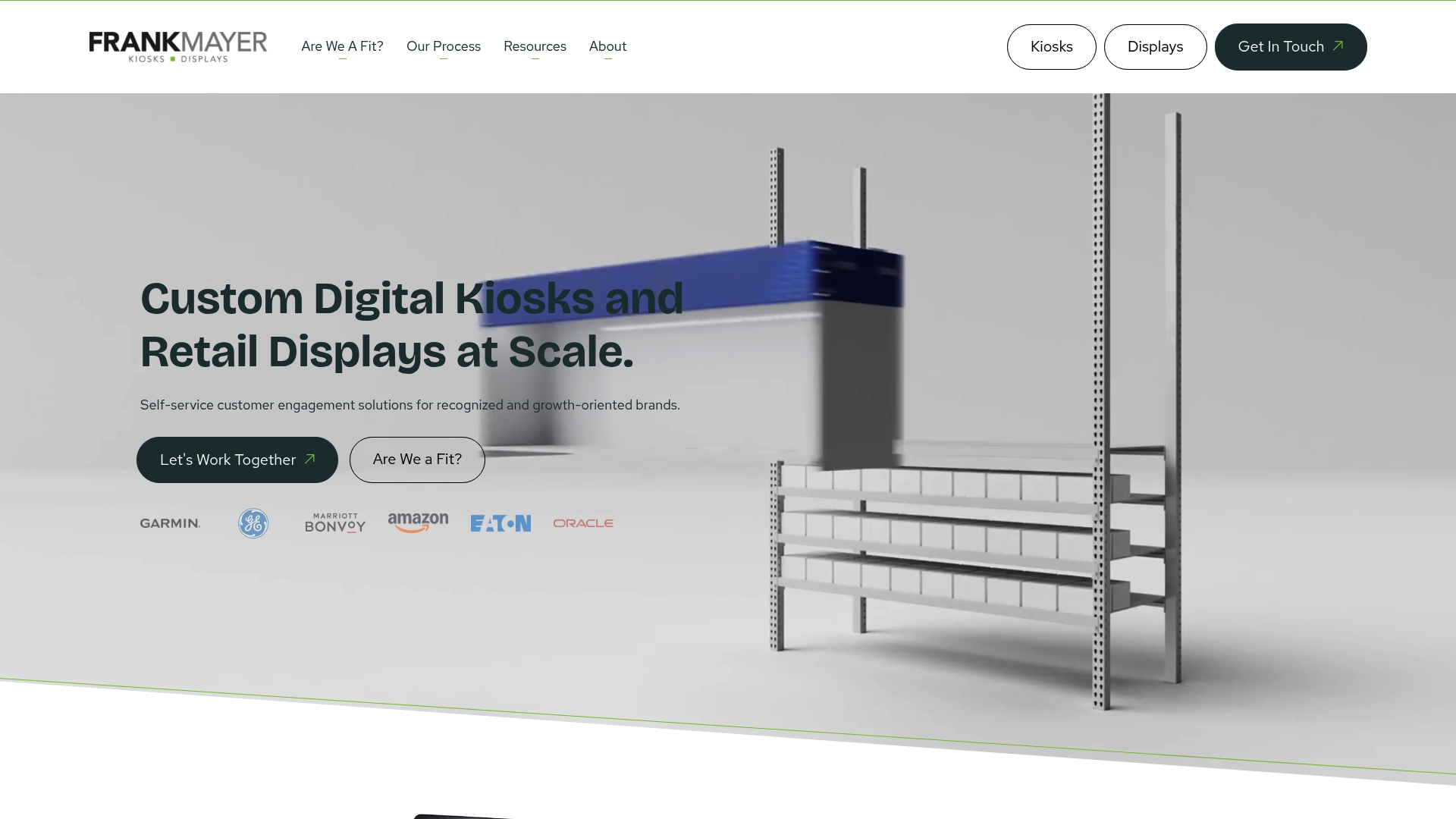
Frank Mayer operates as a full service manufacturer that handles concept, prototyping, mass production, installation, and aftermarket support for branded self service kiosks and retail displays. Their focus is clearly on enterprise scale programs for recognized brands rather than off the shelf solutions.
Core Features
They pair an in-house design agency with engineering and factory teams to move from sketches to thousands of deployed units. Services cover design, prototyping, testing, manufacturing, logistics, and ongoing support for installed fleets. Program management for multi-site rollouts is part of the package.
Key Differentiator
The single most notable element is integrated capability across design and manufacturing. That means your creative team and the factory live under the same program, which reduces the translation loss that often derails complex branded kiosks during scale up.
Pros
- Deep category expertise that helps avoid common build mistakes when projects scale to hundreds or thousands of units.
- In-house design work reduces back and forth between external studios and vendors and speeds decision cycles during prototyping.
- Strong program management helps coordinate logistics, site installation, and post install support for multi-location rollouts.
- End to end responsibility from discovery through aftermarket support gives one vendor to hold accountable if a design needs iteration in the field.
- Experience across QSR, retail, and government sectors means they have practical knowledge of compliance, durability, and serviceability requirements.
Cons
- Publicly available third party reviews and case studies are limited, so validating performance claims requires direct references from the vendor.
- The emphasis on large custom projects means small chains or independent retailers will likely find the minimum scope and cost impractical.
- The site provides no standard pricing examples, which makes early-stage RFP scoping more time consuming for procurement teams.
- Options aimed at lower volume or templated retail displays appear limited compared with companies that sell modular off the shelf units.
When It May Not Fit
If you need a handful of floor stands or low volume displays, the procurement and engineering lead time will not match your timeline. If transparent standard pricing is required to allocate budget quickly, the bespoke pricing model will slow vendor selection. If you are a small brand without enterprise rollouts, this provider is not a natural match.
Who It's For
Large brands, national retail chains, QSR operators, and government agencies that require fully branded, durable self service solutions at scale. Ideal users have internal program managers and capital budgets for custom hardware and multi-site installations.
Real World Use Case
A national retail chain engaged Frank Mayer to design and deploy interactive kiosks across 600 locations. Frank Mayer managed design, tested durability to store conditions, produced the units, coordinated installation schedules, and provided ongoing support to ensure consistent branding and uptime across the fleet.
Pricing
Pricing is custom and scoped to project complexity and volume. The vendor does not publish fixed ranges, so expect a formal discovery and quotation process for any enterprise deployment.
Website: https://frankmayer.com
Comparative Analysis
Choosing the right experiential marketing or fabrication partner requires understanding the distinctions in service models, technical expertise, and project-fit alignment offered by the various firms reviewed here. By comparing key characteristics, insights can be drawn about which provider is appropriate for specific needs.
Turnkey Service Bundling Across Specialized Domains
King Sixteen specializes in high-profile event production, offering end-to-end services from creative design to execution, particularly notable in luxury and automotive spaces. This integration of capabilities ensures coordination across operations, reducing vendor interactions. In contrast, MadeFirst takes pride in custom design and fabrication with a manufacturing focus, providing tailored solutions but typically requiring prior creative input. For projects demanding simultaneous creativity and operational excellence, King Sixteen’s unique in-house cohesion offers noticeable benefits.
Scalability and Geographic Presence
When addressing large-scale or multi-location projects, Axis Display Group and Integrated Display Group demonstrate strengths in modular construction and consistent execution for retail or branded environments. Axis Display Group, for instance, employs modular systems that enhance repeatability for nationwide rollouts, whereas Integrated Display Group’s proficiency with technological integration supports engaging customer experiences at scale. For brands needing vast geographical reach alongside technical consistency, these providers deliver proven expertise by boutique-focused agencies.
Best Fit Applications
When evaluating your options, consider these specific applications:
- King Sixteen: For luxury brand launches or experiential activations requiring tight integration of design and on-ground execution.
- MadeFirst: For custom scenic fabrication projects demanding detailed craftsmanship supported by dedicated production facilities.
- Axis Display Group: For coordinated multi-location rollouts emphasizing consistent brand representation.
- Integrated Display Group: For integrating interactive technology into permanent retail fixtures at scale.
Our Pick
King Sixteen is the recommendation for clients seeking an agency that merges creative ideation with logistical precision for high-profile events. While competitors excel in niche areas like scalable retail displays or tech-integrated fixtures, King Sixteen’s cohesive approach provides efficiency for experiential campaigns where maintaining brand prestige is crucial. However, for clients focusing exclusively on modular systems or immediate off-the-shelf solutions, alternatives like Axis Display Group may be more suitable.
Experiential Marketing Agencies Comparison
Choosing the right experiential marketing agency depends on their ability to deliver comprehensive services tailored to your specific event needs.
| Agency Name | Core Feature | Key Differentiator | Best For | Pricing | Notable Limitation |
|---|---|---|---|---|---|
| King Sixteen | Event management and production services | Over two decades of experience with turnkey solutions | Marketing heads at luxury or automotive brands | Not disclosed | Scope and pricing require custom discussions. |
| MadeFirst | Scenic and environmental build-out specialists | Dual-location operations ensure both rapid prototyping and scaling capabilities | Brands or agencies needing custom environment builds | Not disclosed | May involve longer lead times and higher costs due to custom integrations. |
| Axis Display Group | Modular retail display production | Focus on consistent, scalable retail environment solutions | Retailers needing multi-location uniformity | Not disclosed | Pricing estimation requires early scoping discussions. |
| Integrated Display Group | Technology-integrated displays | Combination of embedded tech and merchandise strategies | Large brands planning immersive in-store setups | Not disclosed | Not ideal for low-budget, single-location custom installations. |
| Crux Retail | Strategy-driven display engineering | The PEAK Method combines strategy, design, and execution | Brands needing scalable, detailed retail solutions | Not disclosed | Best suited for mid-to-large projects; scope may not match smaller project needs. |
Discover a New Standard Beyond In-Store Display Manufacturers
When searching for an in-store display manufacturer, the challenge often lies in finding a partner who does more than just build fixtures. You want a team that delivers immersive, brand-driven environments that captivate audiences and drive real results at every touchpoint. King Sixteen excels by offering a turnkey experience that merges custom fabrication with entire campaign production — from concept through execution. This approach eliminates coordination headaches and accelerates timelines while ensuring your brand makes a memorable impact.
Why settle for just displays when you can create full sensory experiences?
Explore how King Sixteen’s expertise with marquee brands like Porsche and Ray-Ban can elevate your next product launch or retail activation. Visit King Sixteen now and book a consultation to start crafting a strategic event and custom brand environment that truly makes your brand felt, not just seen.
Frequently Asked Questions
What capabilities does Kingsixteen offer for in-store displays?
Kingsixteen excels in event production and management, handling everything from concept creation to on-site execution. Their turnkey delivery model bundles creative, fabrication, AV, logistics, and staffing under one lead, streamlining the process for complex brand activations.
How does Kingsixteen compare to MadeFirst in terms of project management?
MadeFirst provides end-to-end design and fabrication, enabling flexible collaboration models with agencies. In contrast, Kingsixteen is tailored for high-visibility launches and experiential campaigns, offering a full-service model that may better support brands looking for comprehensive event management.
Can I expect pricing details from Kingsixteen for in-store display projects?
Kingsixteen does not publish standard fees, as their projects are quoted per scope, which means pricing varies significantly based on specific requirements and complexities of the activation. Prospective clients should prepare for conversations to assess their unique needs and receive bespoke estimates.
What types of brands benefit most from Kingsixteen's services?
Kingsixteen is ideal for heads of Marketing, SVPs, producers, and founders at established brands seeking a full-service partner for high-visibility launches and experiential campaigns. Their capabilities are particularly suited for brands that prefer to manage logistics and creative under one vendor.
What is the unique advantage of Kingsixteen in experiential marketing?
Kingsixteen's long-standing vendor network and in-house fabrication capabilities allow them to compress timelines and reduce the burden of coordination across multiple contractors. This can lead to smoother project execution, especially for large-scale automotive and luxury activations.