Luxury consumers have grown immune to banners, pre-roll ads, and influencer reposts. When your audience owns multiple properties, travels business class, and filters out noise instinctively, a static campaign simply doesn't register. High-end brands need more than visibility. They need moments that feel personal, that create a story worth telling, and that leave a lasting impression long after the experience ends. Experiential marketing answers that challenge directly, offering a proven path from passive awareness to genuine emotional connection and measurable business impact.
Table of Contents
- Understanding experiential marketing: Definition and core principles
- Why experiential marketing matters for high-end brands
- Key frameworks: Five dimensions and phygital integration
- Measuring what matters: Attribution, KPIs, and overcoming challenges
- The uncomfortable truth: Experiential marketing's biggest risk and reward
- Take your brand experience further with King Sixteen
- Frequently asked questions
Key Takeaways
| Point | Details |
|---|---|
| Experiential is multidimensional | Engages all senses and emotions to foster authentic brand experiences. |
| Luxury brands demand innovation | Phygital, exclusive, and sustainable experiences are now essential in high-end markets. |
| Measurement drives results | ROI and brand growth come from clear KPIs and thoughtful attribution strategies. |
| Co-creation fuels loyalty | Audience involvement and participation lead to stronger advocacy and revenue gains. |
| Strategic risk, high reward | Successful campaigns balance innovation with accountability and brand integrity. |
Understanding experiential marketing: Definition and core principles
Experiential marketing is far more than throwing a launch party or sponsoring a venue. It's a discipline focused on designing meaningful interactions between a brand and its audience, whether in person, digitally, or through a blend of both. Think of it as building the stage, the script, and the audience reaction all at once. When done well, experiential marketing explained is a full-sensory brand encounter that changes how people feel about you.
The academic and strategic foundation for this field rests on five core dimensions, which researchers have identified as defining how people engage with brand experiences:
- Sense: The physical environment. What your audience sees, hears, smells, and touches.
- Feel: The emotional resonance. Does this moment move them? Do they feel something real?
- Think: The intellectual engagement. Are they challenged, curious, or inspired by the brand's message?
- Act: The behavioral response. What action do they take? Do they try something, sign up, or buy?
- Relate: The social dimension. Does this experience connect them to a broader community or identity?
These five dimensions don't operate in isolation. The most powerful luxury experiences layer them together, building something that participants naturally want to share and return to.
"Experiential marketing has evolved beyond event sponsorships into what practitioners now call Experiential 2.0, integrating AR, VR, sustainability commitments, and genuine co-creation with the audience to create brand moments that drive performance, not just PR."
This shift matters enormously for high-end brands. Exploring innovative event strategies reveals that forward-thinking brands no longer treat events as one-time media moments. They treat them as performance channels with measurable return on objectives (ROO) and return on investment (ROI), giving every decision a clear business justification.
Why experiential marketing matters for high-end brands
With the basics defined, let's explore why luxury brands are turning to these strategies now. The answer starts with your audience. Elite consumers don't just want a product. They want a relationship with the brand behind it. They want to feel seen, understood, and part of something worth belonging to.
Phygital experiences, which blend physical and digital touchpoints seamlessly, are rapidly becoming the standard for this audience. A luxury automotive brand might pair a live test drive with a personalized AR overlay showing custom specs. A jewelry house might create a private dinner where guests co-design a piece that's fabricated live. These aren't gimmicks. According to research, prioritizing phygital hybrids alongside exclusivity, co-creation, and sustainability is now the recommended approach for high-end brands aiming to build loyalty and drive revenue in premium segments.
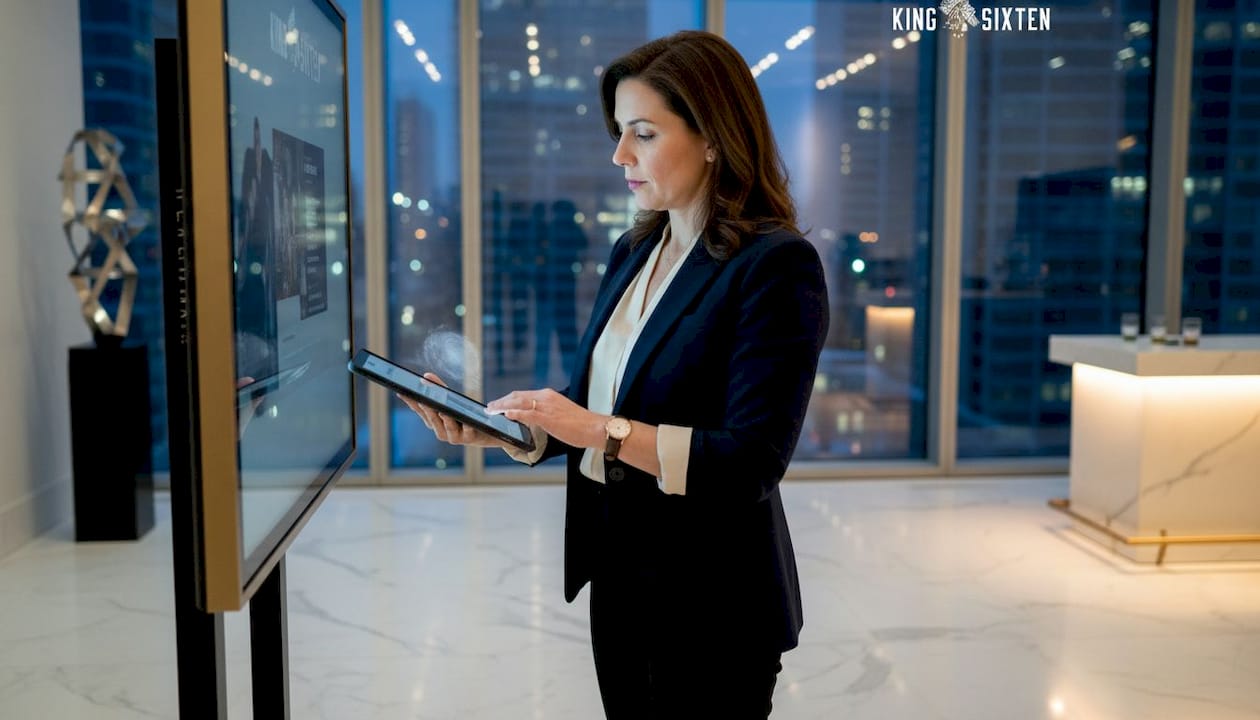
The business results support the investment. Coach, the luxury fashion brand, achieved 25% revenue growth by centering its experiential strategy on audience co-creation, inviting customers to shape the brand's direction rather than simply receive its messaging. That's the co-creation model in action, and the numbers speak for themselves.
What modern luxury audiences expect from brand experiences:
- Exclusivity: Access, not mass participation. Private previews, invitation-only events, curated guest lists.
- Personalization: Tailored touchpoints that reflect individual preferences, not generic experiences.
- Innovation: Technology that enhances the story, from VR and AR trend insights to real-time customization.
- Sustainability: Environmentally responsible design is now a baseline expectation, not a differentiator.
- Emotional resonance: A story that connects to their values, aspirations, and sense of identity.
| Strategy element | Traditional marketing | Experiential marketing |
|---|---|---|
| Audience role | Passive viewer | Active participant |
| Brand message | Broadcast | Co-created |
| Emotional impact | Low to moderate | High |
| Data capture | Limited | Rich and actionable |
| Post-event shelf life | Short | Extended through advocacy |
This table illustrates why unique high-end brand experiences are pulling budget away from traditional channels. The output isn't just impressions. It's data, advocacy, and loyalty that compounds over time.
Pro Tip: Define your performance metrics before the event is designed, not after. Tie each experiential element to a specific KPI, whether that's qualified leads captured, social shares generated, or post-event purchase intent scored. Treating your experiential campaign as a performance channel from day one is what separates strategic brands from those chasing the trend.
Key frameworks: Five dimensions and phygital integration
To help you apply these insights, here are proven frameworks that power results in the field. The five-dimension model gives you a planning checklist for every touchpoint in your activation. Before finalizing your event design, run each element through this lens:
- Sense: Is the environment visually cohesive and brand-consistent? Have you considered ambient sound design, scent, and tactile elements?
- Feel: What emotion does this moment trigger? Have you mapped the emotional arc of the guest journey from arrival to departure?
- Think: Is there a narrative or challenge embedded in the experience that engages intellectual curiosity?
- Act: Are there clear, low-friction moments that encourage participation, sign-up, or purchase?
- Relate: Does the experience create a sense of belonging or shared identity among attendees?
Running your activation plan through these five checkpoints reveals gaps before they become costly problems on-site. It's a disciplined approach that forces you to design with the audience's full experience in mind, not just the visual highlight.
Phygital integration adds the next layer. Merging digital and live events means creating a continuous experience that doesn't end when guests leave the venue. A live activation might generate a personalized digital artifact, a custom video, a digital collectible, or a data-driven profile that continues the brand relationship online. Geoframing for hybrid experiences is one tactical tool here, allowing brands to capture location-based audience data and retarget attendees with relevant digital content in the days and weeks that follow.
Phygital integration comparison: Traditional events vs. phygital events
| Factor | Traditional events | Phygital events |
|---|---|---|
| Audience reach | Venue-limited | Venue plus extended digital audience |
| Data capture | Manual sign-ins, surveys | Automated, real-time, behavioral |
| Brand continuity | Ends at the door | Continues digitally for weeks |
| Personalization | Low | High, driven by real-time data |
| Risk of brand dilution | Moderate | Higher if not carefully executed |
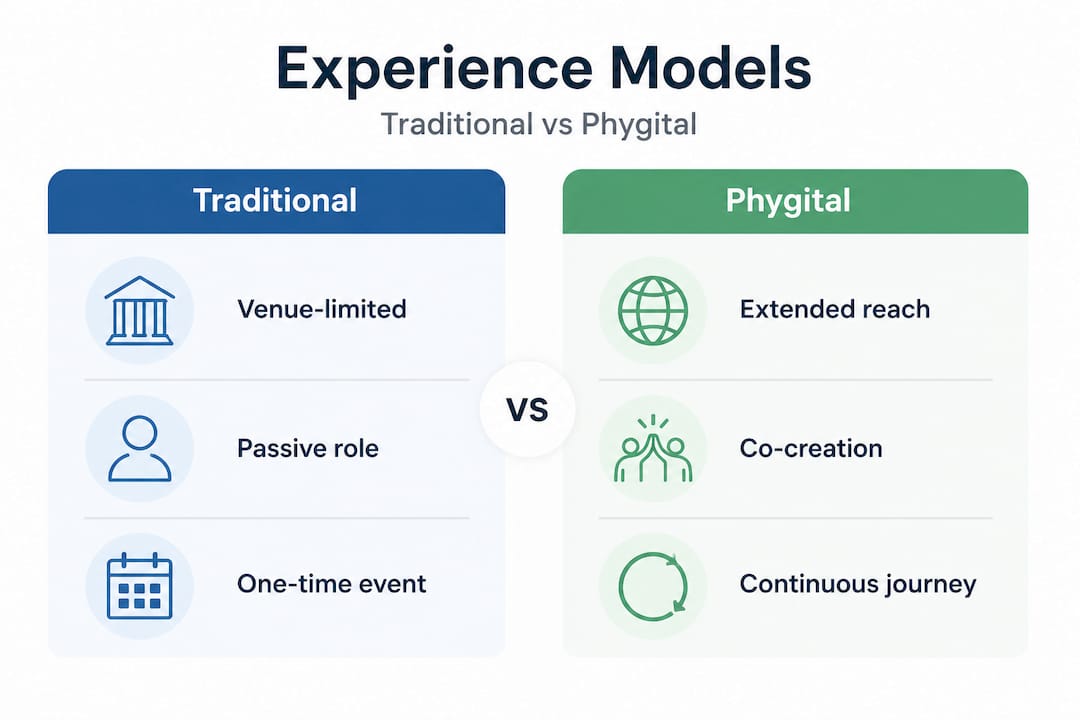
That last point deserves attention. Research shows that phygital integration can introduce brand risk if the technology overshadows the brand's essence or creates a disjointed experience. Luxury brands must ensure the digital layer enhances the physical story rather than competing with it.
Checklist for avoiding common experiential design pitfalls:
- Confirm every digital touchpoint is brand-aligned, not just technically impressive
- Audit cultural references in your design for multicultural audiences to avoid unintentional stereotyping
- Test the full guest journey before launch, including arrival flow, peak moments, and exit
- Build in redundancy for tech-dependent elements to prevent failure points during live execution
- Assign a dedicated experience director to manage the guest journey in real time
Measuring what matters: Attribution, KPIs, and overcoming challenges
To ensure your investment pays off, here's how to focus on measurement and optimization. Measurement is where many high-end brand campaigns fall apart. The experience might be flawless, but without a clear framework for capturing data and attributing outcomes, you can't justify the spend or improve the next activation.
The scale of the challenge is significant. Research shows that 39 to 56% of marketers struggle to prove ROI from experiential campaigns, and 71% identify expertise gaps as a primary barrier. These aren't small brands with limited resources. These are seasoned marketing teams without a structured measurement approach.
The solution is a pre-defined KPI framework built before the event is designed. According to industry analysis, pre-defining KPIs and using causal measurement methods is what separates campaigns that prove their value from those that generate beautiful photos and unclear outcomes. Top campaigns also convert participants into active advocates through engineered shareable moments, extending reach far beyond the guest list.
Step-by-step process for building your measurement framework:
- Define your business objective first. Are you driving trial, building awareness, capturing data, or accelerating a sales cycle? Be specific.
- Map objectives to KPIs. Each objective should have at least one quantifiable metric attached. Engagement rates, data capture volume, conversion rates, and Net Promoter Score are all viable options.
- Build measurement into the event design. Registration forms, QR code interactions, app check-ins, and live surveys all become data capture tools. Don't add them as an afterthought.
- Track digital amplification. Monitor social shares, hashtag reach, and earned media coverage in real time and for 30 days post-event.
- Conduct post-event attribution analysis. Use event data for attribution to connect event participation to downstream business outcomes like pipeline value or purchase behavior.
- Close the loop with stakeholders. Report not just what happened, but what changed as a result. Tie data back to the original business objective.
Pro Tip: Build digital components into your live activation specifically because they generate trackable data. A well-placed AR interaction or digital sign-in doesn't just add novelty. It creates a data trail that links individual attendees to specific behaviors, making your attribution story far more compelling to leadership.
Key metrics for high-end experiential campaigns:
- Qualified leads captured per event
- Dwell time at key brand moments
- Share rate of branded content generated at the event
- Post-event purchase intent shift (measured via pre and post surveys)
- Earned media value from organic coverage
- Cost per meaningful engagement vs. digital channel equivalents
The uncomfortable truth: Experiential marketing's biggest risk and reward
Having covered strategies and frameworks, let's cut through the hype with a frank reality check. We see it regularly in the high-end space. A brand hears that immersive experiences drive results, allocates a serious budget, and then designs a campaign built around a flashy technology or a trending aesthetic rather than a genuine audience insight. The photos look extraordinary. The coverage is there for a day. And then, nothing compounds.
This is what we call shiny object syndrome, and it's the single biggest risk in luxury experiential marketing. The brands chasing the latest AR feature or the most Instagrammable installation without grounding it in their audience's real values and behavior end up with a beautiful expense rather than a strategic investment.
The brands that outperform their peers treat experiential as a performance channel with the same rigor they apply to media buys or product development. They start with a deep audience insight. They co-create where possible, pulling the audience into the brand's story rather than presenting a finished narrative. They align every creative decision with a sustainable brand position. And they measure obsessively.
We've worked with brands across automotive, fashion, and lifestyle categories who came to us frustrated by past activations that generated buzz but no lasting return. In almost every case, the missing ingredient wasn't creative ambition. It was strategic accountability. When you explore proven event marketing innovation, the pattern is clear. The brands winning with experiential treat it as a long-term brand-building investment, not a one-off spectacle.
The reward for getting this right is significant. Genuine co-creation builds loyalty that no paid media can replicate. A guest who shaped an experience with your brand doesn't just buy again. They advocate. They become part of your brand's story in a way that feels authentic because it genuinely is.
Take your brand experience further with King Sixteen
When you're ready to implement these ideas, industry expertise can make all the difference.
At King Sixteen, we design and execute expert experiential marketing campaigns built specifically for brands that operate at the highest level. We understand the pressure you're under. A flawed execution at this caliber doesn't just miss a KPI. It damages a brand's reputation with exactly the audience that matters most.
Our turnkey model covers everything from concept and custom fabrication through to AR and VR activations, logistics, and post-event attribution reporting. We've partnered with Porsche, Audi, Ray-Ban, Fossil, and Churchill Downs to create moments that drove measurable outcomes, not just attention. Whether you're launching a product, hosting a summit, or building a flagship brand environment, our specialized event services give your team the expertise and execution capacity to deliver without margin for error. Let's build something your audience won't forget.
Frequently asked questions
How does experiential marketing differ from traditional event marketing?
Experiential marketing goes beyond events by designing multi-sensory, immersive experiences that engage and emotionally connect with the audience across all five defining dimensions: sense, feel, think, act, and relate, rather than simply gathering people in a room.
What makes a luxury experiential campaign successful?
Success depends on exclusive, personalized experiences and strategic use of technology to foster connection and track impact. Research confirms that phygital hybrids, exclusivity, and data capture for attribution are the leading drivers of loyalty and revenue in premium segments.
How do brands measure the ROI of experiential marketing?
Brands measure ROI using predefined KPIs that link audience engagement, data capture, and brand advocacy to business outcomes. Industry analysis confirms that pre-defining KPIs and causal measurement are the foundations of campaigns that prove their value.
What are common challenges in luxury experiential marketing?
Brands often face measurement issues, expertise gaps, and risks of phygital integration overpowering the brand's essence. Data shows that 39 to 56% struggle with ROI proof, 71% cite expertise gaps, and poorly executed digital integration can dilute the brand experience rather than enhance it.
Recommended
- Experiential Marketing | Elevate Your Brand Experience - Act Now — King Sixteen
- King Sixteen | Discover Unique Experiences — Get Started
- Innovative event marketing strategies to maximize brand impact
- Event Services | Elevate Your Event Today — King Sixteen
- 7 Examples of Experiential Marketing for Luxury Brands - Corrado Manenti