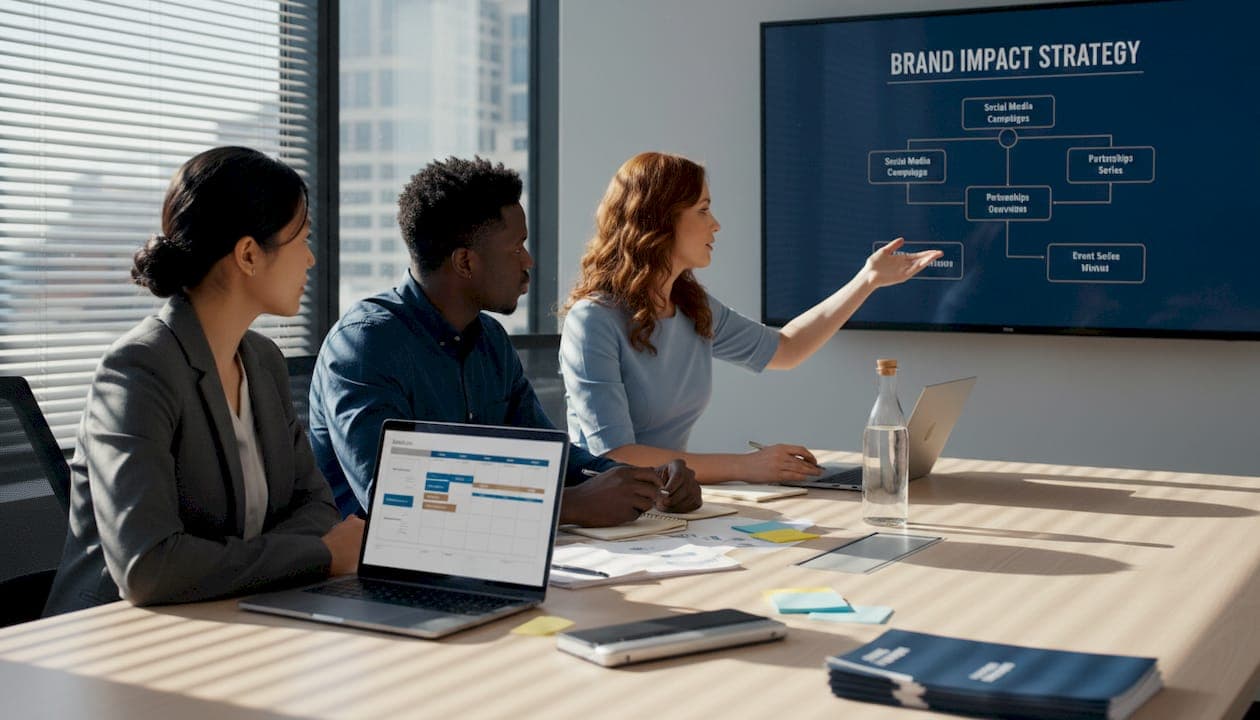
Choosing the right event marketing strategy is one of the most consequential decisions your marketing team will make this year. Attendance numbers alone don't move the needle anymore. What actually drives results is the intersection of immersive experience design, disciplined audience segmentation, and airtight data integration. Brands that treat events as isolated moments miss the compounding value that comes from connecting every touchpoint into a measurable revenue engine. This guide breaks down the strategies that high-performing marketing teams use to turn events into business outcomes, not just brand moments.
Table of Contents
- Define clear goals and segment your audience
- Create omnichannel promotional timelines for maximum reach
- Design immersive onsite and hybrid event experiences
- Measure, optimize, and prove event ROI
- Why most event strategies fail—and what savvy brands do differently
- Ready to transform your event strategy?
- Frequently asked questions
Key Takeaways
| Point | Details |
|---|---|
| Set SMART goals | Measurable objectives and detailed audience segmentation lay the foundation for event ROI. |
| Use layered promotions | Omnichannel, multi-stage campaigns maximize event reach and registration conversion. |
| Prioritize immersive experiences | Live, AR, and VR event elements drive deeper engagement and better ROI than purely digital approaches. |
| Track and nurture for ROI | Connect event data to revenue with rapid follow-up and robust measurement for sustained impact. |
Define clear goals and segment your audience
Every powerful event strategy starts with the same question: what does success actually look like? Not in a vague, "we want brand awareness" way, but in specific, measurable terms tied to revenue outcomes. Without that clarity, your budget becomes a best guess and your results become impossible to defend.
SMART goals aligned to business outcomes like pipeline influence and revenue are the core mechanics of any high-performing event marketing strategy. That means setting targets like "generate 150 sales-qualified leads" or "influence $2M in pipeline" rather than softer metrics like impressions or social shares. When your goal is specific, every subsequent decision, from venue selection to post-event nurture, has a clear purpose.
Audience segmentation is the other half of this equation. The most successful events we've seen aren't built for "everyone in our target market." They're built for a precisely defined slice of that market, and then layered outward. Key segmentation variables to work with include:
- Demographics: Title, industry, company size, and geography
- Behavioral signals: Past event attendance, content consumption habits, and product usage data
- Buyer journey stage: Awareness, consideration, and decision-ready prospects each need a different experience
- Account tier: Enterprise targets deserve different touchpoints than mid-market prospects
Using event data for targeting transforms segmentation from a static exercise into a living strategy. When you feed attendance data, session engagement metrics, and booth interaction data back into your CRM, you build a progressively sharper picture of what your best prospects actually respond to.
One common mistake is treating segmentation as a one-time pre-event task. Markets shift. Buying committees change. A persona that was accurate six months ago may be outdated today. Your event staffing best practices should also reflect your segmentation, because the wrong staff-to-audience match is one of the most overlooked conversion killers on the show floor.
Statistic: Brands that define revenue-aligned SMART goals before an event report significantly higher satisfaction with ROI outcomes compared to those using vanity-based targets.
Pro Tip: Revisit your audience segmentation at least once per quarter. New product releases, market shifts, and competitive moves all affect who your ideal event attendee actually is. Segment assumptions that are six months old are costing you conversions you don't even know you're missing.
Create omnichannel promotional timelines for maximum reach
With targeted goals and audiences in place, the next priority is building a promotion strategy that reaches the right people at the right moments, across the right channels. A single email blast three weeks out is not a promotion strategy. It's a missed opportunity.
High-performing event promotion is structured in phases, each with a specific purpose. Here's how the most effective timelines break down:
- Teaser phase (8 to 12 weeks out): Build curiosity with behind-the-scenes content, speaker hints, and early-access offers. This phase primes your audience before the hard sell begins.
- Early-bird registration (6 to 8 weeks out): Introduce urgency with pricing incentives or exclusive access tiers. This phase captures your most motivated prospects first.
- Agenda and speaker announcements (4 to 6 weeks out): Content is your strongest conversion lever at this stage. Drop major speaker names and session highlights to pull in fence-sitters.
- Reminder and social proof phase (2 to 4 weeks out): Testimonials, attendee counts, and countdown timers all reinforce urgency and credibility.
- Final push (last 7 days): Last-call messaging, FOMO-driven content, and direct outreach to high-value prospects who haven't registered yet.
The data supports this structured approach. Late promotions cause 45% of registrations to cluster in the final four weeks, which compresses your lead qualification window and limits your ability to personalize the experience. Starting earlier spreads registration across phases and gives your team more runway to nurture each attendee segment.
Another important dimension is the channel mix. Omnichannel promotion with layered timelines drives significantly stronger engagement than single-channel approaches. Here's a quick comparison of how promotion formats perform:
| Promotion format | Reach | Engagement depth | Tracking capability |
|---|---|---|---|
| Pure digital | High | Low to medium | Excellent |
| Hybrid (digital + in-person) | High | High | Good |
| In-person only | Targeted | Very high | Limited |
For premium brands, the hybrid model consistently delivers the best balance of scale and engagement quality. Pure digital campaigns suffer from hybrid fatigue, especially when over-digitization leads audiences to tune out before they even register.
One often-overlooked tool is Geo Frame Marketing for targeting, which lets you serve ads to specific physical locations, like competitor events, industry conferences, or key prospect office buildings. It's a precision layer that most brands haven't fully activated yet, and the results can be significant.
Design immersive onsite and hybrid event experiences
Promotion only works if the event itself delivers something worth showing up for. And in 2026, showing up means giving your attendees an experience that a webinar simply cannot replicate.
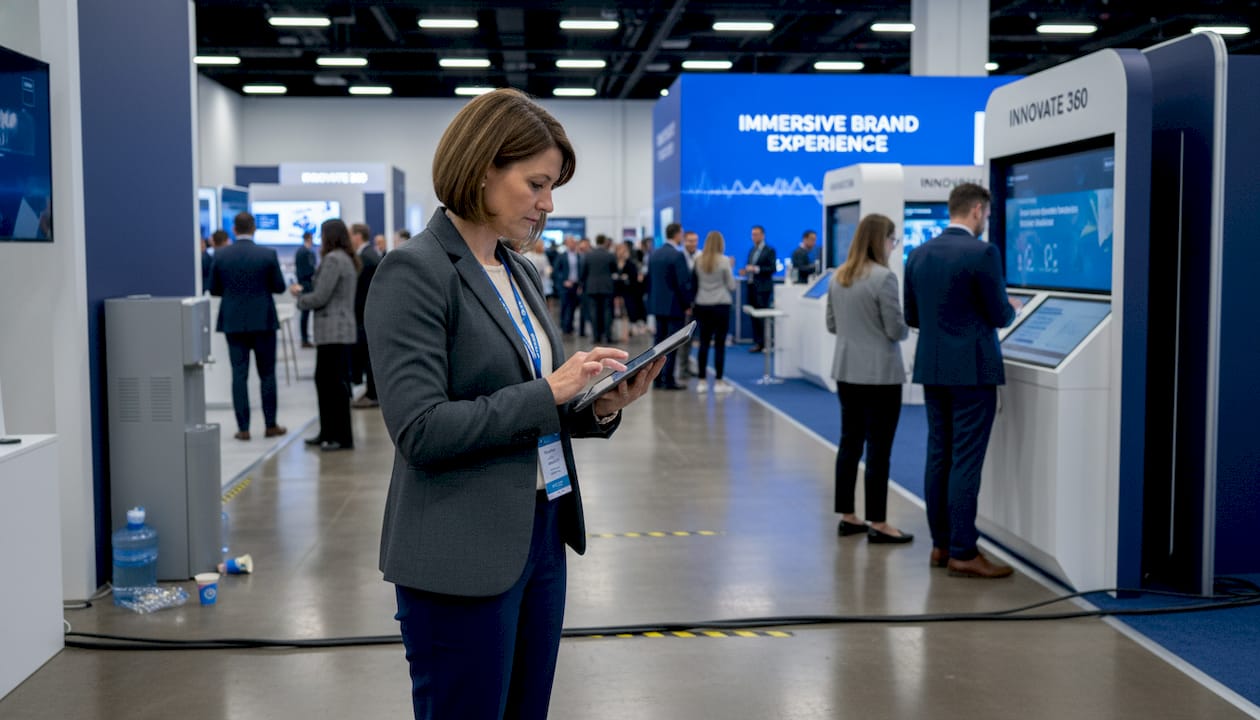
Immersive onsite experiences using AR, VR, and gamification create deeper engagement and stronger CRM-linked follow-up opportunities than any passive presentation format. These aren't novelty features anymore. They're the tools that separate memorable brand experiences from forgettable ones.
Consider what each format actually delivers:
- Augmented reality (AR): Lets attendees interact with products in real space, ideal for product launches where physical demonstration drives purchase intent
- Virtual reality (VR): Creates fully controlled narrative environments where you take the attendee somewhere they couldn't go otherwise, whether that's inside a race car, a luxury property, or a product manufacturing facility
- Gamification: Drives participation, dwell time, and social sharing through challenges, leaderboards, and reward mechanics
- Interactive digital installations: Custom environments that double as data capture points, feeding engagement signals back to your CRM in real time
The ROI case for immersive investment is strong. Immersive experiences drive emotional connections that outperform digital formats by up to 5x in live versus digital ROI comparisons. For global brands, hybrid formats that pair physical immersion with digital access strike the optimal balance between reach and cost efficiency.
Here's a practical performance snapshot:
| Experience type | Avg. engagement time | Lead quality score | Post-event recall |
|---|---|---|---|
| Standard booth | 3 to 5 min | Medium | Low |
| AR/VR activation | 12 to 20 min | High | High |
| Gamified experience | 15 to 30 min | High | Very high |
Longer engagement time directly correlates with stronger brand recall and higher lead quality scores. When an attendee spends 20 minutes inside a VR event activation, they leave with a visceral memory that no brochure can compete with.
Data capture is the often-missed opportunity inside these experiences. Every touchpoint, from badge scans to AR interactions to gamification completions, is a signal that can be fed into your CRM to inform post-event personalization. The brands that build this data architecture before the event are the ones who run the most effective follow-up campaigns afterward. Explore how experiential marketing tactics can be designed to capture data at every touchpoint.
Pro Tip: Consider facial recognition check-in for high-value events. It reduces no-show friction, speeds up the arrival experience, and creates a personalization signal from the first moment an attendee walks through the door. When paired with a CRM, it can trigger real-time alerts to your sales team when a priority prospect arrives on site.
Measure, optimize, and prove event ROI
Stunning experiences alone aren't enough. What truly matters is your ability to demonstrate measurable ROI to leadership, and then use those insights to make the next event sharper.
The benchmarks here are worth knowing. Trade shows return $20.98 per $1 spent, and overall event marketing delivers a 4.35:1 ROI, with digital-first events reaching 5.2:1. The cost per lead from events averages $112 compared to $259 for field sales, and high-performing marketing teams average 25 events per year with roughly 412 registrations and 269 attendees per event.
Despite these strong numbers, 40% of organizers still struggle to prove ROI, down from 70% several years ago, but still a meaningful gap. The brands closing that gap are the ones building measurement frameworks before the first attendee registers, not after.
Here's a practical framework for measurement:
- Define your revenue KPIs upfront. SQLs generated, pipeline influenced, cost per lead, and attendance-to-opportunity conversion rate should all be tracked against pre-set targets.
- Integrate your event platform with your CRM before the event. Real-time data flow prevents the post-event scramble where valuable leads sit in a spreadsheet for two weeks.
- Track engagement depth, not just attendance. Session participation, booth dwell time, and content downloads give you a richer picture than headcount alone.
- Run your 24-hour follow-up without exception. 24-hour follow-up triples pipeline value compared to delayed outreach, yet most teams let this window slip due to post-event fatigue.
- Build a closed-loop report for leadership. Connect event investment to influenced deals in the pipeline, showing both direct attribution and assisted influence.
The pitfalls to avoid are equally important. Vanity metrics like total registrations, social impressions, and raw attendance numbers feel good to report but don't connect to revenue. Leadership teams are increasingly demanding closed-loop reporting, and the organizations that can show SQL-to-close rates from specific events are the ones that earn larger budgets for the next one.
Measuring event ROI is a discipline, not an afterthought. The brands that treat it as the final step in execution, rather than an integrated part of planning, consistently underperform their potential. Pair your measurement strategy with the right event service solutions to ensure every data point is captured and actioned.
Why most event strategies fail—and what savvy brands do differently
Here's the uncomfortable truth: most event strategies fail not because the experience was bad, but because the experience ended at the exit. Brands pour budget into AR activations, custom fabrication, and premium venues, then walk away without a data-driven follow-up plan that converts what just happened into revenue.
The pattern we see consistently is this: surface-level innovation without integrated data infrastructure. A stunning installation generates a thousand badge scans, but if those scans never reach your CRM with context, they're just numbers. The wow moment has a 48-hour half-life in an attendee's memory. Your follow-up is what makes it stick and converts it into a sales conversation.
The brands that outperform are the ones designing their learning from event data strategy before the event opens, not after it closes. They build empathy-driven experiences that resonate emotionally, then back them with systematic, personalized nurture sequences that extend the experience into the buying journey. That combination, emotional resonance plus data-driven follow-through, is the new standard for event marketing that actually moves the needle.
Ready to transform your event strategy?
If this guide has made one thing clear, it's that the gap between a good event and a great one comes down to strategy, execution, and follow-through working together seamlessly.
At King Sixteen, we design and execute experiential marketing services that go beyond the moment. From immersive VR event activations to full-scale conference production, we handle every detail so your team can focus on relationships, not logistics. Our turnkey model covers everything from concept and fabrication to staffing, AV, and post-event data strategy. If you're ready to build events that generate real pipeline, explore our full event support and let's talk about what's possible for your brand.
Frequently asked questions
What are the top KPIs for measuring event marketing success?
Revenue-influenced pipeline, cost per lead, SQLs generated, and attendance rates are the most critical metrics. Event marketing benchmarks show trade shows return $20.98 per $1 spent, with a cost per lead of $112 compared to $259 for field sales.
How does immersive technology increase event ROI?
Immersive experiences like AR and VR build stronger emotional connections and yield up to 5x higher ROI than pure digital formats, making them a high-value investment for brands targeting deep engagement.
What's the optimal event follow-up window for lead conversion?
Following up within 24 hours is critical. 24-hour follow-up triples pipeline value compared to outreach that happens days later, making speed the single most impactful follow-up variable.
Why do some event marketing campaigns fail despite high attendance?
High attendance without data integration and personalized follow-up leads to poor conversion. 94% of events fail lead conversion without the right systems in place, meaning the experience alone is never enough without the infrastructure to capitalize on it.