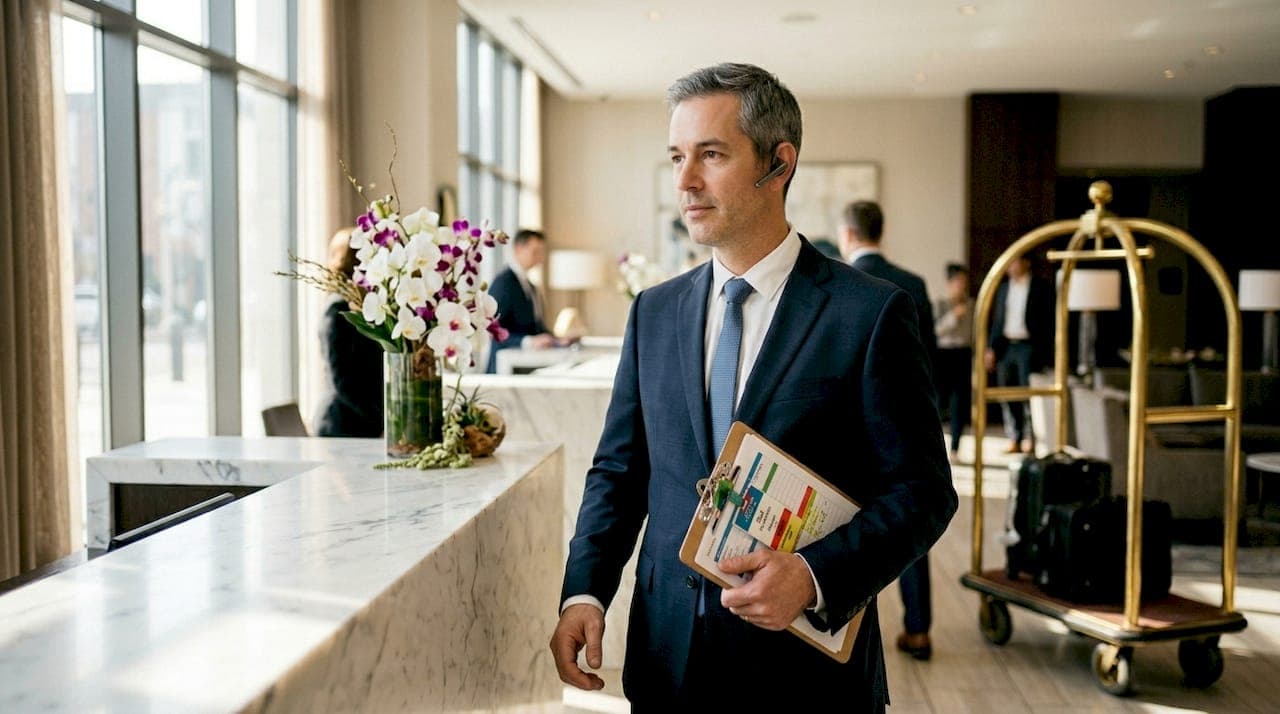
Experiential marketing for luxury brands isn't just growing, it's outpacing nearly every other channel. Luxury event spending tops $100 billion annually, with events yielding 10x ROI versus traditional channels and generating 85% higher purchase likelihood post-attendance. For marketing executives at established luxury brands, that's not a marginal difference. It's a strategic signal. Mass-market event tactics, scaled reach, broad demographic targeting, and volume-driven metrics, simply don't translate to high-net-worth audiences. What does work is a fundamentally different approach: one built on exclusivity, emotional resonance, and immersive brand storytelling. This article breaks down exactly what that approach looks like, how to execute it, and how to measure it honestly.
Table of Contents
- Defining luxury event marketing: Beyond traditional promotions
- Core mechanics: Creating exclusive and immersive luxury experiences
- Luxury event marketing ROI: The measurement paradox and real impact
- Innovative strategies for luxury event marketers
- What most brands get wrong—and what actually drives luxury event success
- Take your luxury events further with expert partners
- Frequently asked questions
Key Takeaways
| Point | Details |
|---|---|
| Exclusivity drives impact | Luxury event marketing thrives on rarity, invitation-only access, and personalized touches that set brands apart. |
| ROI is qualitative | Long-term brand sentiment, VIP conversion, and cultural influence are more valuable than immediate sales metrics for luxury events. |
| Innovation fuels engagement | Leveraging digital integrations and global partnerships keeps luxury event strategies relevant and impactful. |
| Small details matter | Attentive service, curated environments, and sensory elements enhance the perceived value of luxury experiences. |
| Cultural ecosystems win | Luxury brands benefit from thinking beyond individual events, building lasting networks and social amplification. |
Defining luxury event marketing: Beyond traditional promotions
Most event marketing is designed to reach as many people as possible. Luxury event marketing works the opposite way. The more exclusive the access, the more valuable the experience becomes. Fewer guests, higher stakes, deeper engagement.
Luxury event marketing is a specialized form of experiential marketing that creates exclusive, immersive events to engage high-net-worth individuals, emphasizing rarity, personalization, emotional connection, and brand storytelling over mass promotion. That definition matters because it reframes the entire objective. You're not trying to generate impressions. You're trying to create a memory that reshapes how someone feels about your brand, permanently.
Several defining characteristics separate this category from traditional event promotion:
- Invitation-only access: The guest list IS the product. Who attends signals what the brand values.
- Personalized guest journeys: Tailored touchpoints from pre-event communication to bespoke gifts.
- Emotional narrative: Every design element, from welcome remarks to exit gifts, serves a story.
- Rarity and scarcity: The event cannot be replicated or attended by everyone, and guests know it.
- Brand-environment fusion: The space doesn't just host the brand. It becomes the brand.
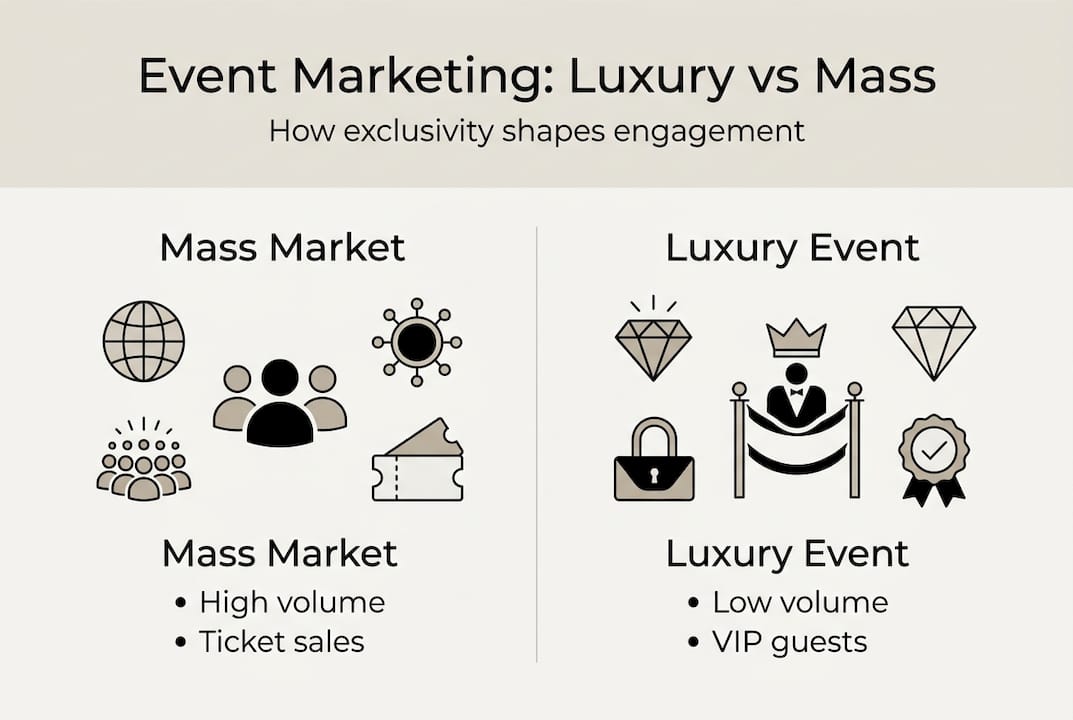
Contrast this with a mass-market event, where success looks like ticket sales, session attendance counts, and social media post volume. Luxury events measure impact through sentiment, behavioral shifts, and long-term relationship equity. The experience itself is the asset.
"The goal of a luxury event is not attendance. It is transformation. Every guest should leave feeling that they understand your brand more deeply and that they belong to something most people never will."
This is why impactful experiential marketing for luxury brands demands a completely different production philosophy. The question shifts from "How do we fill the room?" to "How do we make this room unforgettable for the twelve people in it?"
Core mechanics: Creating exclusive and immersive luxury experiences
Knowing what luxury event marketing is matters. Knowing how to build it is what separates exceptional from merely expensive.
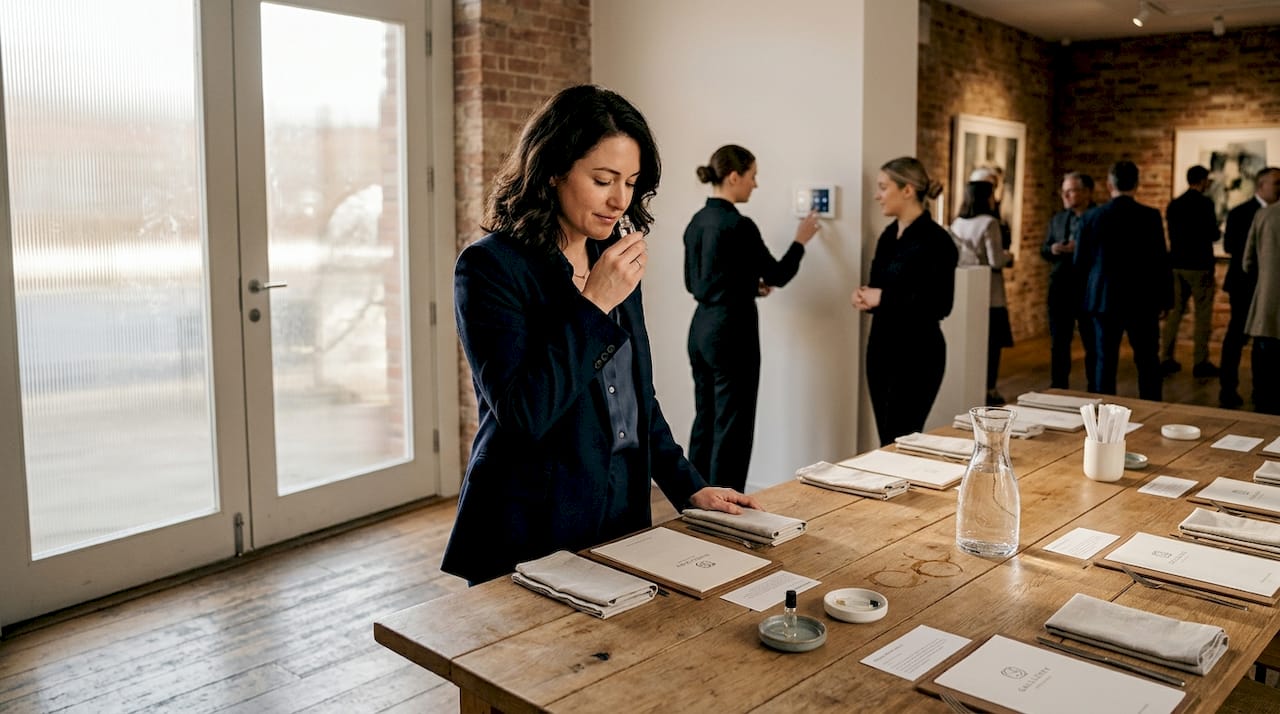
Core mechanics include white-glove service with a 1:4 staff-to-guest ratio, obsessive attention to detail such as custom scents and floral arrangements, exclusivity via invite-only access and private venues, and multi-sensory experiences blending physical scenography and digital phygital elements. Let's unpack what each of these looks like in practice.
Service architecture: The 1:4 staff-to-guest ratio isn't just a hospitality benchmark. It's a message. When a guest never waits, never searches for help, and never feels unattended, they internalize that experience as a reflection of the brand's standards. Personalized event touches at this level require exhaustive pre-event planning and skilled event staffing built around discretion and intuition.
Multi-sensory environment design: Luxury experiences engage every sense intentionally. Custom scents diffused through the venue. Curated soundscapes that shift as the event progresses. Lighting calibrated to flattering color temperatures. Florals chosen not just for beauty but for symbolic alignment with the brand narrative. These details work together to create an atmosphere guests feel before they consciously register it. For deeper event decor strategies, visual storytelling through art and installation is often underutilized.
Phygital integration: Modern affluent audiences expect both physical richness and digital sophistication. A tactile, handcrafted invitation paired with a personalized digital pre-event journey is now standard expectation at the top tier.
| Feature | Mass-market event | Luxury event |
|---|---|---|
| Guest ratio | High volume, minimal staff | 1:4 staff-to-guest |
| Venue | Accessible, scalable | Private, exclusive |
| Sensory design | Functional | Fully curated |
| Access model | Open ticket | Invitation only |
| Success metric | Attendance numbers | Sentiment and conversion |
Pro Tip: The detail guests remember most is rarely the largest. It's the one that made them feel personally seen. A handwritten note on their preferred drink order at their seat speaks louder than a celebrity keynote.
Luxury event marketing ROI: The measurement paradox and real impact
Here's where many luxury marketing executives hit friction. Traditional ROI frameworks demand clear attribution: spend X, generate Y in sales. Luxury event marketing resists that logic, and for a good reason.
Precise ROI tracking undermines luxury positioning by commoditizing experiences. When you treat a curated guest dinner as a lead-generation funnel with measurable close rates, you've already broken the spell. Luxury guests are acutely sensitive to transactional intent. The moment they sense they're being converted rather than celebrated, trust erodes.
The better framework is delayed and qualitative measurement. Track invitation acceptance rates as a proxy for brand desirability. Monitor sentiment shifts through post-event conversations and relationship depth. Observe long-term behavioral changes: referrals, reactivated relationships, accelerated partnership discussions that began over dinner and closed six months later.
The market context here is significant. The corporate luxury events market was valued at $152.5 billion in 2020 and is projected to reach $526.2 billion by 2030, growing at a CAGR of 14.5%, driven by experiential demand, globalization, and hybrid formats. That growth rate reflects executive confidence in qualitative impact, not a sudden improvement in short-term attribution modeling.
| Metric type | Traditional event | Luxury event |
|---|---|---|
| Primary KPI | Ticket revenue | Brand sentiment |
| Attribution window | 30 days | 12 to 36 months |
| Success indicator | Attendance count | Invitation acceptance rate |
| Network effect | Low | High (referral-driven) |
The most sophisticated luxury brands measure private events ROI through a combination of qualitative indicators and long-term relationship outcomes. Some also layer in geo frame marketing to capture behavioral data from attendees post-event without disrupting the guest experience during the event itself.
Innovative strategies for luxury event marketers
Understanding impact is one thing. Actively engineering it is another. The leading luxury brands in 2026 are not just hosting better events. They're building strategic ecosystems around them.
Here are the most effective approaches being deployed right now:
- Global event alignment: Luxury brands align with events like Coachella, Milan Design Week, and Art Basel to create satellite experiences that capture cultural momentum without competing with it. The strategy is to orbit a cultural moment rather than manufacture one from scratch.
- Scarcity engineering: Waitlists, tiered invitation structures, and limited-release access windows create desire before a single attendee arrives. Exclusivity is not just a guest list decision. It's a communication strategy that begins months before the event.
- AR and VR integration: Augmented and virtual reality layers allow modern affluent audiences to experience brand environments beyond physical limits. A luxury automaker can place a guest inside a prototype years before production. A jeweler can let a guest visualize a commission in real time.
- Cultural ecosystem building: One-off events generate one-off impact. Brands that build recurring, interconnected event touchpoints, private dinners, curated retreats, intimate previews, create a cultural ecosystem that guests want to belong to year-round.
- Social amplification by design: Engineer moments specifically for high-value social sharing by the right people. One image from a credible, influential guest generates more brand equity than a paid campaign reaching millions.
For executives benchmarking performance, VIP conversion rates run 3x higher from experiential campaigns than standard digital channels, with overall ROI benchmarks of 25 to 34% from well-executed experiential programs.
Pro Tip: Explore corporate retreat strategies as a vehicle for ecosystem building. A curated multi-day retreat with your top 20 clients generates more relationship depth than 20 separate meetings across a year. The intimacy of shared unique experiences accelerates trust in ways no digital touchpoint can replicate.
What most brands get wrong—and what actually drives luxury event success
We've seen brands invest heavily in production quality and still leave guests unmoved. The room was beautiful. The catering was impeccable. But nothing felt intentional. That's the real failure point.
The mistake is treating luxury events as elevated versions of standard events. Better food, bigger budget, nicer venue. That's not luxury. That's expensive.
True luxury event marketing is built on qualitative impact: the feeling a guest can't quite articulate but absolutely won't forget. That means prioritizing sentiment, exclusivity perception, and cultural resonance over any short-term sales attribution model. Brands that think in quarters will optimize for the wrong things every time.
Think in decades. The guest who attended your private dinner in 2024 and referred two key partners in 2026 didn't show up in your 30-day post-event report. But they showed up where it actually matters. Build your brand experience expertise around that timeline, and your events will consistently outperform anything a traditional marketing channel can produce.
Take your luxury events further with expert partners
The strategies in this article are actionable, but execution at the luxury level demands more than a strong concept. It requires flawless production, trusted vendor networks, and a team that understands what's at stake when the guest list includes your most valuable relationships.
At King Sixteen, we work with established luxury brands to design and execute experiential marketing programs that go far beyond the event itself. From full-scale activations to intimate private events, our turnkey model handles everything so you can focus on the relationship. If you're ready to build something memorable, explore our event services and let's start the conversation.
Frequently asked questions
What distinguishes luxury event marketing from traditional event marketing?
Luxury event marketing prioritizes exclusivity, personalization, and immersive experiences for high-net-worth audiences rather than mass promotion and broad reach. The guest experience itself is the primary product, not attendance volume.
How is ROI measured in luxury event marketing?
ROI is measured through qualitative metrics like sentiment, exclusivity perception, and VIP conversion rates. Precise tracking undermines luxury positioning, so successful brands favor long-term cultural impact and invitation acceptance rates over short-term sales attribution.
What are the top strategies for luxury event marketing in 2026?
Leading strategies include global event partnerships, AR/VR integration, scarcity-driven waitlists, and building cultural ecosystems that foster ongoing exclusivity and brand loyalty across the year.
Why is personalization critical for luxury event marketing?
Personalization creates the emotional connection that sets luxury brands apart from competitors, leading to higher guest engagement, stronger loyalty, and meaningfully higher repeat customer rates among affluent clientele.
Recommended
- King Sixteen | Discover Unique Experiences — Get Started
- Experiential Marketing | Elevate Your Brand Experience - Act Now — King Sixteen
- Event Services | Elevate Your Event Today — King Sixteen
- Event data: the key to impactful marketing in 2026
- Yacht ownership exclusivity: options, costs, and what sets you apart
- Why roses elevate business gifts: elegance and impact | OnlyRoses - UK