
Every senior marketer knows the pressure: your brand shows up, spends the budget, and still walks away wondering whether anyone actually felt something. Attention is cheap now. Venues are bigger, production values are higher, and competitors are throwing money at moments that disappear by Monday morning. The brands that consistently win are the ones building experiences around strategic criteria, not instinct. Immersive experiences deliver 91% more positive feelings and push 85% of attendees toward a purchase decision. That gap between "attended" and "converted" is exactly where strategy lives. Here are five proven ways to close it.
Table of Contents
- Define a data-driven creative brief for brand experiences
- Leverage immersive and shareable brand moments
- Build brand communities through co-creation and collaboration
- Engineer event quality and manage risks for lasting impact
- Rethinking brand impact: Lessons from immersive campaigns
- Elevate your brand impact with immersive solutions
- Frequently asked questions
Key Takeaways
| Point | Details |
|---|---|
| Data-driven planning | Successful brand impact starts with clear criteria and measurable objectives. |
| Immersive experience | Creating shareable joy and hybrid activations amplifies both reach and purchase intent. |
| Community loyalty | Collaborative brand communities deepen engagement and drive retention. |
| Quality management | Investing in high production values and risk mitigation protects brand reputation. |
| Strategic promotion | Connecting immersive strategies with expert partners delivers actionable next steps. |
Define a data-driven creative brief for brand experiences
The single biggest mistake brands make is starting with the idea before defining the outcome. A strong activation begins with a clear brief that locks in goals, audience segments, preferred formats, and the KPIs that will tell you whether any of it worked. Without that foundation, even the most beautiful installation becomes guesswork.
Start by asking three grounding questions: What behavior do we want to change? Who are we trying to move, and what do they already believe about us? What does success look like in concrete, measurable terms? These aren't philosophical questions. They're the architecture that design impact in advertising professionals use to translate creative vision into real-world results.
Once objectives are set, use data to inform creative decisions and budgeting. Audience segment research, past activation performance, and competitor benchmarking all belong in the brief before a single concept is sketched. This is how you avoid over-investing in formats that don't resonate and under-investing in the moments that do.
Best-in-class event briefs consistently target measurable ROI from the start. Average event ROI sits between 25 and 34%, while high-performing programs reach a 5:1 return on investment.
- Define the behavioral goal and target audience segment
- Identify the formats that match your audience's expectations
- Set KPIs before creative development begins
- Allocate budget against projected returns, not just production costs
- Build in feedback loops for real-time data capture during the event
Pro Tip: Centralize your planning around event data planning tools that track dwell time, user-generated content volume, and purchase intent signals. These metrics give you actionable insights that raw attendance numbers never will.
With objectives and metrics set, consider how immersive experiences drive memorable impact at the moment that counts most.
Leverage immersive and shareable brand moments
Immersion is not just about spectacle. The best activations are engineered to make people feel something specific, then give them a natural reason to share that feeling with their networks. That combination of emotion and social amplification is what separates a good event from one that continues working for your brand weeks after the doors close.
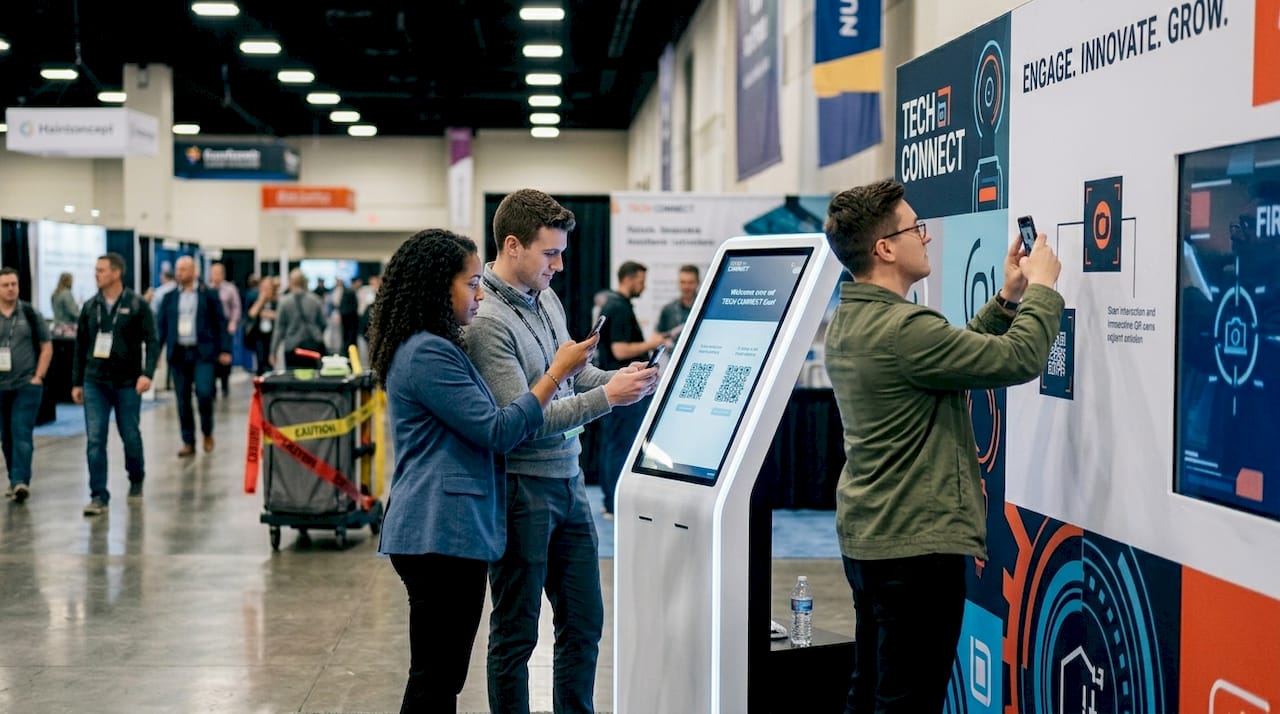
Creating moments of shareable joy is one of the clearest differentiators for brands competing in crowded categories. It's not about being the loudest. It's about being the most memorable in the right way.
Key features of high-performing immersive activations:
- Multisensory design: Engaging sight, sound, touch, and even scent to deepen emotional memory
- Social amplification hooks: Built-in moments, backdrops, or interactions designed for organic sharing
- Digital-physical integration: Hybrid formats that extend the experience beyond the room and the day
- Personalization layers: Customized touchpoints that make each attendee feel the experience was built for them
- Brand storytelling techniques: Narrative threads woven through every element of the environment
The numbers back this up. Visa Live at Le Louvre is a strong case study in what happens when immersive design meets strategic intent:
| Metric | Result |
|---|---|
| Total impressions | 9.3 million |
| Social engagement rate | Above benchmark |
| Livestream views | Significant reach beyond venue |
| Gen Z relevancy lift | +6% |
Those outcomes don't happen by accident. They're the result of experiential marketing strategies built around audience insight from the start.
Pro Tip: Integrate digital amplification from day one of planning. Design UGC moments intentionally, brief your staff on encouraging sharing, and build a content capture plan that runs parallel to the live experience. The extended ROI from earned media often exceeds the event's immediate impact.
Brands maximize impact by fostering ongoing communities, not just one-time moments.
Build brand communities through co-creation and collaboration
An activation that ends when the event ends is a missed opportunity. The brands building the most durable impact are treating their audiences as participants, not spectators. Community is the infrastructure that turns a great moment into a sustained relationship.
Brand communities thrive when they're built on three connected pillars: conversation, collaboration, and co-creation. Glossier built its early identity by treating customers as co-designers. GoPro turned its users into content creators whose work became the brand's most powerful marketing asset. These aren't flukes. They're repeatable strategies.
| Community method | Mechanism | Outcome |
|---|---|---|
| Conversation | Forums, social listening, live Q&A | Deeper brand understanding and trust |
| Collaboration | Co-designed products, ambassador programs | Shared ownership and advocacy |
| Co-creation | User content, community-led campaigns | Organic reach and sustained loyalty |
Real-world activations that execute this well often include:
- Limited-edition products developed with community input before launch events
- Pop-up experiences where attendees contribute to an evolving brand installation
- Post-event digital spaces where the conversation continues and UGC is amplified
- Partnership campaigns that invite community members into the brand story as equals
Purpose-driven activations build the kind of loyalty that withstands market pressure and competitor noise. When your audience feels like co-authors of your brand story, retention becomes a byproduct of belonging.
Your experiential community strategy should treat every touchpoint as a relationship deposit, not just a brand impression. The cumulative effect compounds over time in ways that single activations never achieve alone.
While communities are organic, events must be thoughtfully engineered to sustain impact.
Engineer event quality and manage risks for lasting impact
High expectations are the double-edged reality of experiential marketing. When you raise the bar with immersive design, you also raise what audiences expect to walk into. Immersive experiences raise expectations significantly, and when the delivery falls short, the brand damage travels faster than the original buzz.
Execution risk is real. Bad experiential design in historic or unconventional venues often stems from underestimating the engineering constraints of the space. Flow, acoustics, sight lines, structural limitations, and safety requirements all compound in environments that weren't built for branded events. Skipping the detailed site assessment is where costly mistakes begin.
Here's a practical framework for engineering quality into every activation:
- Run a full site audit before committing to a venue. Assess load capacity, power infrastructure, egress, and acoustic properties.
- Build production redundancy into AV, lighting, and digital systems so a single failure doesn't collapse the experience.
- Invest in event staffing best practices with trained staff who understand both the brand story and the operational run-of-show.
- Set realistic timelines that account for fabrication lead times, venue restrictions, and rehearsal periods.
- Create a risk register that maps potential failures to contingency responses before the event goes live.
The return on that investment in quality is well documented. 48% of brands report 300 to 500% ROI when events are planned with rigorous production standards from the outset.
Pro Tip: Resist the pressure to rush activations to market when a timeline is tight. A scaled-back experience executed flawlessly outperforms an ambitious concept delivered poorly every single time. Explore event delivery solutions that build quality control into the process from day one.
Now that the core strategies are outlined, let's look at how to synthesize these into actionable decisions.
Rethinking brand impact: Lessons from immersive campaigns
After years of building immersive campaigns for brands like Porsche, Audi, and Ray-Ban, we've learned something the industry doesn't say loudly enough: the brands chasing viral moments are often the ones with the weakest long-term positioning.
Viral is a side effect, not a strategy. The activations that generate real business results are the ones built around authentic audience insight and executed with genuine craft. Prioritize authenticity and audience understanding over spectacle, and integrate digital amplification as an extension of the live experience rather than a substitute for it.
What we consistently see is that the brands winning at experiential marketing are treating event marketing insights as strategic inputs, not post-event reports. They're building hybrid physical-digital approaches that extend reach while managing execution risk. And they're measuring outcomes that actually connect to revenue, not just impressions.
The uncomfortable truth is that most brands underinvest in quality and overinvest in concept. A tighter, better-executed activation with a smaller footprint will almost always outperform a sprawling event that stretches the team and the budget beyond their limits. Build with intention. Measure what matters. Repeat what works.
Elevate your brand impact with immersive solutions
The strategies in this article aren't theoretical. They're the frameworks we use every day at King Sixteen to help established brands move from visibility to genuine impact. If you're planning a product launch, a branded experience, or a large-scale activation and you need a partner who handles every detail without margin for error, we're ready to help.
Our experiential marketing services cover the full scope from concept and fabrication to staffing, AV, and digital integration. Whether you need a turnkey activation or precise event management expertise for a complex production, King Sixteen brings the craft and the strategic rigor your brand deserves. Let's build something your audience won't forget.
Frequently asked questions
What is the average ROI for immersive brand events?
Most well-executed events deliver a 25 to 34% average ROI, with high-performing programs reaching a 5:1 return on investment.
How do immersive experiences drive purchase intent?
85% of attendees report a high likelihood to purchase following immersive brand events, driven by positive associations and emotionally resonant moments.
What are the main risks in experiential brand marketing?
Overhyping poorly planned events, especially in historic or unconventional venues, can result in logistical failures and viral backlash that erodes brand trust quickly.
How can brands build lasting communities?
Brands foster loyalty by engaging audiences in ongoing conversation, collaboration, and co-creation rather than treating events as one-time transactions.
What metrics go beyond impressions for measuring brand impact?
Successful brands track dwell time, user-generated content volume, purchase intent signals, and direct ROI alongside raw impression counts.
Recommended
- Event data: the key to impactful marketing in 2026
- Experiential Marketing | Elevate Your Brand Experience - Act Now — King Sixteen
- King Sixteen | Discover Unique Experiences — Get Started
- Social Media Services | Boost Your Social Reach—Get Started Today — King Sixteen
- Boost brand impact with custom print packaging in 2026
- Co to branding wizualny i jak go skutecznie zastosować w MŚP w 2026 - Coolheads - Fotografia biznesowa