
A brand environment is the physical, spatial manifestation of your brand identity, designed to make visitors feel your brand before they read a single word. This brand environment setup guide is built for marketing professionals and brand strategists who need more than aesthetics. You need a repeatable process that integrates strategy, design, and execution from day one. Whether you are producing a product launch for Porsche, activating a space for Ray-Ban, or building a conference presence for a high-value B2B brand, the principles here apply. The difference between a forgettable booth and an immersive brand experience comes down to how well you plan before a single panel gets fabricated.
What does a brand environment setup guide actually cover?
A brand environment setup guide covers the full arc from discovery through post-install inspection. The industry term for this discipline is environmental branding, which encompasses spatial design, wayfinding, material selection, lighting, and the physical expression of brand strategy across a built space. This guide treats environmental branding as a strategic function, not a decorative one. Kingsixteen has executed this process for brands like Audi, Fossil, and the Natural Diamonds Council, and the workflow is consistent: strategy first, design second, fabrication third.
The scope of environmental branding ranges from a single accent wall to a full event build-out. Branded environment projects in 2026 range from $5,000 to over $50,000 depending on scope, square footage, and material complexity. That range reflects a critical truth: the decisions you make in the planning phase determine your budget ceiling more than any vendor quote will.
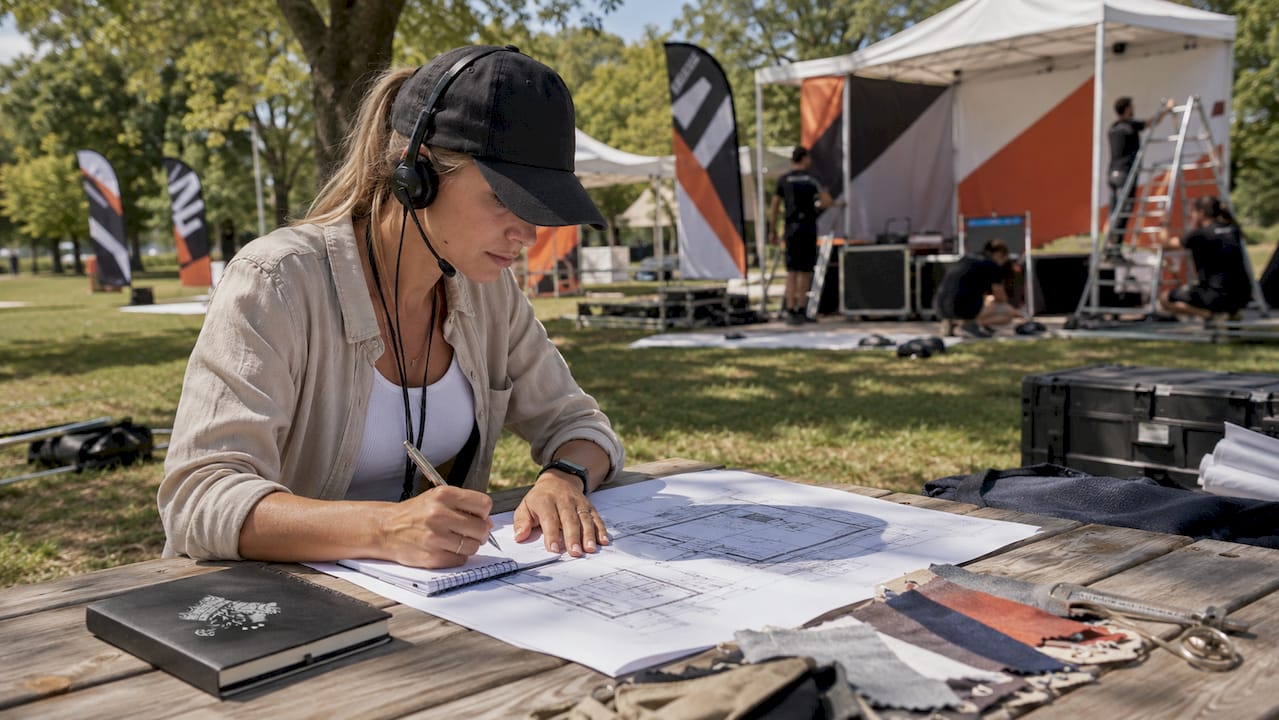
What prerequisites and tools do you need before setup?
The most expensive mistakes in environmental branding happen before the design phase begins. Skipping discovery is the fastest way to produce a space that looks polished but feels off-brand.
Discovery requirements you cannot skip:
- Stakeholder interviews: Interview 6–10 internal stakeholders and 5–10 customers to surface brand perception gaps and spatial expectations.
- Competitive audit: Analyze 8–15 competitors to understand how the category communicates spatially and where differentiation opportunities exist.
- Site survey: Measure the space, document ceiling heights, power access, load-in restrictions, and ADA requirements. No design should begin without this data.
- Brand identity readiness: Confirm your brand strategy and visual system are documented. A full brand identity development process typically takes 7–9 weeks including research, strategy, visual design, and documentation.
Budget and timeline reference:
| Project Type | Estimated Budget | Typical Timeline |
|---|---|---|
| Accent wall or single installation | $5,000–$15,000 | 3–5 weeks |
| Mid-scale event activation | $15,000–$35,000 | 6–10 weeks |
| Full build-out or multi-zone environment | $35,000–$50,000+ | 10–16 weeks |
Project management tools like Asana, Monday.com, or Notion help coordinate vendor timelines, design approvals, and fabrication milestones. Assign a single point of contact on your team who owns every vendor relationship.
Pro Tip: Run your site survey before briefing your designer. Dimensions, lighting conditions, and load-in constraints will reshape your concept more than any mood board will.
How do you design and build a branded environment step by step?
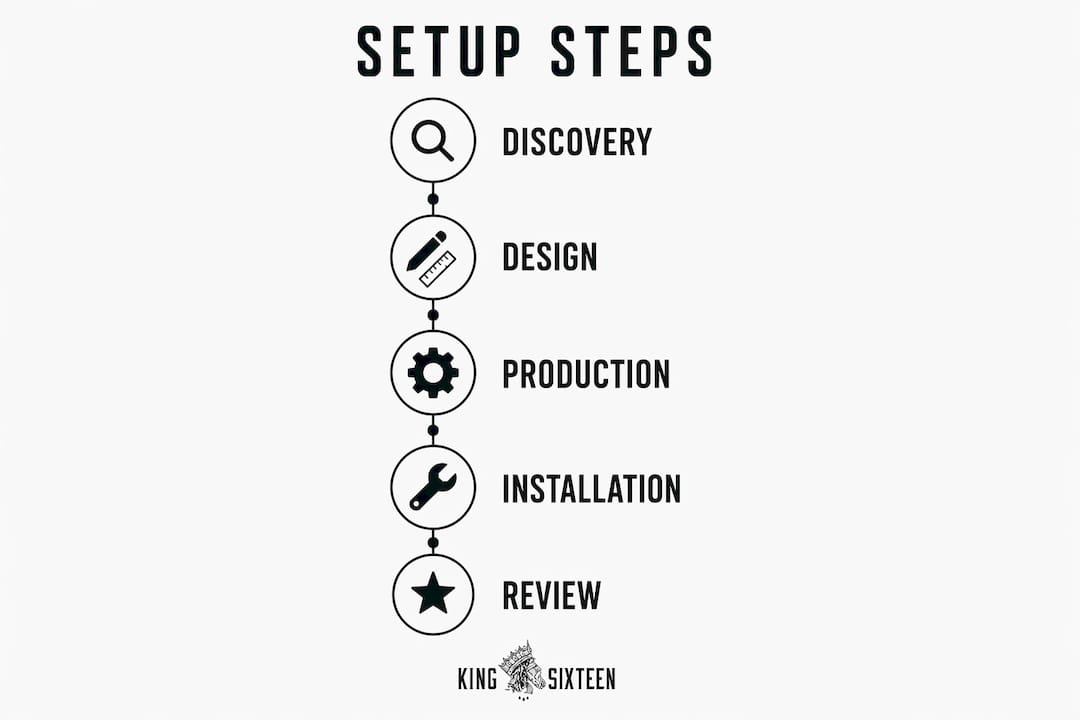
The process Kingsixteen uses mirrors the workflow that Amplify Graphics & Branding outlines as industry standard: discovery, concept design, production, installation, and post-install walkthrough. Each phase has clear inputs and outputs.
1. Discovery and concept development
Start with your brand strategy document. Every spatial decision, from color temperature to material texture, should trace back to a brand attribute. If your brand is precision-engineered and minimal, your environment should reflect that through clean lines, controlled lighting, and deliberate negative space. Concept development produces a mood board, a spatial layout sketch, and a materials shortlist.
2. Layout and design
Design the visitor journey before you design any individual element. Map entry points, primary focal zones, secondary engagement areas, and exit paths. Effective brand environments balance design, engineering, and visitor flow to convert engagement into real interaction. A visually stunning space that creates a traffic bottleneck at the entrance will underperform every time.
ADA compliance is non-negotiable. Plan for accessibility during the design phase, not after fabrication. Aisle widths, surface transitions, and signage heights all require compliance checks before production begins.
3. Material selection and production
Choose materials based on the environment's traffic level and duration. High-traffic venues require substrates and finishes that resist peeling and scuffing, not just materials that photograph well. Foam core looks great in a mockup and fails in a three-day activation. Dibond, aluminum composite, and fabric tension systems hold up under real event conditions.
Lighting is a production decision, not a finishing touch. Lighting significantly influences customer perception and mood, directly affecting how long visitors stay and how they feel about the brand. Specify your lighting fixtures during the production phase so power requirements are built into the installation plan.
4. Installation logistics
Coordinate your install schedule around the venue's load-in window and other vendor timelines. Assign a dedicated install lead who has the approved layout, a punch list, and direct contact with the venue operations team. Never assume the venue crew will interpret your design intent correctly without documentation.
5. Post-install walkthrough
Walk the space as a visitor would. Check sightlines, lighting angles, material seams, and wayfinding clarity. A warranty inspection at this stage catches issues before the event opens, not during it.
Pro Tip: Build a 10% contingency into your production budget specifically for material substitutions. Supply chain delays are common, and your fabricator will need flexibility to source equivalent materials without stopping production.
How do you optimize a brand environment for engagement and recall?
The ultimate test of a branded environment is whether it communicates your brand clearly without any text or logos, through architecture, lighting, and spatial layout alone. That is a high bar, and it is the right one to aim for.
Here is how to get there:
- Use lighting to direct attention. Warm, focused lighting draws visitors toward key brand moments. Cold, diffuse lighting flattens the space and reduces dwell time. Treat your lighting plan like a stage director treats a spotlight.
- Protect your negative space. Empty space is intentional and crucial to prevent visitor overwhelm and direct attention effectively. Resist the urge to fill every surface. The brands that feel premium almost always have more open space than you expect.
- Build a cohesive visual identity system, not a logo parade. Color, texture, material, and form language should carry the brand identity. Logos are confirmation, not communication.
- Design predictable wayfinding. Visitors should never feel lost or uncertain about where to go next. Consistent signage hierarchy and spatial cues reduce friction and increase time spent in the environment.
"The retail environment should feel like the brand itself beyond signage, supporting deeper brand recall." — Sergio Mannino Studio
For a deeper look at environmental branding strategies that improve recall and visitor engagement, the principles above apply across retail, events, and permanent installations equally.
What are the most common brand environment setup challenges?
Even well-planned projects hit friction. Knowing where problems typically emerge lets you build solutions into your process before they become crises.
- Scope creep and budget overruns. The most common cause is adding design elements after the production brief is locked. Every addition post-brief carries a premium. Freeze your scope before fabrication begins.
- Vendor coordination delays. Fabricators, AV teams, and installation crews operate on different schedules. A single delayed vendor can cascade into a missed install window. Build buffer days into your timeline between production completion and install start.
- Material durability failures. Choosing materials based on visual mockups without considering real-world conditions is a recurring mistake. Specify materials for the environment's actual traffic level and duration.
- Strategy and design misalignment. This happens when brand strategists and spatial designers work in separate workstreams. Integrating brand strategy and spatial design from project start avoids expensive rework and inconsistent messaging. Put both disciplines in the same briefing room on day one.
- Ignoring visitor flow until installation. Layout decisions made without traffic modeling create congestion points that no amount of post-install adjustment can fully fix.
Pro Tip: Schedule a pre-production alignment call with your fabricator, AV lead, and install crew together. Catching conflicts between their scopes before production starts saves more time than any other single action.
For more on event branding strategies that prevent these common failures, the principles of early integration and cross-functional alignment apply across every project type.
Key takeaways
A successful brand environment requires integrating strategy, spatial design, and execution from the first briefing, not as sequential handoffs.
| Point | Details |
|---|---|
| Start with discovery | Interview 6–10 internal stakeholders and audit 8–15 competitors before any design begins. |
| Budget to scope | Projects range from $5,000 to $50,000+; material and square footage decisions set your ceiling early. |
| Design for visitor flow | Map traffic patterns and engagement zones before designing individual elements. |
| Protect negative space | Open, uncluttered zones direct attention and signal brand quality more effectively than filled surfaces. |
| Integrate strategy and design | Align brand strategists and spatial designers from day one to prevent rework and messaging gaps. |
What i've learned after years of building brand environments
The biggest misconception I see from marketing teams is treating the physical environment as a production task rather than a strategic one. They hand a brief to a fabricator after the brand strategy is finalized, and then wonder why the space feels disconnected from the brand they spent months defining.
Architectural branding experts are clear on this: brand identity and physical space should be designed simultaneously for the result to feel unified and authentic. That is not a design philosophy. That is a project management decision. It means your brand strategist and your spatial designer need to be in the same room at the briefing, not in sequential handoffs.
The other thing I would push back on is the obsession with visual complexity. The environments that generate the most social sharing and the strongest brand recall tend to be the most restrained. One powerful focal point, deliberate lighting, and a material palette that feels intentional will outperform a maximalist build every time. Visitor flow is the invisible metric that separates good environments from great ones. You can feel it immediately when you walk a space, and you almost never see it in a design rendering.
My practical recommendation: walk your site survey as a visitor, not as a project manager. Enter from the main access point, move through the space at a normal pace, and note every moment where your attention is pulled, confused, or lost. That walk will tell you more than any design review will.
— Tyler
Ready to build a brand environment that actually performs?
Kingsixteen designs and executes immersive brand environments for high-value brands that need results, not just a good-looking space. From concept through custom fabrication and full installation, we manage every element of the process so your team can focus on the event itself.
We have built activations for Porsche, Audi, Ray-Ban, and Churchill Downs, and our turnkey model covers design, fabrication, AV, staffing, and logistics through a single trusted team. If you are ready to move from planning to execution, explore our experiential marketing services to see how we approach brand environment design and activation from the ground up.
FAQ
What is a brand environment in experiential marketing?
A brand environment is a physical space designed to express a brand's identity through architecture, lighting, materials, and layout. It goes beyond signage to create a sensory experience that communicates the brand without relying on text or logos alone.
How long does it take to set up a brand environment?
Timeline depends on scope. Accent walls and single installations typically take 3–5 weeks, while full event build-outs require 10–16 weeks from discovery through installation.
What budget should i plan for a branded environment?
Branded environment projects range from $5,000 for simple installations to over $50,000 for full build-outs. Material choice, square footage, and installation complexity are the primary cost drivers.
Why does visitor flow matter in brand environment design?
Visitor flow determines how people move through and interact with the space. Poor traffic planning creates congestion and reduces engagement, while a well-mapped layout guides visitors naturally toward key brand moments.
When should brand strategy and spatial design be aligned?
Brand strategy and spatial design should be aligned from the first project briefing. Treating them as sequential workstreams leads to expensive rework and environments that feel visually polished but strategically inconsistent.