In-person activation tactics are live marketing experiences designed to create memorable, interactive connections between brands and consumers. Unlike passive advertising, brand activation, the recognized industry term for this discipline, puts customers inside the story rather than in front of it. The most effective live event marketing strategies combine immersive technology, sensory design, and social sharing mechanics to generate both immediate engagement and lasting brand recall. Most mistakes arise from treating activations as static displays rather than interactive marketing channels aligned with CRM and revenue goals. The tactics below fix that.
1. What are the top in-person activation tactics for customer engagement?
Interactive installations anchor the strongest activations. LED walls, projection mapping, and holographic content pull attendees in physically and hold their attention long enough to create a real brand moment. Interactive LED walls and wearable gamification deliver 47% higher returns in engagement and lead capture than traditional static event setups. That gap is too large to ignore when you are competing for attention at a crowded trade show or festival.
Immersive installations
- Large-format LED walls with real-time branded content
- Projection mapping on architectural surfaces or product displays
- Holographic performers or product reveals for premium launches
- Mixed-reality photo moments that blend physical and digital environments
Wearable tech gamification
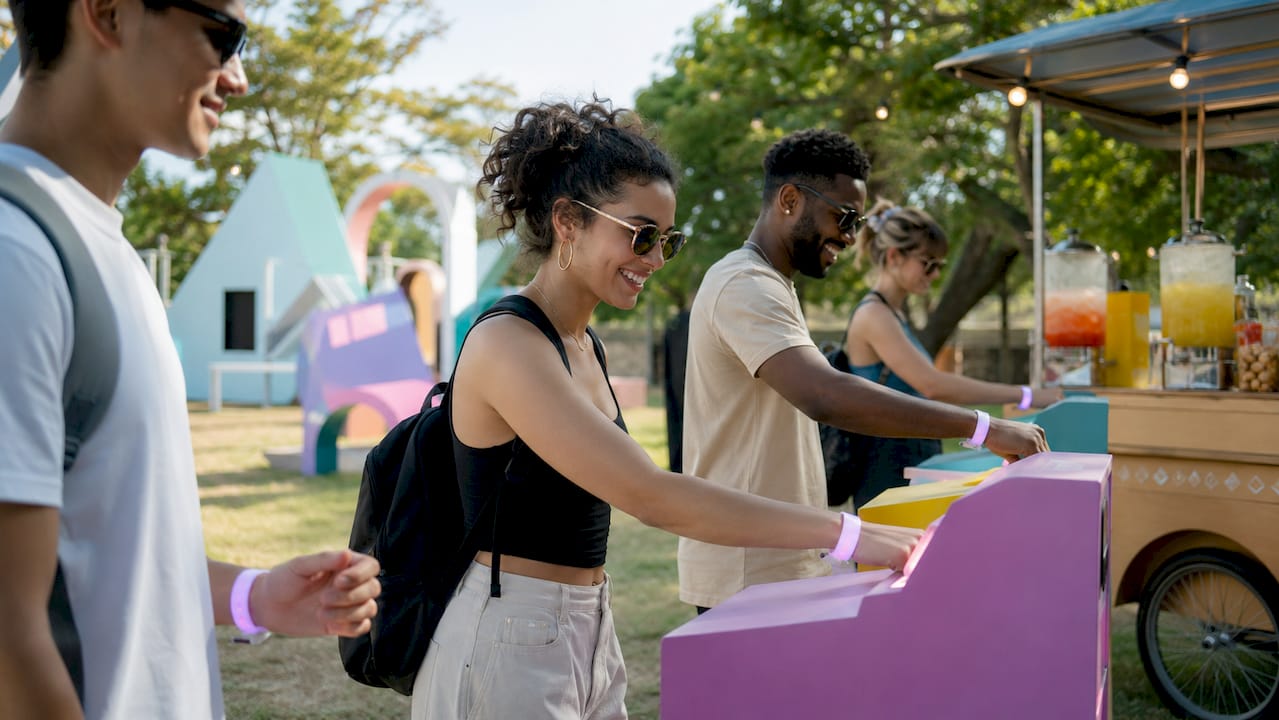
NFC wristbands and LED devices turn passive attendees into active participants. Each tap or scan logs a data point, which feeds directly into your CRM for post-event follow-up. Wearable-tech gamification typically costs 2–3 times a standard single-performer entertainment package. That premium pays back when every interaction becomes a qualified lead rather than an anonymous foot-traffic number.
Pop-up shops and sensory sampling
Pop-ups work because they create urgency. A well-designed sensory sampling event, built around taste, scent, or touch, gives customers a reason to stop, stay, and share. Pair the physical product moment with a digital capture mechanic, such as a QR-linked offer, and you connect the offline experience to your online funnel.
Gamified challenges with immediate rewards
Gamification drives participation best when paired with clear incentives like discounts, exclusive content, or tangible prizes. Vague "enter to win" mechanics underperform. Immediate rewards, redeemable on the spot, convert casual browsers into engaged participants and measurable contacts.
Pro Tip: Design your gamification flow so that every reward redemption requires an email or phone capture. You get the engagement data; the attendee gets the prize. Both sides win.
2. How can marketers design activations that maximize shareability?
Shareability is not accidental. It is an engineering decision made before the first fabrication drawing is approved. Successful activations in 2026 focus on creating shareable moments to generate earned media and extend reach far beyond the event itself. That means designing every visual element with a phone camera in mind.
The four mechanics that drive social sharing at live events:
- Bold, singular visual anchors. One unforgettable installation outperforms ten mediocre ones. Give attendees a clear, beautiful subject to photograph.
- Branded hashtags on every surface. Print them on floors, walls, wristbands, and cups. Friction kills sharing; make the hashtag impossible to miss.
- Live social walls. Display attendee posts in real time at the venue. Seeing your own content on a big screen is a powerful incentive to post again.
- Live streaming integration. Stream key activation moments to extend reach to audiences who are not physically present. This is especially effective for product reveals and performances.
"Creating activations designed for social sharing and user-generated content significantly increases earned media and brand reach. The activation does not end when the event does. Every post, story, and reel extends the campaign's life for days or weeks after the doors close."
Emotional connection is the underlying driver of all of this. People share experiences that made them feel something. Design for emotion first, aesthetics second, and the shares follow naturally. Explore immersive brand activation techniques to see how emotional design translates into measurable social lift.
3. What role does technology play in modern activation tactics?
Technology is the multiplier. The right tech turns a good activation into a data-generating, personalized, measurable marketing channel. The wrong tech, bolted on without integration, creates expensive confusion.
| Technology | Primary benefit | Planning lead time |
|---|---|---|
| AR and VR experiences | Deep immersion, product visualization | 4–6 months |
| Holographic content | Premium brand perception, high memorability | 4–9 months |
| NFC wearables | Real-time data capture, gamification | 2–3 months |
| Interactive polling | Live feedback, audience segmentation | 1–2 months |
| Projection mapping | Large-scale visual impact, flexible content | 4–6 months |
High-end activations involving holographic content or mixed-reality require a lead time of 4–9 months. That timeline accounts for content production, technical rehearsals, and failover planning. Brands that treat holographic activations like a standard AV order consistently run into execution problems.
Leading experiential programs integrate engagement tools directly into CRM systems so every participant interaction generates data. The shift is from counting attendance to attributing revenue. When a wristband tap at a Porsche launch connects to a prospect record in Salesforce, the activation becomes a sales tool, not just a brand moment.
Pro Tip: Build your tech stack from the CRM backward. Decide what data you need post-event, then select the capture technology that delivers it. Choosing tech for its visual appeal without a data plan wastes budget.
Modern experiential teams use NFC wearables and interactive polling integrated with CRM systems to attribute every interaction to marketing outcomes. This approach also supports relationship marketing strategies by turning one-time event contacts into long-term brand relationships through personalized follow-up.
4. Where and when should you deploy face-to-face activation strategies?
Location and timing determine whether a great activation reaches the right people or performs for an empty room. The best on-site marketing tactics are placed where your audience already gathers, not where you wish they would go.
High-impact locations for brand activations:
- Urban high-foot-traffic zones (transit hubs, shopping districts, public plazas)
- Trade shows and industry conferences where buyers are already in a decision mindset
- Music and cultural festivals where emotional openness is high
- Retail environments adjacent to the point of purchase
- Corporate campuses for B2B product demonstrations
Guerrilla activations in urban high-foot-traffic areas can lower costs significantly while delivering high engagement through creativity and surprise. The trade-off is control. Guerrilla formats require permits, contingency plans, and experienced crews who can adapt in real time.
Timing follows complexity. Simple visual installations need 3–6 months of lead time. High-tech, multi-element productions require 4–9 months. Aligning your activation calendar with your brand's campaign windows, product launches, and seasonal demand peaks is the difference between a well-supported activation and one that launches into a marketing vacuum.
Hybrid or phygital activations incorporate remote participant inputs live at venues, engaging both in-person and online audiences simultaneously. Physical activations typically reach thousands locally, while digital experiences can reach millions. Hybrid models close that gap without doubling the budget. For planners building an omnichannel customer experience, phygital activations are the most direct way to connect live events to digital marketing ecosystems.
Key Takeaways
The most effective in-person activation tactics combine immersive technology, social sharing design, and CRM integration to turn live events into measurable, revenue-generating marketing channels.
| Point | Details |
|---|---|
| Design for interaction, not display | Activations built as interactive channels outperform static setups by 47% in engagement and lead capture. |
| Engineer shareability from the start | Bold visual anchors, branded hashtags, and live social walls drive user-generated content that extends campaign reach. |
| Integrate tech with your CRM | NFC wearables and interactive polling only deliver ROI when connected to post-event marketing and attribution systems. |
| Plan lead times by complexity | High-tech activations need 4–9 months; simpler installations need 3–6 months. Build your calendar accordingly. |
| Match location to audience behavior | Deploy activations where your audience already gathers, whether at trade shows, urban hubs, or cultural festivals. |
The activation mistake I see most often
After years of working on activations for brands like Porsche, Ray-Ban, and Churchill Downs, the single most common mistake I see is this: marketers spend the majority of their budget on the build and almost nothing on the data strategy. The installation looks incredible. The photos are stunning. And then, two weeks later, nobody can tell you how many qualified leads the activation generated or what the cost per engagement was.
The brands that get the most from their live events treat the activation as a channel, not a moment. They know before the first nail is driven what data they need, how they will capture it, and how it feeds into the next marketing touchpoint. That discipline is what separates a beautiful event from a beautiful event that also moves revenue.
The other shift I am watching closely is the maturation of hybrid formats. A few years ago, "hybrid" meant streaming a keynote to a Zoom audience. Now it means remote participants triggering physical elements at the venue in real time. That is a fundamentally different experience, and brands that figure it out early will have a significant advantage in reach and engagement efficiency. The step-by-step guide to brand activations we put together at Kingsixteen reflects this shift. Planning for both audiences from day one produces better outcomes than retrofitting a digital layer onto a physical event after the fact.
— Tyler
How Kingsixteen brings activation tactics to life
Kingsixteen is a high-end experiential marketing agency that designs and executes the kind of activations described throughout this article, from holographic product reveals to NFC-powered gamification environments.
Every project runs through a turnkey model covering concept, fabrication, AV, staffing, logistics, and CRM integration. That means you get a single accountable partner instead of a fragmented vendor list. If you are planning a product launch, conference, or brand activation and need it executed without margin for error, explore Kingsixteen's experiential marketing services to see what full-scale, data-driven activation looks like in practice. Brands like Audi, Fossil, and the Natural Diamonds Council have trusted this process. Yours can too.
FAQ
What are in-person activation tactics?
In-person activation tactics are live, interactive brand experiences designed to engage consumers directly and create measurable marketing outcomes. They differ from traditional advertising by placing the audience inside the brand experience rather than in front of it.
How long does it take to plan a brand activation?
Lead times depend on complexity. Simple visual installations need 3–6 months, while high-tech activations involving holographic content or mixed-reality require 4–9 months of planning and production.
How do activations generate data and ROI?
The most effective activations connect NFC wearables, interactive polling, and gamification mechanics directly to CRM systems, so every attendee interaction becomes a trackable data point tied to marketing attribution and revenue outcomes.
What makes an activation shareable on social media?
Shareable activations include a bold, singular visual anchor, branded hashtags on every surface, live social walls displaying attendee posts in real time, and emotional design that gives participants a reason to share beyond aesthetics.
Where should marketers deploy live event marketing strategies?
Deploy activations where your audience already gathers: trade shows, urban high-foot-traffic zones, cultural festivals, and retail environments. Guerrilla formats in busy urban areas deliver high engagement at lower media spend through creativity and surprise.