Event design is defined as the deliberate, strategic process of shaping every physical, sensory, and narrative element of an event to produce specific attendee behaviors and business outcomes. The role of event design goes far beyond selecting furniture or color palettes. It determines whether your event creates genuine brand impact or simply fills a room. Industry analysis confirms that design is a core strategic function, not decoration, directly influencing whether events generate tangible business value and change attendee behavior. For marketing and event professionals, understanding this distinction is the difference between producing an event and building a brand experience that people remember and act on.
What is the role of event design in brand strategy?
Event design is the architecture of experience. The industry term most professionals use is experiential design, which encompasses spatial planning, sensory programming, narrative structure, and environmental branding working together as a system. Each element serves a purpose tied to a business objective.
Well-designed events make attendees 74% more likely to purchase from or recommend the associated brand. That number tells you something critical: design is a revenue function, not a production detail. When a brand invests in thoughtful spatial flow, purposeful lighting, and cohesive visual storytelling, it creates the conditions for trust, connection, and conversion.
Corporate event design translates brand identity into a physical experience through layout, lighting, structures, and visuals. This translation is what makes events memorable and aligned with brand messaging. Think of it as your brand's values made tangible. A Porsche product launch does not feel like a software conference because every design decision, from the floor plan to the ambient sound, reinforces a specific brand promise.
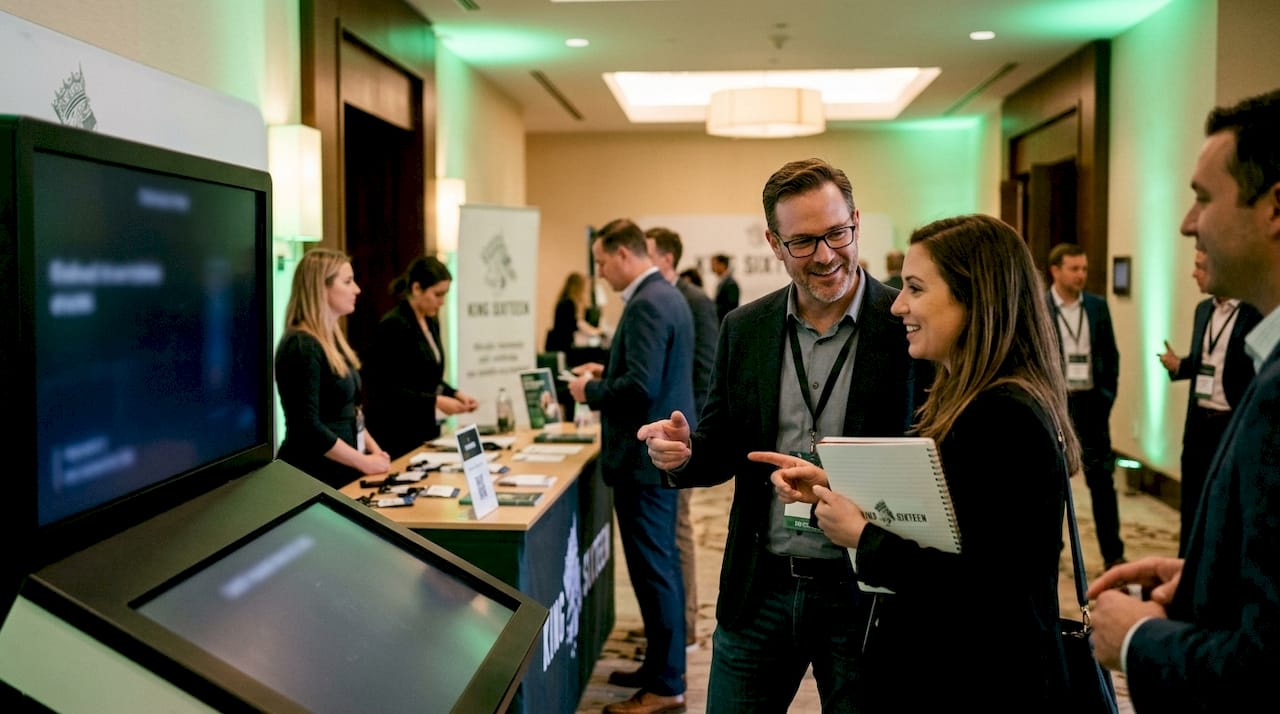
The IMEX Frankfurt 2026 education report frames design as a fundamental strategic lever that determines whether events generate enduring business value and behavioral shifts. That framing should change how you budget, brief, and evaluate your events.
How does event design influence attendee behavior?
Design shapes behavior before a single speaker takes the stage. Layout, lighting, and sensory cues work on attendees at a subconscious level, guiding movement, setting mood, and priming people for the interactions you want them to have.
Spatial flow and layout determine how attendees move through a space and who they encounter along the way. An open, circular seating arrangement signals collaboration. A theater-style layout signals authority and passive reception. Neither is wrong, but each produces a different behavioral outcome. If your goal is networking and co-creation, your floor plan must reflect that goal, not contradict it.
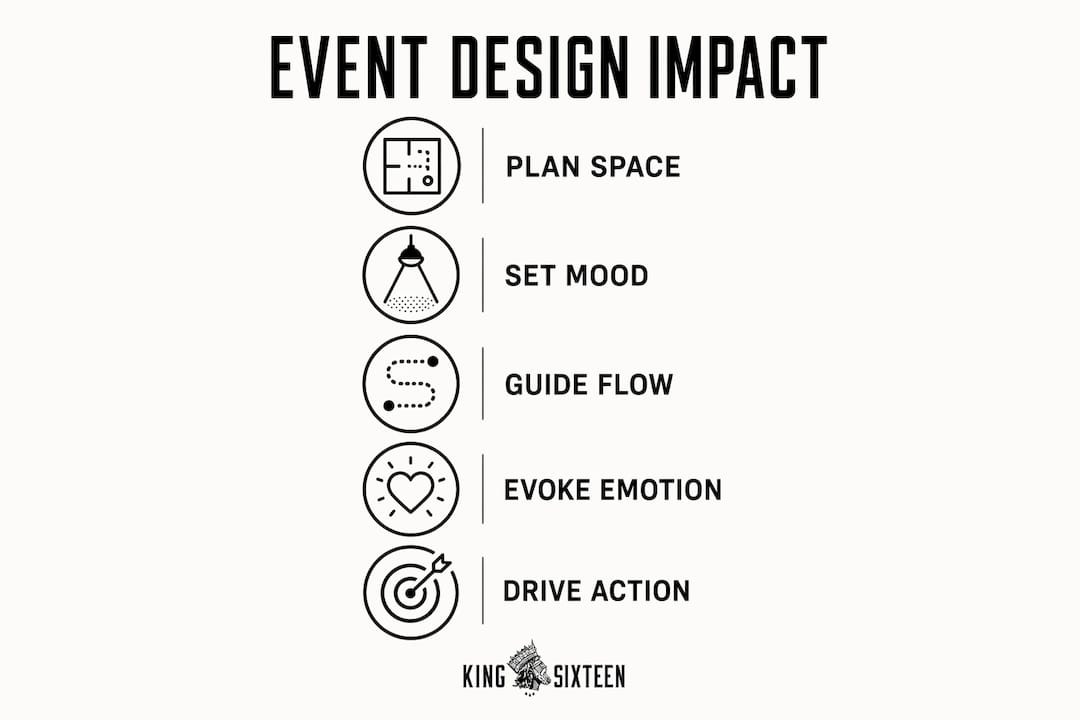
Lighting as a behavioral tool is one of the most underused levers in event design. Research shows that warm, soft light fosters intimacy and connection, while bright, open lighting stimulates energy and sociability. A product reveal benefits from dramatic, focused lighting that creates anticipation. A networking reception benefits from warmer, lower light that reduces social friction. The psychology of color and light in branded environments directly affects how confident and comfortable attendees feel.
Multi-sensory design deepens immersion and strengthens memory. Scent, sound, texture, and temperature all contribute to how an experience is encoded and recalled. Events that engage multiple senses create stronger emotional associations with the brand, which is the foundation of long-term loyalty.
Key behavioral design elements to prioritize:
- Arrival sequence: The first 90 seconds set the emotional tone for everything that follows.
- Wayfinding: Clear, branded navigation reduces friction and keeps energy high.
- Conversation zones: Intentional seating clusters encourage interaction between specific attendee groups.
- Sensory anchors: A signature scent, a recurring sound motif, or a tactile brand element creates memory hooks.
- Exit experience: How attendees leave shapes what they remember and what they share.
Pro Tip: Transition moments between sessions, including breaks, pre-session arrivals, and room changeovers, are the most under-designed parts of most events. Treating these as intentional design moments, rather than dead time, dramatically improves narrative pacing and attendee retention.
Event design vs. event planning vs. styling: what is the difference?
Most organizations conflate three distinct disciplines, and that confusion costs them results. Understanding where each function begins and ends helps you staff correctly, brief vendors accurately, and protect design from being cut when budgets tighten.
| Function | Primary focus | Business impact |
|---|---|---|
| Event design | Attendee experience, behavior, and brand narrative | Drives engagement, recall, and conversion |
| Event planning | Logistics, timelines, vendor coordination, and budgets | Keeps the event operational and on schedule |
| Event styling | Aesthetic choices including décor, florals, and visual finishing | Creates visual appeal and photo-worthy moments |
Event planning answers the question "Will this event happen correctly?" Event styling answers "Will this event look good?" Event design answers "Will this event change how attendees think, feel, and act toward our brand?" Only one of those three questions connects directly to your marketing KPIs.
Poor design produces events that run smoothly and look polished but generate no measurable brand lift. Strong design produces events where attendees leave with a clear emotional impression of the brand, a story they want to tell, and a reason to engage further. The IMEX Frankfurt 2026 report is explicit: design must secure budget priority because it determines whether an event creates tangible business value. That argument belongs in your next budget conversation.
Event design best practices for maximum brand impact
The most effective event design programs share a set of consistent practices. These are not trends. They are proven methods that produce measurable results across industries and event formats.
-
Embed interactive formats early. 68% of attendees prefer live interaction over passive sessions. Live polling, Q&A, and structured networking embedded within programming shift attendees from observers to participants. This shift increases investment in the experience and makes design choices measurable through engagement data.
-
Design for inclusion from the brief stage. Accessibility and inclusion are not afterthoughts. Sustainability and inclusion are commercially essential in event design, affecting budgets, policies, and audience reach. A space that excludes any attendee group undermines the brand promise the event is meant to deliver.
-
Use real-time data to adjust pacing. Sentiment tracking, app engagement data, and session attendance patterns give you live feedback on whether your design is working. Build in decision points where you can adjust lighting, pacing, or programming based on what the data shows.
-
Invest in custom-built installations. Generic rental furniture and standard staging communicate generic brand values. Custom fabricated environments, from branded set pieces to immersive installations, signal that the brand takes its audience seriously. Kingsixteen builds these physical brand elements specifically to create visual authority and lasting impression across event branding contexts.
-
Align every design decision to a narrative arc. The best events tell a story with a beginning, middle, and end. Each spatial zone, each programming block, and each sensory element should advance that story. When design and narrative are misaligned, attendees feel the disconnect even if they cannot name it.
Pro Tip: Interactive moments embedded early in programming sustain engagement across the full event arc. Do not save participation for the end. Front-load interaction to establish the behavioral norm that attendees carry through the rest of the experience.
How do you measure the impact of event design?
Attendance numbers measure reach. They do not measure impact. The shift toward measuring design success by behavior change and emotional impact is the defining evolution in how serious marketing organizations evaluate their events.
Metrics that actually reflect design effectiveness include:
- Net Promoter Score collected on-site: Captures emotional response while it is fresh.
- Session dwell time: Longer dwell time in a designed zone indicates the environment is working.
- Social sharing rate: Attendees share experiences that feel worth sharing. Low sharing often signals weak environmental design.
- Post-event purchase intent: Directly connects the experience to commercial outcomes.
- Behavioral observation data: Where do attendees congregate? Where do they avoid? This reveals design success and failure in real time.
"Design-driven events measure success by behavior change and emotional impact rather than just attendance. The industry is shifting toward measuring event legacy and participant transformation as the true indicators of design value." IMEX Frankfurt 2026 Education Report
One common pitfall is "design washing," which is the practice of adding visual complexity to an event without connecting it to a behavioral objective. A stunning installation that attendees photograph but do not engage with beyond a selfie has failed as a design element. Every design choice should have a measurable behavioral hypothesis attached to it. If you cannot articulate what behavior a design element is meant to produce, reconsider whether it belongs in the program. Connecting your event design metrics to broader marketing engagement strategies ensures your results translate into language the C-suite understands.
Why design deserves a seat at the strategy table
I have sat in enough pre-event briefings to know the pattern. Design gets called in after the venue is booked, the agenda is set, and the budget has been allocated to AV and catering. Then the design team is asked to "make it look great" with whatever is left. That sequence produces forgettable events.
The brands that consistently create memorable experiences treat design as a strategic input, not a finishing touch. They brief the design team alongside the content team, not after. They give design a budget line that reflects its role in driving outcomes, not a discretionary spend that gets cut first. When I see a brand bring design into the room early, the entire event changes. The agenda gets shaped around the experience arc. The venue gets selected based on what it can support spatially. The content gets written to land within a designed environment, not despite it.
The other shift I advocate for is cross-functional design ownership. The best event experiences I have seen come from marketing, creative, and production teams working from a shared brief. When those teams operate in silos, you get events where the content contradicts the environment, or where the brand narrative gets lost between the keynote and the networking reception. Cohesion is a design problem, and it requires design thinking at every level of the organization.
Advocating for design's budget influence is not about aesthetics. It is about outcomes. Frame design investment in terms of purchase intent, brand recall, and social amplification, and the conversation changes. That is the language that moves budgets.
— Tyler
How Kingsixteen brings event design to life for high-impact brands
Kingsixteen builds events where design and production are never separate conversations. From the initial brief through fabrication, staffing, and on-site execution, every decision connects back to the brand experience you are trying to create.
For brands like Porsche, Audi, and Ray-Ban, Kingsixteen has designed and built immersive environments where spatial flow, custom installations, and sensory programming work together to produce measurable brand impact. The agency's experiential marketing services cover the full scope: concept, fabrication, AV, logistics, and digital integration through a single trusted team. For brands that also need private event design, Kingsixteen applies the same strategic approach to more intimate, high-value experiences. If your next event needs to do more than fill a room, this is where to start.
FAQ
What does event design actually involve?
Event design involves the strategic planning of spatial flow, lighting, sensory elements, narrative structure, and environmental branding to shape attendee behavior and brand perception. It goes well beyond décor to function as a business discipline tied directly to engagement and conversion outcomes.
Why does event design matter for marketing teams?
Well-designed events make attendees 74% more likely to purchase from or recommend a brand. That direct link to purchase intent and advocacy makes event design a measurable marketing investment, not a production cost.
How is event design different from event planning?
Event planning manages logistics, timelines, and vendor coordination to keep an event operational. Event design shapes the attendee experience to produce specific emotional and behavioral outcomes. Both are necessary, but only design connects directly to brand and marketing KPIs.
What are the most effective event design best practices?
Embedding interactive formats early, designing for inclusion from the brief stage, using real-time engagement data to adjust pacing, and aligning every spatial decision to a brand narrative arc are the practices that consistently produce the strongest results.
How do you measure the success of event design?
Measure design success through behavioral indicators: session dwell time, on-site Net Promoter Score, social sharing rate, and post-event purchase intent. Design-driven events prioritize behavior change and emotional impact over attendance numbers alone.
Key takeaways
Event design is a strategic business function that shapes attendee behavior, drives brand recall, and connects directly to commercial outcomes when integrated from the earliest stage of event planning.
| Point | Details |
|---|---|
| Design drives revenue | 74% of attendees are more likely to purchase or recommend a brand after a well-designed event. |
| Behavior is by design | Layout, lighting, and sensory cues shape how attendees move, interact, and feel before any content begins. |
| Design differs from planning | Planning keeps events operational; design produces behavioral and brand outcomes tied to marketing KPIs. |
| Measure behavior, not attendance | Track dwell time, NPS, sharing rate, and purchase intent to prove design's business value. |
| Bring design in early | Brands that brief design teams alongside content teams consistently produce more cohesive, impactful experiences. |