Event producers are the central architects of live brand experiences, responsible for integrating creative vision, technical execution, client communication, and logistics into a single, coherent outcome. The industry term for this function is "show production," and the professional who leads it carries a scope far broader than most marketing teams realize. Understanding the role of event producers is the first step toward getting more from your events. Whether you are planning a product launch, a summit, or a full-scale brand activation, the producer is the person who makes the difference between a good idea and a great execution.
What are the core responsibilities of event producers?
Event producers manage everything from concept development to post-event evaluation, ensuring events remain financially viable and high quality. That scope is wider than most clients expect. A producer is not just a logistics coordinator. They are the person who holds the creative brief in one hand and the production budget in the other, constantly reconciling the two.
The core event production responsibilities break down into six areas:
- Concept development: Translating a brand's marketing goals into a physical, experiential format that resonates with the audience.
- Budget management: Building and defending a realistic financial plan, tracking spend across vendors, AV, staffing, and fabrication.
- Vendor coordination: Sourcing, contracting, and managing every external supplier from caterers to lighting crews.
- Onsite logistics: Running the day-of timeline, managing load-in and load-out, and solving problems in real time.
- Client communication: Serving as the primary point of contact, filtering requests, and managing expectations throughout the process.
- Post-event evaluation: Gathering data, reviewing what worked, and integrating feedback into future planning.
Producers also liaise with nearly every department, from technical crews to marketing teams and external vendors, acting as the central coordinator who unifies resources. That breadth requires strong project management skills, including budgeting, contracts, logistics, and compliance oversight.
Pro Tip: Build your event brief before your first producer meeting. A clear brief cuts concept development time significantly and gives the producer a sharper target to work toward.
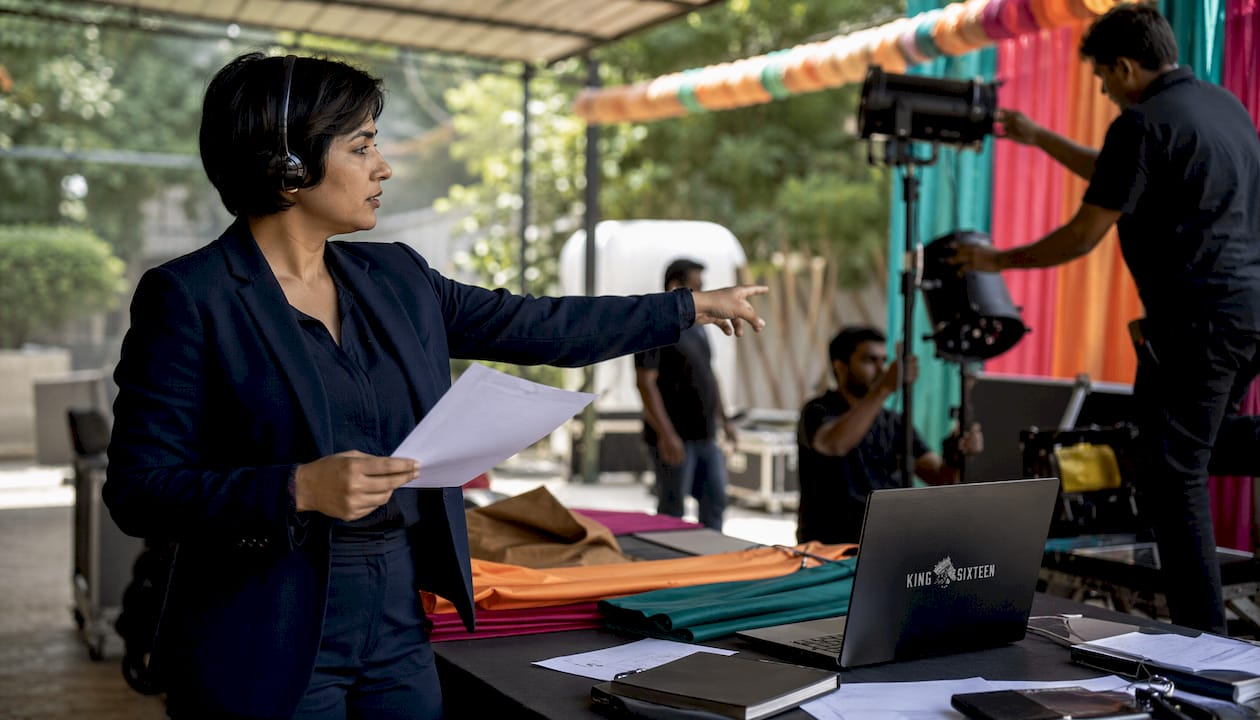
49% of marketers identify audience engagement as directly linked to successful event execution. That connection runs through the producer. When execution is tight, audiences feel it.
How do event producers work with technical teams?
The production team structure centers on a management triangle with distinct roles including Show Producer, Show Caller, and specialized technical crew. This structure exists because live events have zero tolerance for miscommunication. One missed cue can derail an entire program.
Here is how the key roles function within that triangle:
| Role | Primary Function |
|---|---|
| Show Producer | Central communication hub between client and crew |
| Show Caller | Calls live cues and manages real-time show flow |
| Head of Production | Architects the overall technical plan |
| Project Manager | Executes the plan and tracks deliverables |
| Camera Director | Manages video capture and live switching |
| Sound Operator | Controls audio levels and mix for the room |
| Lighting Operator | Programs and operates the lighting design |
Defining clear roles using a RACI matrix prevents responsibility gaps and technical failures, with event producers ensuring alignment between clients, logistics coordinators, and audiovisual teams. A RACI matrix assigns who is Responsible, Accountable, Consulted, and Informed for each task. Without it, critical decisions fall through the cracks under pressure.
The Show Producer sits at the top of this structure for a specific reason. They act as a critical filter between client input and technical crew, prioritizing information and shielding crews from client-induced pressure to maintain performance focus. A client who wants to change the opening video 30 minutes before doors open is a real scenario. The producer absorbs that request, assesses feasibility, and communicates a clear answer. The crew never loses focus.
Pro Tip: When briefing your production team, always confirm who holds final decision authority for each category: creative, technical, and logistics. Ambiguity at the top creates chaos at the crew level.
The human element here is what separates good productions from great ones. Technology handles the execution, but the producer ensures synchronization and clear communication across every moving part. That psychological steadiness under pressure is a skill, not a given.
What challenges do event producers face?
Event producers operate in one of the most pressure-intensive environments in marketing. 78% of planners cite budgeting as a top challenge, 54% report last-minute technical issues disrupt events, and 52% handle more events each year than the year before. Those numbers reflect a profession that is constantly doing more with tighter margins and faster timelines.
The most common challenges producers navigate include:
- Budget pressure: Costs for AV, fabrication, and staffing rise consistently. Producers must find savings without compromising the audience experience.
- Last-minute client changes: A client who shifts the run-of-show 48 hours out creates a cascade of technical and logistical adjustments. Producers absorb and redirect that energy.
- Vendor reliability: A single vendor failure can collapse a timeline. Producers build redundancy into their vendor networks and always have a backup plan.
- Technical failures onsite: Equipment fails. Producers who have rehearsed contingency protocols recover quickly. Those who haven't do not.
- Expectation management: Clients often arrive with a vision shaped by a competitor's event or a social media highlight reel. Producers align expectations to budget reality early and often.
The most critical and non-obvious function of a producer is acting as a strategic filter that shields technical teams to prevent scope creep and maintain workflow focus during high-pressure live events. This is the insurance policy against chaos. When a client panics, the producer translates that panic into a clear, actionable plan. The crew never sees the chaos. They only see the solution.
Risk mitigation starts in pre-production. Producers who build detailed contingency plans for power failure, weather, AV breakdown, and speaker cancellation are the ones who deliver clean shows regardless of what goes wrong.
How do event producers shape brand marketing outcomes?
Event producers play a strategic role in experiential marketing by aligning event logistics and production with brand messaging to enhance audience engagement and deliver measurable ROI. This is where the producer's work crosses from operational into genuinely strategic territory. A producer who understands your brand can make every technical decision, from lighting color temperature to stage layout, reinforce your message.
Here is how producers contribute to brand marketing outcomes:
- Brand alignment in every detail: Producers translate brand guidelines into physical decisions. The color of the drape, the font on the LED wall, the music during registration. Each choice either reinforces or dilutes the brand.
- Immersive environment design: Producers work with creative directors and fabricators to build environments that put attendees inside the brand story, not just in front of it.
- Consistent audience experience: From the moment guests arrive to the moment they leave, producers control the pacing, flow, and emotional arc of the event. Brand consistency across every touchpoint builds trust and recall.
- Cross-functional coordination: Producers connect marketing teams, creative agencies, AV vendors, and fabricators into a single, aligned production. Siloed teams produce fragmented experiences. Producers prevent that.
- Post-event data and feedback: Producers capture what worked, what did not, and what the audience responded to. That data feeds directly into future campaign planning and budget allocation.
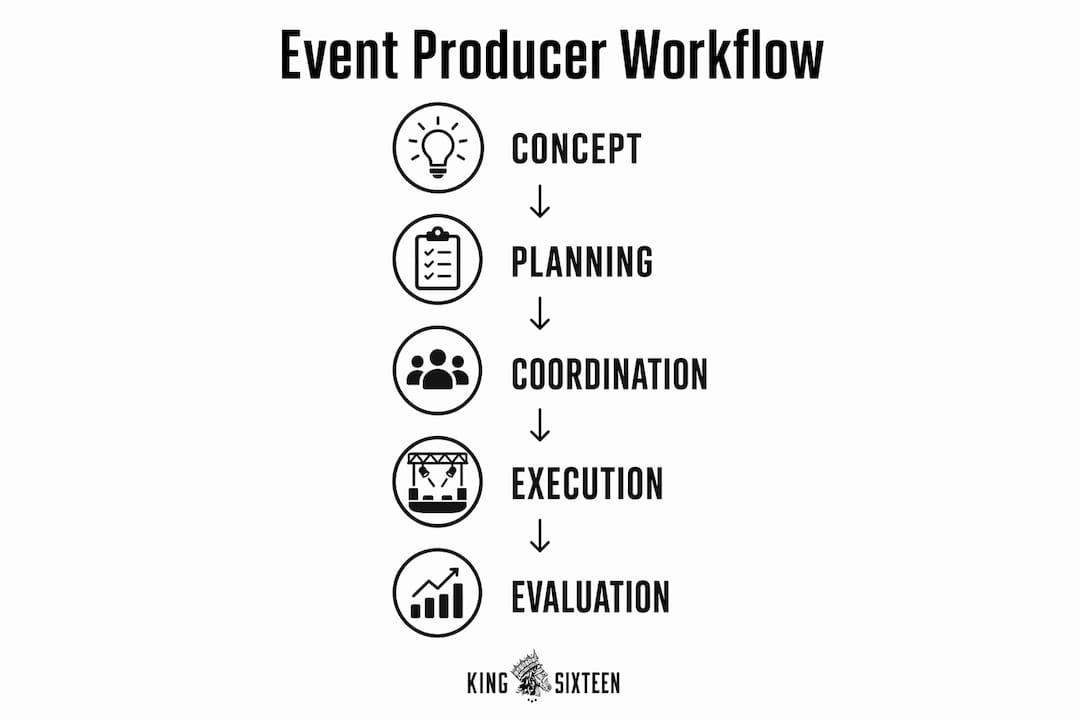
The event production workflow that a skilled producer follows is not just a checklist. It is a repeatable system for delivering brand experiences that hold up under pressure and scale across multiple events. Marketing teams that treat producers as strategic partners, rather than vendors, consistently get better outcomes.
Key Takeaways
Event producers are the operational and strategic core of any high-impact live experience, and their effectiveness directly determines whether a brand event delivers on its promise.
| Point | Details |
|---|---|
| Producers own the full scope | From concept to post-event evaluation, producers manage every phase of production. |
| The management triangle prevents failure | Clear role definitions across Show Producer, Show Caller, and technical crew eliminate miscommunication. |
| Budget and last-minute changes are the top threats | 78% of planners cite budgeting as their biggest challenge; producers mitigate this through early planning. |
| Producers are brand strategists, not just logistics managers | Every technical decision a producer makes either reinforces or weakens the brand message. |
| The filter function is the most undervalued skill | Shielding technical crews from client pressure is what keeps live shows running cleanly. |
The producer is the most underestimated person in your marketing budget
I have watched brands spend six figures on a venue and then underfund the production team. The result is always the same: a beautiful room with a forgettable experience. The space does not create the moment. The producer does.
What most marketing professionals miss is that a great producer is not just managing tasks. They are managing energy. They read the room, read the client, and read the crew simultaneously. They know when to push back on a bad idea and when to absorb a last-minute change without letting it ripple through the team. That skill is not in a job description. It is built through years of high-pressure live events.
The technology side of production has advanced significantly. LED walls, real-time graphics, hybrid streaming, spatial audio. But the more complex the technology, the more critical the human at the center becomes. A producer who cannot communicate clearly under pressure will lose control of a technically complex show faster than a simple one.
My advice to marketing professionals: stop treating the producer as a line item and start treating them as a co-author of your brand experience. Bring them into the brief early. Share the marketing goals, not just the logistics. The best producers I have worked with do not just execute your vision. They make it better.
If you want to understand how production investment translates to brand ROI, the case for event production is clearer than most marketing channels. The audience is captive, the brand controls the environment, and the emotional impact is direct. A skilled producer is what converts that opportunity into a result.
— Tyler
How Kingsixteen approaches event production for brands
Kingsixteen works with established brands that need events executed at the highest level, without the coordination overhead that typically comes with complex productions.
From product launches to multi-day conferences, Kingsixteen handles design, fabrication, AV, staffing, logistics, and vendor management through a single, accountable team. Clients like Porsche, Audi, Ray-Ban, and the Natural Diamonds Council trust Kingsixteen because the production matches the brand. Every technical decision connects back to the marketing goal. If you are planning a brand activation or live event and need a production partner who operates at that level, explore Kingsixteen's experiential marketing services or learn more about private event production built for high-value brands.
FAQ
What does an event producer do?
An event producer manages the full lifecycle of a live event, from concept development and budgeting through vendor coordination, onsite execution, and post-event evaluation. They serve as the central communication link between the client and every technical team involved.
How is an event producer different from an event planner?
An event planner typically focuses on logistics and guest experience, while an event producer holds responsibility for the technical execution, creative vision, and real-time show management. Producers operate within a structured team that includes Show Callers, AV specialists, and a Head of Production.
Why do event producers matter for brand marketing?
Producers align every technical and experiential detail with the brand's marketing goals, ensuring the event delivers a consistent, immersive audience experience. Their work directly influences audience engagement and the measurable ROI of live brand activations.
What skills define a strong event producer?
Strong producers combine time management, clear communication, and flexible problem-solving with deep knowledge of AV systems, budgeting, and vendor management. The ability to absorb client pressure without passing it to the technical crew is the most critical and least visible skill.
How do I become an event producer?
Most event producers build their careers through hands-on experience in event coordination, AV production, or project management, progressively taking on larger productions. Formal training in production management, combined with experience across multiple live event formats, accelerates the path to a senior producer role.