Most event planners assume conference fabrication services are just about building booth frames and hanging banners. That assumption leaves serious opportunity on the table. In the professional world, this discipline is more accurately called scenic fabrication or custom event fabrication, and it covers everything from immersive branded environments to interactive exhibit services and large-scale structural installations. Get it right, and your conference becomes the event attendees talk about for months. Get it wrong, and your brand blends into the background noise of every other event in the room.
Table of Contents
- Key takeaways
- What conference fabrication services actually cover
- How fabrication shapes attendee engagement
- Choosing the right fabrication partner
- Integrating fabrication into your planning process
- My take on fabrication strategy
- Build your conference environment with Kingsixteen
- FAQ
Key takeaways
| Point | Details |
|---|---|
| Fabrication goes far beyond booths | Custom event fabrication includes scenic design, ceiling treatments, stage environments, and branded perimeter elements. |
| Physical environment shapes brand perception | High-quality fabrication builds attendee trust and creates memorable impressions that outlast the event itself. |
| Provider selection is a strategic decision | Evaluate partners on design collaboration, timeline management, and materials quality, not just price. |
| Early engagement reduces costly errors | Bringing your fabrication partner in during the planning phase improves coordination and eliminates last-minute surprises. |
| Fabrication supports hybrid events too | Custom physical elements and interactive displays extend engagement beyond in-person audiences. |
What conference fabrication services actually cover
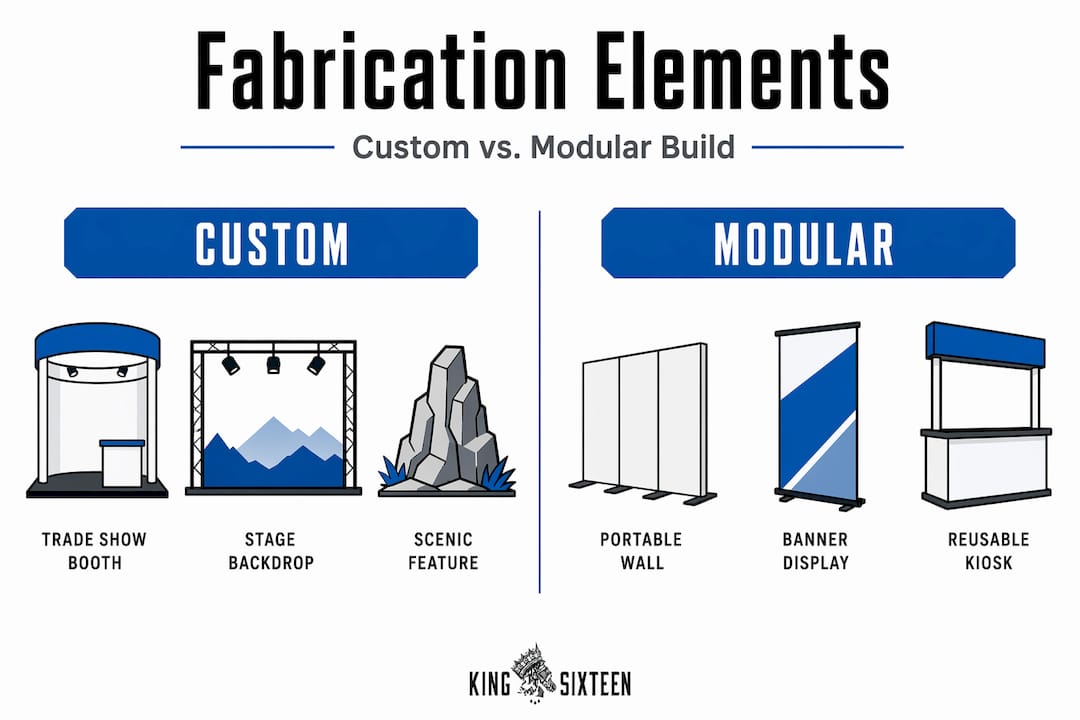
Conference fabrication services, or custom event fabrication as it is known across the industry, refers to the design, construction, and installation of physical environments and branded structures at live events. This is not signage printing or pop-up banner stands. It is the physical architecture of your event's visual identity, built from scratch or modular components to fit a specific space and purpose.
The range of deliverables is broader than most planners realize. Fabrication services can include perimeter wraps, stage backdrops, ceiling treatments, and full scenic construction that transforms a generic convention hall into a branded world. Here is a breakdown of the core categories:
- Custom booth design and trade show fabrication: Fully designed and built exhibit structures, often with integrated AV, product displays, and interactive stations
- Exhibition display services: Branded display walls, freestanding structures, and modular systems that work across multiple events
- Environmental branding installations: Signage, graphic wraps, and architectural elements that carry brand identity throughout an entire venue
- Stage and scenic construction: Custom platforms, set pieces, and backdrop systems that support keynote presentations and live programming
- Portable event structures: Tensile structures, geodesic domes, and modular frameworks that can be built, torn down, and reused across events
The materials used span aluminum extrusions, lightweight steel, tension fabric, acrylic, timber, and increasingly, printed materials with UV-stable inks. Modern fabricators also integrate LED lighting, digital screens, and sensor-driven interactive elements directly into physical builds.
To see how these components compare at a strategic level, consider this breakdown:
| Element | Primary function | Reuse potential |
|---|---|---|
| Custom trade show booth | Brand activation and lead capture | High with modular systems |
| Stage and scenic construction | Program framing and speaker elevation | Medium, event-specific |
| Portable event structures | Spatial division and branded zones | High across multiple events |
| Environmental graphic wraps | Full-venue brand immersion | Low, typically single-use |
| Interactive exhibit installations | Audience engagement and data capture | Medium with tech upgrades |
Understanding these categories helps you allocate budget where the return is strongest and plan for reuse from the start.
How fabrication shapes attendee engagement
The physical environment your attendees walk into within the first 30 seconds forms their emotional baseline for everything that follows. That is not a marketing theory. It is how human perception works. A well-fabricated conference environment signals that the organizing brand is serious, credible, and worth paying attention to. A generic one signals the opposite, regardless of how strong the content is.
Custom booths and displays support strategic marketing objectives in ways that digital assets simply cannot replicate. A prospect who physically walks through a branded installation, touches a product, and engages with a well-designed exhibit is forming memories anchored to sensory experience. That memory is stickier than a social media impression by a significant margin.
"The environment is the message. When a brand invests in a well-built physical space, attendees perceive that investment as proof of commitment, quality, and authority." This principle drives every fabrication decision we make at Kingsixteen.
The experiential elements fabrication enables include photo-worthy branded zones that drive organic social sharing, interactive product displays that generate qualified leads on-site, and spatial storytelling that takes attendees through a brand narrative in sequence. None of that happens with off-the-shelf booth rental.
Fabrication also integrates directly with your brand activation strategy. When your physical environment and your digital touchpoints share the same visual language, the brand signal compounds. Attendees connect what they see on-site with what they encounter online before and after the event, creating a unified impression that deepens over time.
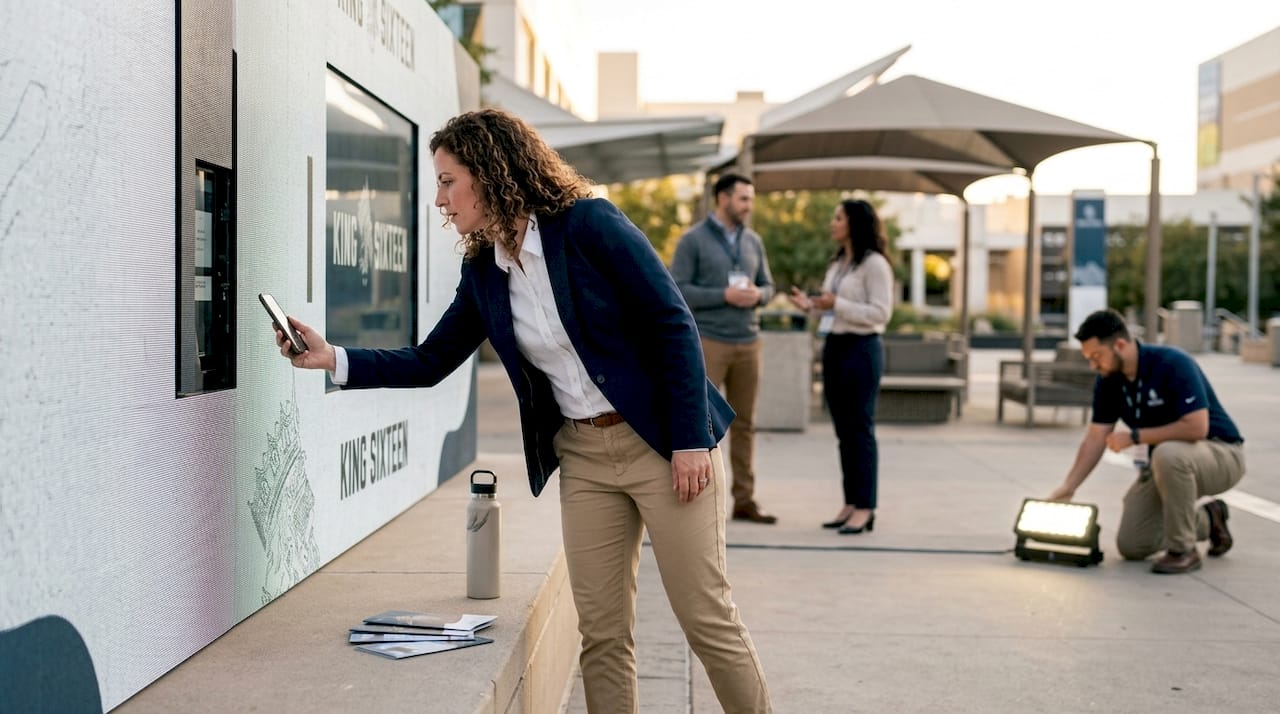
Pro Tip: Design your fabrication with post-event content in mind. A well-lit, visually distinctive booth or installation becomes the backdrop for dozens of photos and videos that your marketing team can use for months.
Choosing the right fabrication partner
This is where many planners make costly mistakes. The fabrication industry spans everything from small regional shops to full-service experiential production companies, and price alone is a poor differentiator. What you actually need to evaluate is whether a potential partner can match your event's complexity, timeline, and marketing objectives.
Choosing the right fabrication partner involves evaluating several interconnected factors, not just the portfolio:
- Design collaboration: Does the company have in-house designers who understand brand strategy, or do they simply build what you hand them? The best partners add creative thinking to your brief.
- Experience with your event type: A partner strong in trade show fabrication may lack the scenic construction expertise required for a large conference general session. Verify their specific experience.
- Materials quality and craftsmanship: Request physical samples of finished work where possible. Photos can obscure material quality. Poor finishing details become obvious under event lighting.
- Project management capability: Comprehensive project management covering design, fabrication, shipping, and on-site installation is what separates professional providers from transactional vendors.
- Timeline discipline: Request references specifically about delivery timelines. Late builds are one of the most common and most damaging failures in event production.
- Budget transparency: Understand exactly what is included in a quote. Freight, drayage, installation labor, and storage are common add-ons that inflate costs after the initial number is agreed upon.
- Sustainability practices: Reusable modular systems reduce long-term costs and align with many brands' environmental commitments. Ask specifically about material sourcing and post-event disposal.
Also ask about trade show printing integration. Many fabrication projects require high-quality graphic production as part of the build, and a partner who manages both in-house saves coordination time and reduces risk of color or sizing errors.
Pro Tip: Request a site visit to the fabricator's workshop before signing a contract. Seeing how they organize materials, manage active builds, and treat their equipment tells you more about operational quality than any sales presentation.
Integrating fabrication into your planning process
Getting the most out of your fabrication investment requires treating it as a production element, not a procurement item. Here is a practical sequence that works for conferences of all sizes:
-
Brief your fabricator at the concept stage. The earlier they understand your event objectives, attendee journey, and brand guidelines, the more they can design for impact rather than just building what fits the spec. Early collaboration in the design and logistics stage is what separates events that feel considered from ones that feel assembled.
-
Run a formal design review with all stakeholders before production begins. This includes marketing leadership, your AV team, and any experiential agency involved. Misalignments caught at the design phase cost nothing. Misalignments discovered on-site can cost thousands and still go unfixed.
-
Build a detailed logistics plan that covers freight, installation windows, and union labor requirements. Convention centers operate on strict schedules, and your fabrication partner needs to know move-in times, loading dock access, and any show floor restrictions well in advance.
-
Plan your on-site installation coordination in advance. Confirm crew size, equipment needs, and installation sequencing with your fabricator at least two weeks before the event. Last-minute adjustments during move-in are expensive and stressful for everyone.
-
Address post-event storage and reuse before the event happens, not after. If elements can be reused, build that into the design from the start. Decide what gets stored, what gets repurposed, and what gets disposed of so there are no surprises in the final invoice.
-
Consider hybrid integration. Fabrication supports hybrid events through custom camera-facing environments, green screen backdrops, and interactive displays designed to translate well on livestreams as well as in person. If any portion of your conference audience is attending virtually, your physical environment is still their visual experience. Design for both.
My take on fabrication strategy
I've seen fabrication treated as a line-item to minimize rather than a lever to pull. That thinking is expensive in ways that don't show up on a budget spreadsheet.
In my experience, the events that generate the most post-event buzz and measurable brand lift are almost always the ones where physical environment was treated as a strategic priority, not an afterthought. The brand that invested in a custom installation at a mid-size industry summit and was the only exhibitor attendees photographed and shared is not a coincidence. It is a fabrication decision that paid dividends in organic reach alone.
What planners most often overlook is the connection between fabrication quality and speaker and attendee psychology. When presenters walk onto a well-built stage in a properly designed environment, they perform differently. When attendees enter a space that feels intentional, their receptiveness to the content that follows increases measurably.
My advice: bring your fabrication partner into the conversation at the same time you bring in your AV and programming teams. Treat the physical environment as part of the content strategy, not separate from it. That alignment is where the real impact comes from.
— Tyler
Build your conference environment with Kingsixteen
When the physical environment of your conference needs to do more than fill a space, Kingsixteen delivers the fabrication expertise to make it work strategically.
At Kingsixteen, custom fabrication is not a side service. It is core to how we produce conferences, summits, and brand activations for clients like Porsche, Audi, and Ray-Ban. We design and build physical brand environments from concept through installation, managing every element through a trusted network that spans scenic construction, exhibition display services, AV integration, and post-event logistics. Our private events team also handles fabrication for marketing-focused conferences where every detail reflects brand standards. If you are ready to work with a fabrication partner who thinks like a marketer, get in touch with Kingsixteen and tell us what you are building.
FAQ
What do conference fabrication services include?
Conference fabrication services cover the design, construction, and installation of physical event environments, including custom booths, stage builds, scenic backdrops, branded displays, and interactive installations. The scope varies from single exhibit structures to full venue transformations.
How early should I engage a fabrication partner?
Engage your fabrication partner at the concept stage of planning. Early collaboration reduces errors, improves design quality, and gives the team enough lead time to source materials and manage production without rushing.
What should I look for in a trade show fabrication company?
Look for demonstrated experience with your event type, in-house design capability, transparent pricing, and strong project management. Check references specifically on timeline delivery and post-event support, not just creative quality.
Can fabrication elements be reused across multiple events?
Yes. Modular systems and portable event structures are specifically designed for reuse. Promotional backdrop displays and tensile structures are common examples of reusable formats that offer strong long-term value.
Does fabrication work for hybrid conferences?
Absolutely. Custom physical environments designed with camera angles and lighting in mind translate strongly to virtual audiences. Fabrication can include green screen zones, branded livestream backdrops, and interactive display elements that serve both in-person and remote attendees equally well.