Influencer marketing at events is defined as partnering with social media creators to promote and amplify a brand's event presence across pre-event, live, and post-event phases. The global influencer marketing industry is projected to reach $32.55 billion by the end of 2025. That number reflects a fundamental shift in how brands earn attention. Unlike traditional celebrity endorsements, event influencer marketing relies on niche creators whose audiences trust them the way they trust a knowledgeable friend. 60% of consumers trust brand-related statements made by creators more than those made directly by brands. For marketing professionals and event organizers, that trust is the most valuable asset on the floor.
What is influence marketing at events, and how does it work?
Influence marketing at events, more precisely called event influencer marketing, is the practice of integrating social media creators into your event strategy as active participants rather than passive attendees. These creators produce content before the event to build anticipation, during the event to drive real-time engagement, and after the event to extend reach and reinforce brand messaging. The result is a content ecosystem that lives far beyond the venue walls.
The distinction from traditional endorsements matters. A celebrity posting a scripted ad feels transactional. A creator sharing genuine reactions from your product launch feels personal. That authenticity is what drives consumer engagement and purchase intention at a level traditional endorsements cannot match. Audiences follow creators because they trust their judgment, not because they were paid to show up.
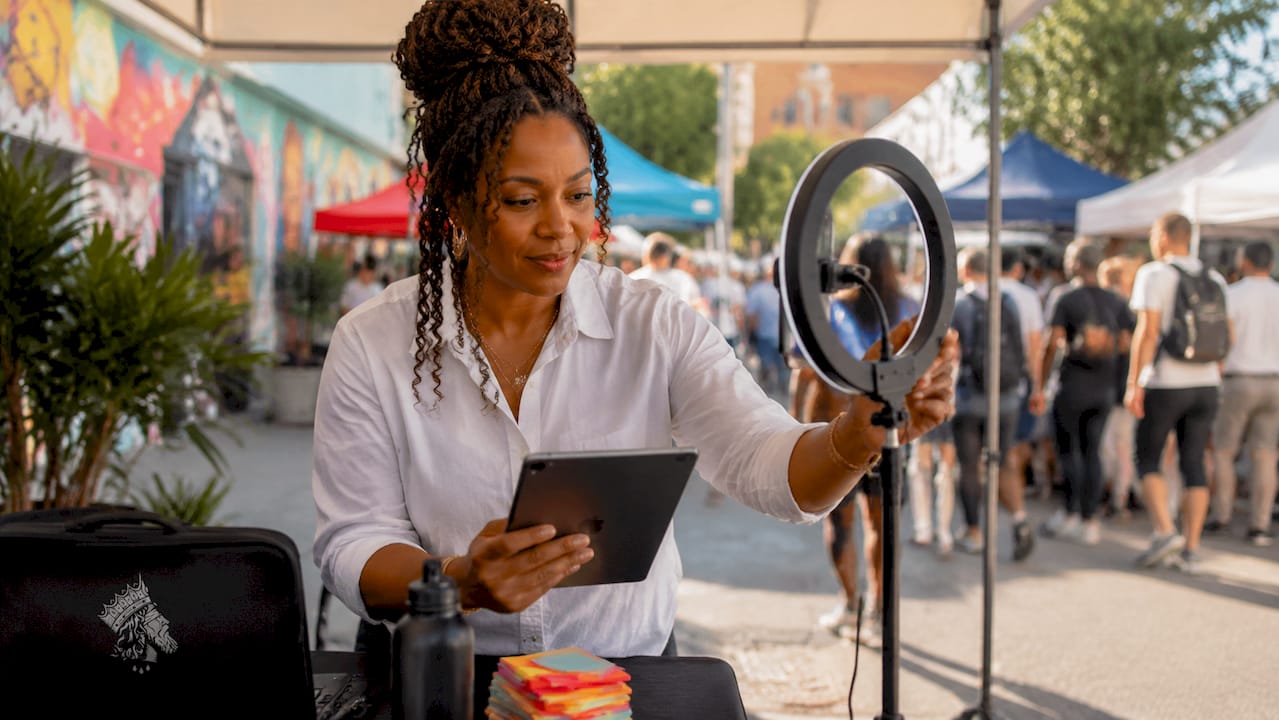
Event influencer marketing also solves three specific problems that plague modern event marketing: ad fatigue, difficulty reaching younger audiences, and the need for credible social proof. When a creator with 80,000 engaged followers posts from your activation, that content reaches people who have already opted into that creator's perspective. You are not interrupting them. You are showing up in a context they chose.
What are the primary influencer marketing strategies to use at events?
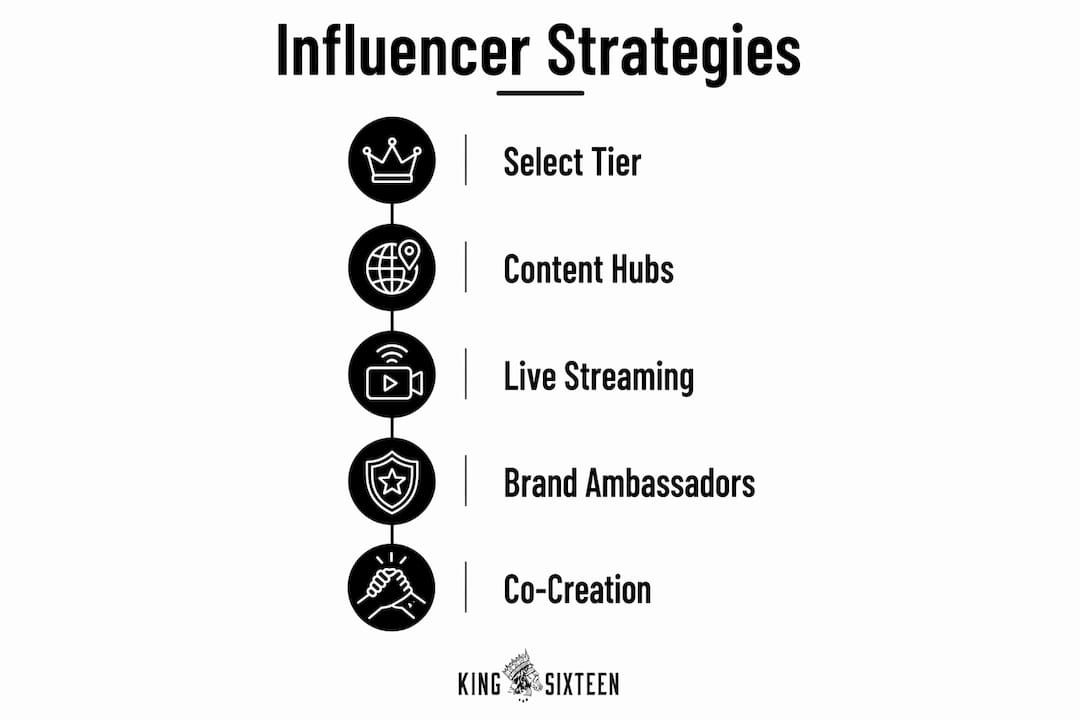
Choosing the right influencer type is the first decision that shapes everything else. The three main categories are:
- Micro-influencers (10,000–100,000 followers): These creators deliver the highest engagement rates and community resonance. They work best for niche product categories, regional events, and campaigns where trust matters more than raw reach.
- Macro-influencers (100,000–1,000,000 followers): These creators are better suited for broad purchase-intent goals and national brand awareness. Macro-influencers often boost broader purchase-intent goals more effectively than smaller accounts.
- Mega-influencers and celebrities (1,000,000+ followers): These work for mass visibility plays, but engagement rates drop significantly. Reserve this tier for launches where sheer impressions are the primary goal.
Beyond tier selection, the most effective event influencer marketing strategies combine short-term activations with long-term partnerships. Hybrid influencer models ensure that influencer presence contributes to sustained event success rather than a single spike of excitement. A creator who has been building anticipation for your event over three months will produce far more credible content than one who shows up the morning of.
Content hubs are another underused tactic. These are dedicated spaces at your event with professional lighting, reliable Wi-Fi, and branded backdrops. They give creators a stable environment to produce quality content without fighting the chaos of the main floor. Most event organizers skip this entirely and then wonder why the content looks amateur.
Pro Tip: Prioritize relevance and resonance over raw reach. A creator with 25,000 deeply engaged followers in your exact niche will outperform a creator with 500,000 general followers almost every time. Check engagement rate, not just follower count, before signing any agreement.
What are the measurable benefits of influencer marketing at events?
The benefits of influencer marketing at events go well beyond impressions. A meta-analysis of 71 papers with 135 experimental studies confirmed that social media influencers significantly impact both consumer engagement and purchase intention compared to traditional endorsements. That is not anecdotal. That is the largest body of evidence assembled on this topic to date.
"59% of marketers confirm positive ROI from influencer marketing, but stress the need to track business outcomes like cost-per-acquisition rather than vanity metrics." — Hootsuite, 2026
The shift from vanity metrics to business outcomes is where most event marketers leave money on the table. Impressions and likes feel good in a report. Cost-per-acquisition and tracked revenue from unique promo codes tell you whether the campaign actually worked.
| Benefit | What it measures | Why it matters |
|---|---|---|
| Brand visibility | Reach and impressions across creator channels | Extends event exposure beyond physical attendees |
| Consumer trust | Creator endorsement vs. direct brand messaging | 60% of consumers trust creators more than brands |
| Purchase intention | Conversion rates tied to influencer content | Directly links creator activity to sales outcomes |
| Content volume | Number of posts, stories, and videos produced | Reduces your content production burden post-event |
| ROI attribution | CPA, unique links, promo code redemptions | Justifies budget and informs future campaign planning |
Understanding experiential ROI requires connecting influencer activity to specific business outcomes. When you track a creator's unique link and see 400 demo bookings, you have a number you can defend in any budget meeting.
How to implement influencer marketing successfully at events
Execution separates campaigns that generate buzz from campaigns that generate revenue. Follow this framework to build a program that delivers both.
-
Set specific, measurable goals before you select a single influencer. Vague objectives like "boost awareness" produce unattributed results. Undefined goals are the most common failure point in event influencer campaigns. Tie every deliverable to a trackable action: a unique URL, a QR code scan, a promo code redemption, or a demo booking.
-
Select influencers based on audience fit, not follower count. Review their last 30 days of content. Does their audience match your buyer profile? Do their engagement rates hold up across post types? A creator with a 6% engagement rate on 40,000 followers is more valuable than one with a 0.8% rate on 400,000.
-
Write a detailed brief that leaves room for creative freedom. Specify the key messages, required disclosures, posting schedule, and any brand restrictions. Then stop. Over-scripting kills authenticity, which kills results. Give creators the facts and trust them to communicate those facts in their voice.
-
Build content hubs into your event floor plan. Dedicated content spaces with professional lighting, power outlets, and branded backdrops give creators what they need to produce quality content without disrupting the event flow. This is one of the highest-ROI investments you can make in your physical event design.
-
Schedule VIP preview access for creators before the event opens. Influencer-only programming, such as a private walkthrough the morning before doors open, lets creators capture exclusive content without crowds. That exclusivity signals to their audience that this event is worth attending.
-
Amplify and reuse creator content after the event. The content produced during your event has a long shelf life. Repurpose it in email campaigns, paid social ads, and sales decks. Most brands use influencer content once and archive it. That is a significant waste.
Pro Tip: Integrate your influencer program into your broader live event branding strategy from day one. When the content hub, the stage design, and the creator briefs all reflect the same visual identity, the content produced looks cohesive and professional across every channel.
What types of influencer collaborations work best for events?
Different collaboration formats serve different event goals. Choosing the right structure depends on your timeline, budget, and what you need the audience to do.
Sponsored posts and stories are the most common format. Creators post branded content before, during, or after the event. They work well for awareness and attendance driving, but they require clear tracking links to measure impact beyond impressions.
Live streaming and real-time coverage put creators on the floor during the event. This format drives immediate engagement and creates urgency for audiences watching remotely. It works especially well for product launches and conference keynotes where the content has news value.
Brand ambassador programs extend the relationship beyond a single event. An ambassador builds familiarity with your brand over months, which means their event coverage carries more credibility. Long-term influencer partnerships produce more consistent results than one-off activations because the creator's audience has already been primed to care.
Co-created event experiences go furthest. Here, the creator helps design an element of the event itself, such as a panel, a challenge, or a branded activation. Their audience feels ownership over the experience, which drives attendance and engagement at a level no sponsored post can match.
| Collaboration type | Best for | Primary benefit |
|---|---|---|
| Sponsored posts and stories | Pre-event awareness, attendance driving | Wide reach with trackable links |
| Live streaming | Product launches, keynotes | Real-time engagement and urgency |
| Brand ambassador programs | Multi-event campaigns, sustained awareness | Credibility built over time |
| Co-created experiences | High-engagement activations | Deep audience investment and attendance |
For most event marketing strategies, a combination of micro-influencers for community engagement and macro-influencers for purchase-intent reach produces the strongest overall results. Neither tier alone covers the full funnel.
Key Takeaways
Effective influencer marketing at events requires clear goals, the right creator tier, and tracking mechanisms that connect content directly to business outcomes.
| Point | Details |
|---|---|
| Define goals before selecting influencers | Tie every deliverable to a trackable action like a unique URL or promo code. |
| Match creator tier to campaign objective | Use micro-influencers for engagement and macro-influencers for purchase intent. |
| Build content hubs into your event design | Dedicated spaces with lighting and branding produce significantly better creator content. |
| Use hybrid influencer models | Combine short-term activations with long-term partnerships for sustained ROI. |
| Measure business outcomes, not vanity metrics | Track cost-per-acquisition and conversion rates to justify budget and improve future campaigns. |
Why most event influencer programs underdeliver
The gap between a mediocre influencer program and a great one almost always comes down to one thing: treating creators as a distribution channel instead of a creative partner. I have seen brands spend significant budgets on creator fees and then hand over a script so rigid that the resulting content looks like a press release. The audience notices. Engagement craters. The brand concludes that influencer marketing does not work, when the real problem was the brief.
The brands that get this right, the ones I have seen produce genuine ROI from event influencer programs, do three things differently. They set specific goals before they book a single creator. They build physical infrastructure, content hubs, VIP access, dedicated schedules, that makes it easy for creators to do their best work. And they measure what actually matters: demo bookings, promo code redemptions, and tracked revenue, not likes.
The other mistake I see constantly is the one-off activation mindset. A brand invites ten creators to a launch event, gets a spike of content for 48 hours, and calls it done. Hybrid models, where some creators are engaged for months before and after the event, produce a fundamentally different result. The audience has been primed. The content has context. The ROI compounds. If you are planning events and you are not thinking about ways to engage attendees through creator relationships that extend well beyond the event date, you are leaving the most durable value on the table.
— Tyler
How Kingsixteen builds influencer programs into event strategy
Kingsixteen designs and executes immersive brand experiences where influencer marketing is built into the event architecture from the start, not bolted on afterward.
That means content hubs are part of the floor plan. Creator briefs align with the event's visual identity. Tracking mechanisms are set up before the first post goes live. Kingsixteen has produced activations for brands like Porsche, Ray-Ban, and the Natural Diamonds Council, where the physical environment and the creator strategy worked as a single system. If you want to build an event where influencer content drives measurable outcomes, explore Kingsixteen's experiential marketing services and see how a fully integrated approach changes what is possible.
FAQ
What is influence marketing at events?
Influence marketing at events is the practice of partnering with social media creators to promote and amplify a brand's event through authentic content. Creators produce content before, during, and after the event to drive attendance, engagement, and conversions.
How do you measure influencer marketing ROI at events?
Track business outcomes like cost-per-acquisition, unique URL clicks, QR code scans, and promo code redemptions rather than impressions or likes. 59% of marketers confirm positive ROI when they measure specific actions rather than vanity metrics.
What types of influencers work best for events?
Micro-influencers deliver higher engagement and community trust, while macro-influencers are better for broad purchase-intent goals. Most event programs benefit from using both tiers to cover the full marketing funnel.
What is a content hub at an event?
A content hub is a dedicated space at an event equipped with professional lighting, reliable Wi-Fi, and branded backdrops. It gives creators a stable environment to produce quality content without competing with the noise and crowds of the main floor.
How far in advance should you engage influencers for an event?
Engaging creators at least 6–8 weeks before the event allows time for briefing, content planning, and pre-event audience priming. Long-term ambassador relationships, built over several months, produce the most credible and highest-converting event coverage.