What is interactive marketing, and why does it matter for immersive events?
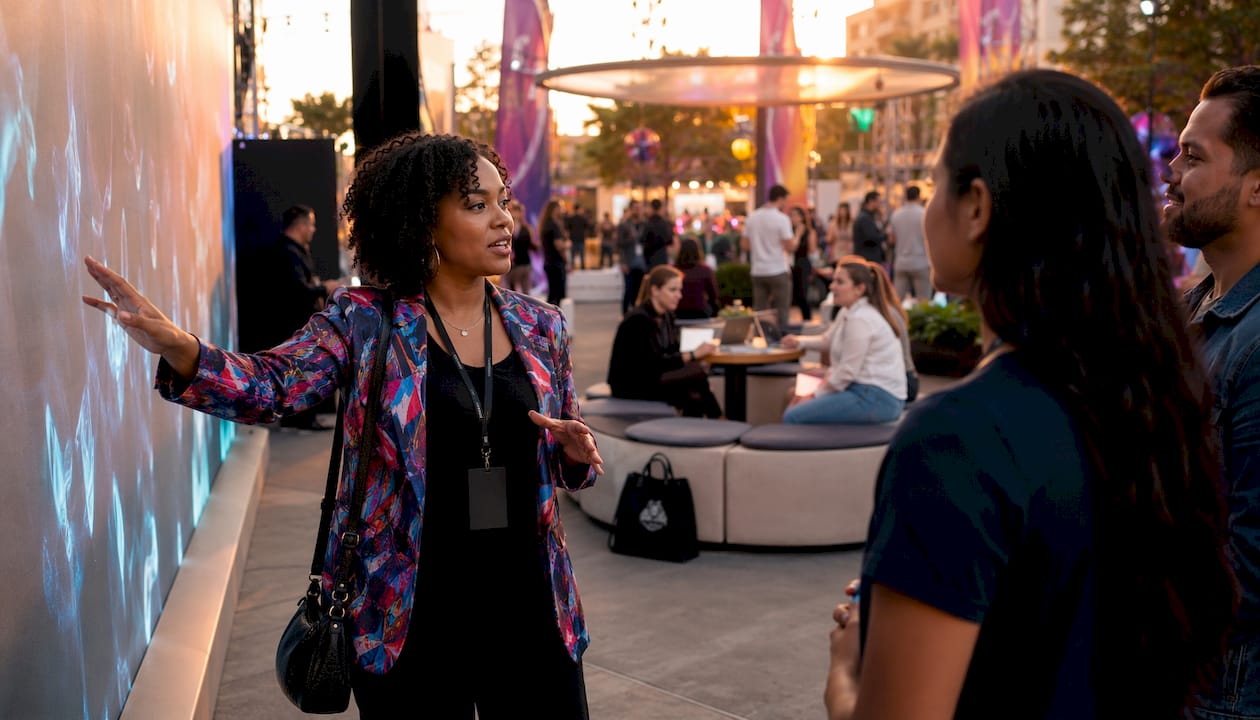
Interactive marketing is a two-way communication strategy where brands engage audiences through personalized, participatory experiences rather than broadcasting a single message to a passive crowd. Instead of a billboard or a press release, you get a conversation. The audience responds, the brand adapts, and both sides walk away with something valuable.
At its core, interactive marketing works because it replaces static messaging with real-time dialogue. Key elements include:
- Quizzes and assessments that diagnose a need or recommend a solution
- ROI calculators and configurators that help prospects model their own outcomes
- Polls and interactive videos that invite opinion and shape what comes next
- Augmented reality and live activations that blend physical and digital engagement
For brands investing in immersive, in-person experiences, this is where the format gets genuinely powerful. A product launch is no longer just a presentation. It becomes a guided discovery where every attendee receives a personalized result, a recommendation, a number, or an insight that feels built for them.
Table of Contents
- Popular formats for interactive marketing in brand activations
- Strategic benefits and common pitfalls of interactive marketing
- How Kingsixteen applies interactive marketing to immersive brand experiences
- How to implement interactive marketing effectively in your brand strategy
- Ready to make your brand felt, not just seen?
- Key Takeaways
Popular formats for interactive marketing in brand activations
Choosing the right format depends on where your audience sits in the buying journey. Different formats serve different stages: social-friendly quizzes work at the top of the funnel when awareness is the goal, while calculators and configurators close the gap at the decision stage.
Here is how each format maps to real event scenarios:
- Recommendation quizzes work at product launches where attendees feel overwhelmed by options. A guided quiz cuts through complexity and delivers a clear, personalized suggestion in under two minutes.
- Scored assessments suit B2B conferences and summits. They position your brand as a diagnostic expert rather than a vendor, revealing gaps attendees had not fully considered.
- ROI calculators belong at the decision stage. When a prospect can input their own numbers and see a projected return, the brand becomes part of their decision logic.
- Interactive video and choose-your-path demos let attendees explore at their own pace, which is especially effective in exhibition environments with high foot traffic.
- Live polls generate real-time audience data and create a sense of shared discovery during keynotes or panel sessions.
Pro Tip: Map each interactive format to a specific moment in your event run-of-show. A quiz at registration warms up attendees. A calculator at a breakout session moves them toward a conversation with your sales team.
Strategic benefits and common pitfalls of interactive marketing
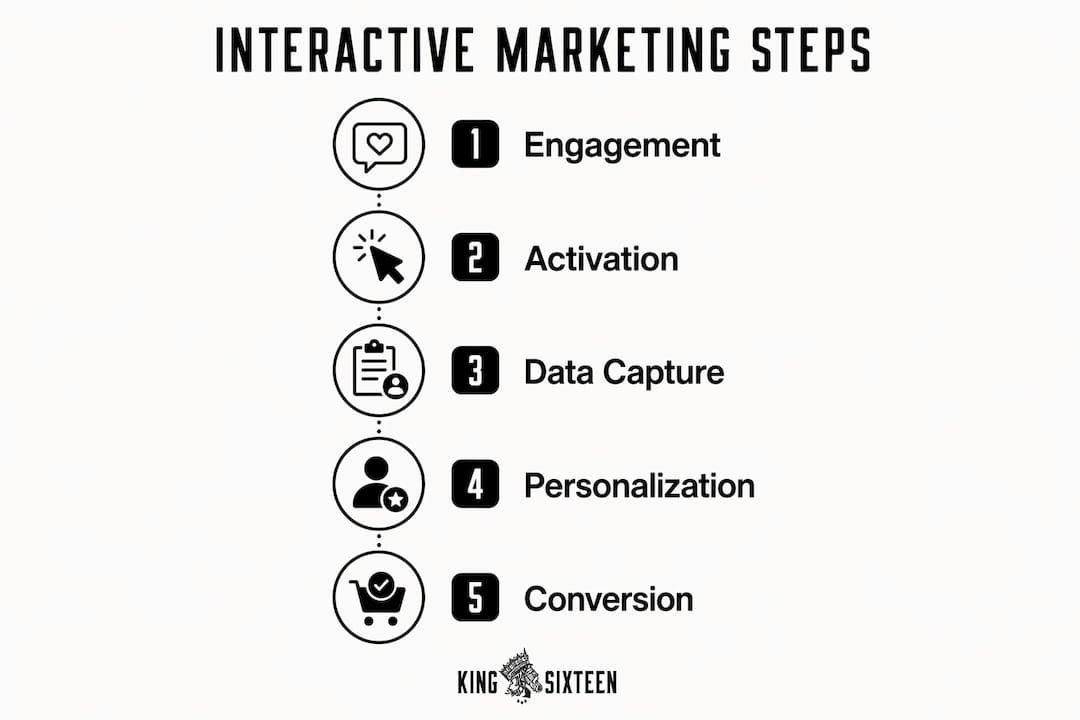
The strongest case for interactive marketing is the data it generates. When someone completes a quiz or runs a calculator, they are voluntarily sharing their priorities, budget range, and readiness. That behavioral data is far richer than anything a passive page view can tell you, and it powers genuinely personalized follow-up campaigns.
Beyond data, interactive formats reduce friction by letting prospects evaluate solutions on their own terms before committing to a conversation. Trust builds faster when the audience feels in control.
Common pitfalls to avoid:
- Using interactivity as a gimmick. Every interactive element must deliver immediate, tangible utility, whether that is a diagnosis, a cost estimate, or a personalized recommendation. Novelty alone loses people fast.
- Mismatching format to funnel stage. Deploying a complex ROI calculator to someone who has never heard of your brand creates confusion, not conversion. Funnel-stage mismatch is one of the primary causes of low completion rates.
- Neglecting the result page. The outcome screen is where conversion happens. Designing it as an afterthought drastically lowers completion rates and kills the next step.
- Asking for data too early. Requesting contact information before delivering value deters participation. Value must precede qualification.
Pro Tip: Design the result page before you build the asset. Know exactly what the attendee will see, what it will say, and what action it will prompt. Everything else flows from that endpoint.
How Kingsixteen applies interactive marketing to immersive brand experiences
Kingsixteen builds experiential campaigns where interactive marketing is not a digital add-on. It is woven into the physical environment from day one. For brands like Porsche, Audi, Ray-Ban, and Fossil, the goal is never just foot traffic. It is measurable engagement, qualified data, and a brand impression that lasts beyond the event itself.
In practice, that means:
- Custom fabricated environments designed to guide attendees through a branded journey, with interactive stations embedded at each stage
- AV and digital integration that turns a product launch into a multi-sensory, participatory experience rather than a passive presentation
- Staffed activations where team members facilitate interactive assessments or live demos, adding a human layer that technology alone cannot replicate
- Data capture built into the experience, so every interaction generates a lead signal without feeling like a form fill
For brands working with in-person activation at scale, the turnkey model matters. Kingsixteen handles design, fabrication, staffing, AV, and logistics through a single coordinated team, which means the interactive elements actually work on the day, not just in the deck.
How to implement interactive marketing effectively in your brand strategy
Getting interactive marketing right is a planning problem as much as a creative one. Here is a practical framework for marketing decision-makers building toward an immersive event or brand activation.
Numbered steps for implementation:
- Map your formats to buyer journey stages. Decide which interactive elements serve awareness, consideration, and decision audiences. Do not use one format for all three.
- Design the result and next action first. Before building any asset, define what the attendee receives and what they do next. Booking a demo, downloading a report, or speaking with a specialist should all be planned before the quiz goes live.
- Reduce friction at every entry point. Let attendees engage before asking for anything. Deliver value first, then qualify. This approach consistently improves lead nurturing outcomes downstream.
- Integrate interactive elements into the physical space. At live events, interactive stations should feel like part of the environment, not a tech demo bolted onto a booth.
- Brief your team on facilitation. Staff who can guide attendees through an interactive experience convert at higher rates than a self-serve kiosk alone.
- Measure participation, completion, and conversion separately. Foot traffic tells you reach. Completion rate tells you relevance. Conversion tells you whether the result page did its job.
For brands ready to go beyond standard event production, partnering with a specialist agency accelerates every step. Kingsixteen's approach to brand engagement combines the strategic planning above with the physical execution that makes interactive marketing land in a room full of real people.
Ready to make your brand felt, not just seen?
Kingsixteen designs and executes immersive brand experiences where interactive marketing drives real outcomes: qualified leads, richer data, and impressions that outlast the event. From product launches to large-scale conferences, we handle every element so your team can focus on the conversation, not the logistics.
Start the conversation and find out what a fully integrated, interactive brand experience looks like for your next activation.
Key Takeaways
Interactive marketing converts passive audiences into active participants, and in immersive brand events, that participation generates both deeper engagement and richer data than any static campaign can match.
| Point | Details |
|---|---|
| Two-way by design | Interactive marketing replaces one-way messaging with real-time dialogue that adapts to each participant's input. |
| Format follows funnel | Quizzes suit awareness stages; assessments fit consideration; calculators and configurators drive decisions. |
| Result page drives conversion | Designing the outcome screen before building the asset is the single most effective way to lift completion rates. |
| Value before data | Delivering a personalized result before requesting contact information consistently improves participation and trust. |
| Physical and digital together | In immersive events, interactive marketing works best when digital tools are embedded in the physical environment, not added as an afterthought. |