Most marketing executives treat brand experiences as a line item on the events calendar. Plan the activation, staff the booth, count the impressions, move on. But that framing leaves enormous value on the table. Brand experiences are increasingly treated as end-to-end, cross-functional strategy work that requires breaking silos across product, operations, and finance to deliver coherent, integrated outcomes. When you build experiences this way, they stop being marketing moments and start becoming loyalty engines, revenue drivers, and organizational catalysts.
Table of Contents
- What is the real role of brand experiences today?
- Building brand experiences with deep consumer insight
- Cross-functional integration: The secret to impact
- Measuring what matters: New metrics for brand experience effectiveness
- Maintaining continuity: Avoiding experience and brand identity gaps
- Why most companies get brand experience wrong and what actually works
- Take your brand experiences further with expert partnership
- Frequently asked questions
Key Takeaways
| Point | Details |
|---|---|
| Strategic integration | Brand experiences deliver results when marketing, product, and ops work together, not in silos. |
| Insight-driven design | Deep ethnographic research powers immersive experiences that build emotional connections. |
| Measure what matters | Metrics like dwell time, engagement quality, and retention are essential for tracking effectiveness. |
| Continuity is critical | Brand identity must remain consistent across changing tools and personalized touchpoints to avoid confusion. |
What is the real role of brand experiences today?
The honest answer is that most organizations are still asking the wrong question. They ask: "What should we do at this event?" when they should be asking: "What should our customer feel, decide, and do because of this experience?"
That shift in framing changes everything. It moves brand experiences out of the event team's inbox and into the C-suite conversation. For executives at established companies, the data is clear: brand experience effectiveness rests on its role as a conversion-and-loyalty mechanism that depends on deep insight and integration across the organization, not on a standalone creative event.
This is the modern definition of brand experience. It is not a pop-up. It is not a product demo tent. It is an orchestrated series of touchpoints that shape perception, deepen trust, and move customers toward a decision. Think of it as a bridge between who your brand says it is and what your customer actually feels when they interact with it. When that bridge is built well, through your brand engagement guide, it carries weight far beyond a single event day.
Here is what this evolution looks like in practice:
- From transactional to emotional: Brands like Porsche and Audi don't just show cars at events. They let customers sit in them, configure them, and imagine their lives with them.
- From isolated to integrated: The strongest brand experiences tie together physical environments, digital touchpoints, post-event follow-up, and sales team alignment.
- From output to outcome: Instead of counting attendees, leading marketing teams measure pipeline influence, NPS shifts, and retention rate changes.
"The experience is not what happens at the event. The experience is every decision a customer makes in the days and weeks after they leave."
With this foundation in mind, let's dissect how immersive experiences are crafted with intention and insight.
Building brand experiences with deep consumer insight
Here is where many marketing teams make their first critical mistake: they design the experience before they truly understand the customer. They base decisions on surveys, past event data, and internal assumptions. That produces experiences that look polished but feel hollow.
Leading CMOs know that experience design grounded in deep consumer insight, including ethnographic and immersive research methods, consistently outperforms surface-level research. Ethnographic research means going where your customers actually are. Watching how they shop, interact with products, and respond to environments in real time. It is slower and more demanding than a focus group, but the insight quality is incomparable.
Here is a practical framework for building consumer insight into your experience design process:
- Conduct contextual observation. Send team members to locations where your core customers spend time. Retail stores, community events, competitor activations. Document behaviors and emotional cues, not just stated preferences.
- Run in-depth interviews with your actual buyers. Not demographic proxies. Speak directly with the customers who converted, those who considered you and walked away, and those who are deeply loyal. Ask about feelings and friction points, not just features.
- Map emotional touchpoints before designing physical ones. Before you choose a venue or design an installation, identify the three or four moments in the customer journey where emotion peaks. Those are the moments your experience should amplify.
- Test concepts with small-scale prototypes. Before committing to a full activation, run smaller versions with real audience segments. Gather feedback on what resonated and what felt misaligned.
- Integrate insight across teams. The insight gathered by marketing must reach product, sales, and operations teams. Otherwise, the experience delivers a promise the rest of the organization cannot keep.
For a deeper look at how strategy shapes experience design, our strategic brand experience framework shows how leading brands translate research into environments that genuinely move people.
Pro Tip: Record short video clips during field observation sessions and share them in cross-functional briefings. Nothing shifts a CFO's perspective on experience investment faster than watching a real customer struggle to understand your brand in the wild.
Designing with deep insight is only step one. The next challenge is connecting the dots across your entire organization for truly seamless experiences.
Cross-functional integration: The secret to impact
You can have the best consumer insight in the room. You can design a breathtaking activation. And you can still fail if the rest of your organization is not aligned with what you are trying to deliver.
This is the most common breakdown we see. Marketing creates something remarkable, and then operations cannot staff it properly, finance cuts the budget for the key moment, or the sales team follows up with messaging that contradicts the experience entirely. The customer walks away confused instead of converted.
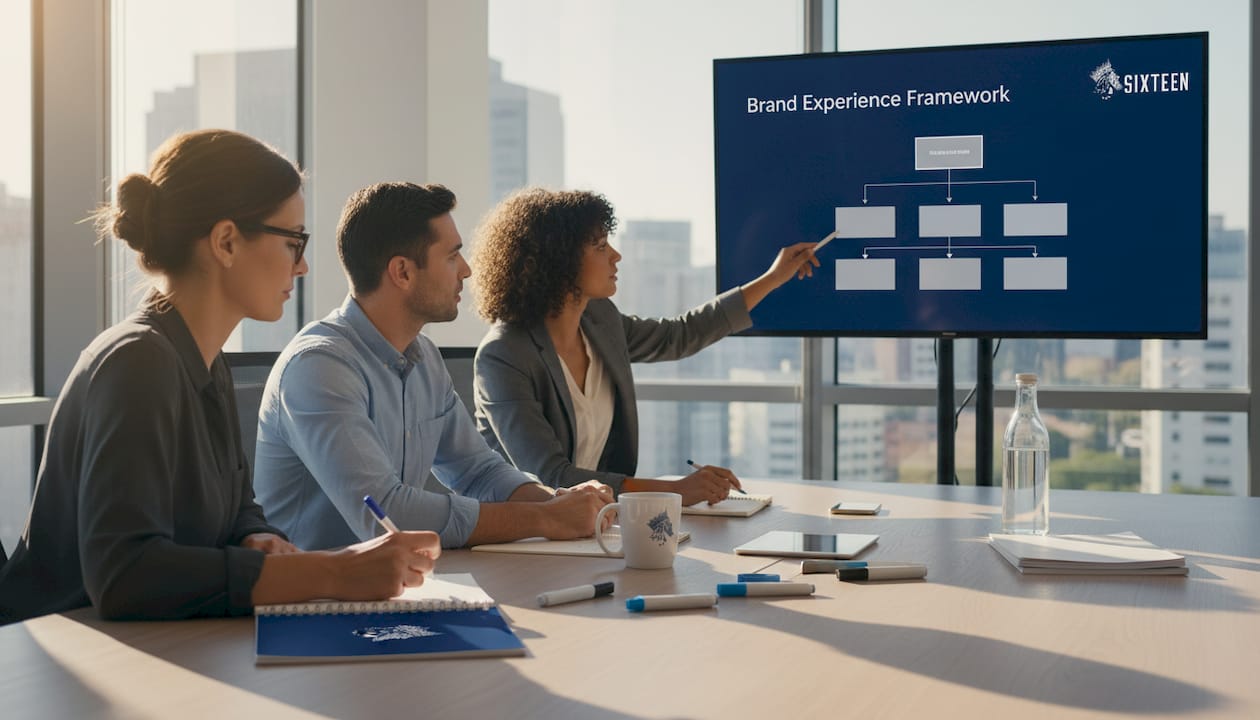
The solution is intentional cross-functional alignment. Setting regular forums with CEOs, CPOs, and CFOs to align on the full consumer journey is not a nice-to-have. It is the structural backbone of effective experience delivery.
Here is what that alignment looks like in practice versus what most companies actually do:
| Approach | What it looks like | Outcome |
|---|---|---|
| Isolated | Marketing plans event in a silo; ops and finance notified late | Budget cuts, poor staffing, inconsistent messaging |
| Partially integrated | Marketing consults ops for logistics only | Better execution, but no shared goals or measurement |
| Fully integrated | All functions co-own the experience strategy and KPIs | Seamless delivery, unified messaging, measurable ROI |
The benefits of full integration extend well beyond smoother event day execution. When finance understands the revenue potential of an activation, they allocate budget more strategically. When product teams are involved early, they can use experiences to gather real-time customer feedback that informs roadmap decisions. When sales teams are briefed properly, follow-up conversations feel like a continuation of the experience rather than a cold reset.
Key actions that drive cross-functional integration:
- Establish a shared experience brief that all functions sign off on before any creative work begins.
- Define shared KPIs that matter to each function: marketing wants engagement, sales wants pipeline, finance wants efficiency.
- Assign a cross-functional experience lead who has authority to coordinate across departments, not just report to one.
- Build post-event debriefs that include all functions, not just marketing.
For more detail on how experiential strategies translate across departments, and how to structure leadership alignment for experiential success, both resources are worth reviewing before your next planning cycle.
Pro Tip: Create a one-page "experience promise" document that captures the core emotional outcome you want customers to feel. Distribute it to every function involved. It becomes the north star that keeps creative, operations, and sales aligned even when details change.
An integrated team delivers results, but how do you know if those efforts are actually moving the needle? Let's examine the metrics that matter.
Measuring what matters: New metrics for brand experience effectiveness
Headcount is not a strategy metric. Neither is social reach. Both numbers feel good in a recap deck, but neither tells you whether your experience moved a customer closer to buying, staying, or advocating.
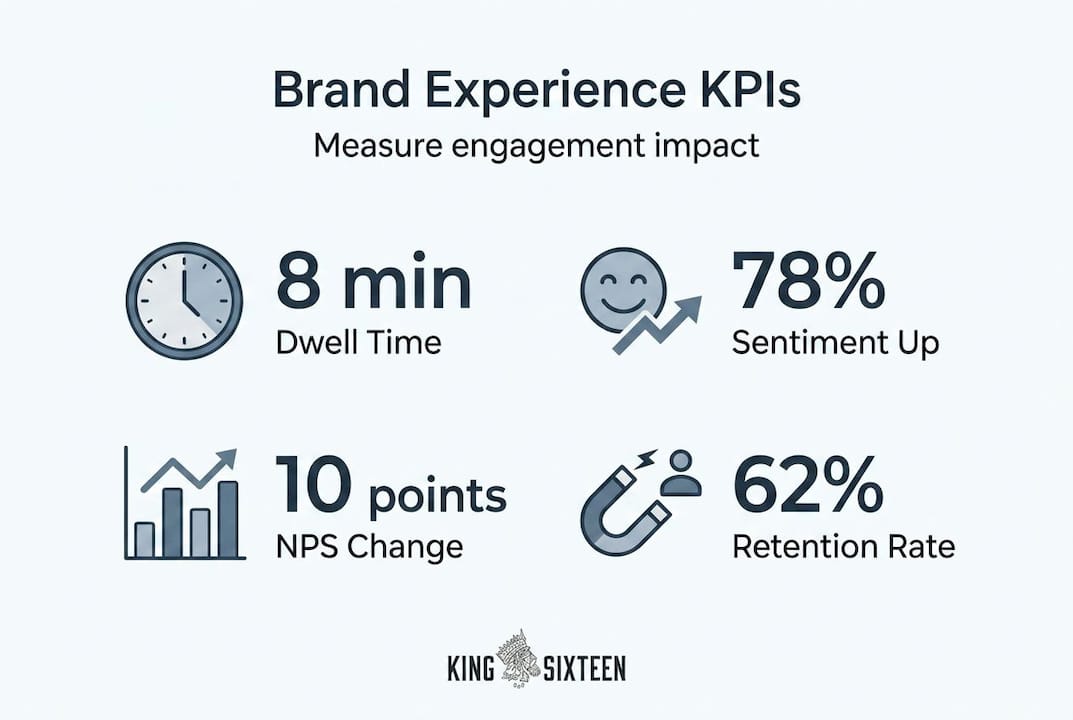
Best-practice measurement is moving toward an engagement-quality lens, including dwell time, engaged minutes, sentiment and NPS shifts, plus downstream conversion and retention metrics. This shift reduces reliance on attendance and social impressions alone, which is the right call for any brand serious about ROI.
Here is how to structure a modern measurement framework for brand experiences:
| Metric category | Examples | What it signals |
|---|---|---|
| Engagement quality | Dwell time, engaged minutes, interaction rate | How deeply attendees connected with the experience |
| Sentiment and perception | NPS, post-event survey scores, social sentiment | Emotional impact and brand perception shift |
| Downstream conversion | Pipeline influenced, sales meetings booked, purchases | Direct revenue contribution |
| Retention indicators | Repeat purchase rate, subscription renewal, loyalty program uptake | Long-term loyalty impact |
Steps to upgrade your experience measurement approach:
- Set baseline metrics before the event. You cannot measure a shift if you do not know where you started. Pull NPS scores, retention rates, and purchase frequency data at least 30 days before activation.
- Instrument the experience environment itself. Use heat mapping tools, RFID tracking, or timed interaction data to capture dwell time and engagement depth in real time.
- Build a 90-day measurement window. Most conversion and retention signals appear weeks after the event. A recap measured at day three is capturing impressions, not impact.
- Tie experience data to CRM. Connect attendee data to your customer relationship management system so you can track behavior changes post-experience for each individual who attended.
Understanding your experiential measurement approach from the start, and knowing how to evaluate brand marketing impact over time, makes the case for continued investment far easier to win internally.
With robust measurement in place, it's vital to maintain the integrity of your brand promise as experiences and tools evolve.
Maintaining continuity: Avoiding experience and brand identity gaps
Here is a risk that grows as your experience programs become more sophisticated: the more you personalize, automate, and orchestrate, the more opportunities you create for your brand to feel inconsistent.
Immersive programs need continuity: if tooling, personalization, or orchestration changes touchpoints without preserving the brand's core promise, the experience can become harder for customers to interpret, creating identity discontinuity that quietly erodes trust.
The most common drivers of this problem include:
- Technology changes that outpace brand guidelines. A new AI-personalization tool starts customizing email follow-ups and on-site signage in ways that no longer match the tone or visual identity of the experience.
- Vendor and partner inconsistency. Different vendors across different activations apply brand standards differently, creating a fragmented impression over time.
- Decentralized decision-making. Regional teams or business units running their own experiences without alignment to a central brand experience standard.
- Rapid scaling without governance. Expanding an experience program too quickly while the systems for brand consistency have not caught up.
"Your customer does not experience your org chart. They experience one brand. Every gap between departments shows up as a crack in their trust."
Proven ways to protect continuity as your program evolves:
- Build a living experience playbook that is updated quarterly and documents tone, visual identity standards, interaction design principles, and escalation paths for off-brand decisions.
- Conduct continuity audits after every major activation. Review every touchpoint from invite to post-event follow-up for alignment with the brand promise.
- Centralize vendor briefs. Every partner who touches the experience should receive the same briefing document, not just a logo file and a color palette.
Investing in brand environment design from the start of your experience planning process is one of the most practical ways to build continuity into the structure of the program rather than trying to retrofit it later.
Having addressed continuity, let's look at this topic from a perspective that goes beyond common industry practices.
Why most companies get brand experience wrong and what actually works
Here is the uncomfortable truth we have observed across hundreds of activations: most companies invest in spectacle when they should be investing in systems.
They budget for the wow moment, the jaw-dropping installation, the celebrity appearance, and they underinvest in the before and after. The insight work that should have informed the design. The cross-functional alignment that should have shaped the execution. The measurement framework that should have been built before a single vendor was briefed.
The brands that achieve long-term loyalty and revenue impact through experience are not always the ones with the biggest budgets or the most elaborate installations. They are the ones with the clearest systems. They know why they are doing this. They know who it is for. They know how every department will support it. And they know exactly how they will measure success before the doors open.
We have seen luxury brand engagement done right by brands that invest deeply in pre-event consumer insight and post-event measurement, while spending moderately on the physical production. And we have seen massive budget activations fall flat because there was no strategy connecting the experience to a business outcome.
The warning signs that your experience program needs a strategic reset are straightforward. Your post-event recaps focus almost entirely on attendance and impressions. Your marketing and sales teams do not debrief together after activations. Your experience design starts with venue and aesthetics rather than customer insight and desired outcomes. And your leadership team views brand experience as marketing's responsibility alone rather than a shared organizational priority.
If any of those resonate, the fix is not a bigger production budget. It is a sharper strategy.
Take your brand experiences further with expert partnership
The insights in this guide point toward one clear conclusion: great brand experiences are built on strategy, insight, and integration, not just creative energy. Executing at that level consistently requires the right partner.
At King Sixteen, we design and execute immersive brand experiences that are grounded in strategic intent and built to deliver measurable outcomes. From full-scale experiential marketing services that transform product launches into demand-generating moments, to private event solutions that create lasting impressions for high-value audiences, our turnkey model means you get integrated execution without the coordination headaches. We handle design, fabrication, AV, staffing, venue, and logistics so your team can focus on strategy, not spreadsheets. Ready to build experiences that your customers genuinely feel? Discover what's possible with King Sixteen.
Frequently asked questions
What distinguishes a brand experience from traditional advertising?
A brand experience is an interactive, immersive touchpoint that builds emotional connection and drives downstream behavior, while advertising typically delivers a one-way message. Brand experiences are increasingly treated as end-to-end, cross-functional strategy work rather than standalone creative efforts.
Which metrics best indicate a successful brand experience?
Engaged minutes, dwell time, NPS shifts, and customer retention rate reflect true experience effectiveness far better than attendance counts. Best-practice measurement now emphasizes engagement quality and downstream conversion over surface-level impressions.
How can large organizations prevent experience gaps as they modernize?
Maintain regular cross-functional leadership alignment and build a living experience playbook that preserves brand promise continuity across every touchpoint. Immersive programs require continuity so that tooling or personalization changes do not introduce identity discontinuity.
Why do some brand experiences fail to drive loyalty or conversion?
Experiences fail most often when they are disconnected from consumer insight and treated as isolated events rather than integrated organizational strategies. Effectiveness as a loyalty mechanism depends on deep insight and cross-functional integration, not creative execution alone.