
Branded displays are defined as strategic visual merchandising tools that shape consumer perception and drive purchase decisions at the physical point of sale. They are one of the few marketing variables a brand fully controls inside a retail environment, making them a primary conversion asset rather than a secondary decoration. 76% of consumers discovered new products because of in-store displays, and 63% said displays influenced their final choice among similar products. That data alone explains why branded displays matter to every marketing professional responsible for in-store performance.
Why branded displays matter for consumer behavior and sales
Branded displays work because most shoppers arrive without fixed decisions. Nearly 75% of shoppers do not have fully predetermined purchase decisions before entering a store, and 92% often buy items not originally intended. That fluidity is an opening. A well-placed display converts a browsing shopper into a buyer before a competitor's product even registers.
The sales impact is measurable and significant. Products in strategically placed displays achieve sales lifts of up to 300% compared to standard shelving. That is not a marginal gain. It reflects the compounding effect of visibility, physical interruption of shopping flow, and the psychological signal that a featured product is worth attention.
Displays also extend the time shoppers spend with a brand. Optimized display placement increases shopper dwell time by up to 30%, which correlates directly with larger basket sizes and higher conversion rates. More time in front of a product means more consideration, more emotional engagement, and a higher probability of purchase.
The behavioral mechanism behind this is straightforward. Branded displays physically interrupt shopper navigation, creating visual zones that separate your product from competitors and increase impulse purchases. Think of a display as a three-dimensional billboard. It captures attention from across the aisle and closes the sale at arm's reach.
"Modern high-end retail displays integrate branding, storytelling, and sales performance, representing a primary conversion point rather than a secondary marketing asset." — Felber Displays
The importance of brand displays goes beyond a single transaction. Each interaction a shopper has with a well-designed display reinforces brand recognition, making future purchases more likely even outside the store environment.
What makes a branded display effective?
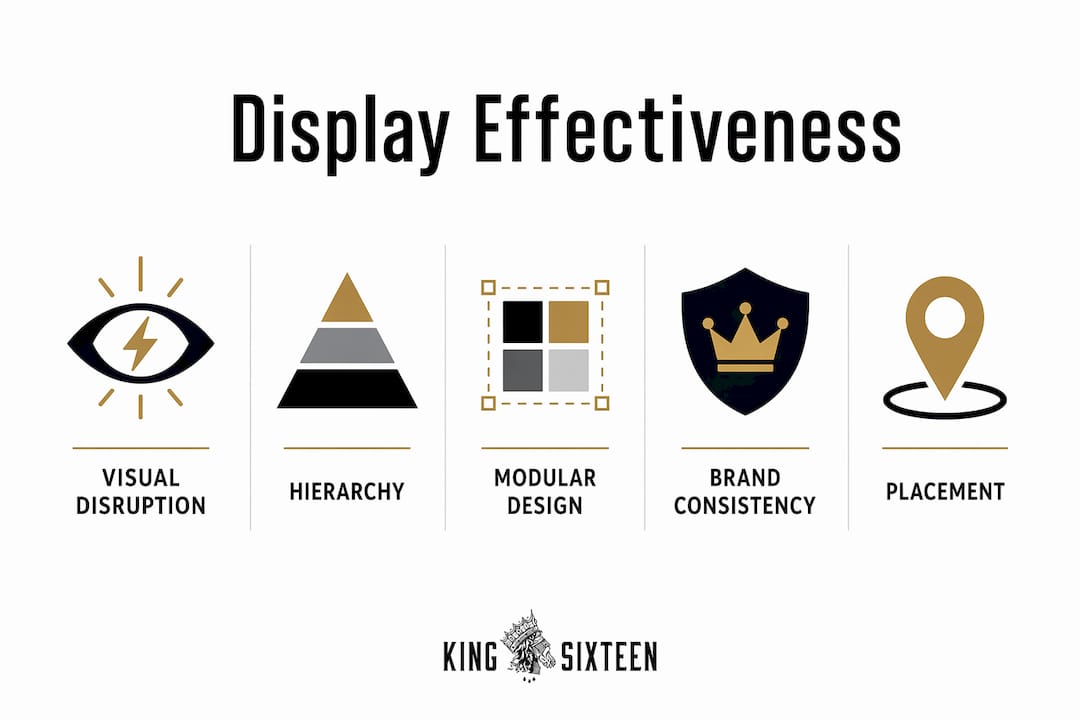
Effective display design follows a clear hierarchy. The first job of any display is to stop a shopper from 15 to 30 feet away. After that, it earns a closer look. Most displays fail because they try to do both jobs simultaneously, cramming product details and brand messaging into a single visual field.

Overcrowding displays with excessive text reduces shopper engagement. High-contrast visuals, bold shapes, and a single dominant color pull traffic effectively. Detailed information belongs at close range, where a shopper has already committed to engaging. This two-stage approach is how the best visual merchandising programs are built.
The four design principles that govern effective displays are:
- Visual disruption at distance. Use high-contrast color and strong geometric shapes to create a 30-foot visual break in the retail environment. The display must read as different before a shopper can read it as branded.
- Negative space. Resist the urge to fill every surface. Empty space signals confidence and premium positioning. Cluttered displays communicate discount, not quality.
- Material and lighting quality. The physical materials of a display communicate brand values before a word is read. Matte finishes, backlit panels, and premium substrates signal a different brand tier than corrugated cardboard.
- Strategic placement. Endcaps, checkout zones, and main aisle intersections are the highest-value real estate in any retail environment. Retailers prefer brands that provide professional displays, often awarding better floor placement as a direct result.
Pro Tip: Design your display in two layers. The outer layer is pure visual disruption: color, shape, and brand mark only. The inner layer, visible at two to three feet, carries product details, pricing, and the call to action. This structure matches how shoppers actually move through a store.
Modular display systems add another layer of value. High-performing brands use modular systems that allow campaign evolution without full rebuilds. A modular approach reduces long-term cost, supports sustainability goals, and keeps the brand presence fresh across multiple retail cycles.
How displays build long-term brand identity and loyalty
The benefits of branded displays extend well past the immediate sale. A display is a brand ambassador. It communicates aesthetics, values, and positioning without a salesperson present. Done well, it creates the same impression a flagship store would, at a fraction of the cost.
Custom point-of-sale displays create sensory experiences that foster brand identity and drive both impulse purchases and repeat engagement. The sensory dimension is what separates a display from a shelf. Touch, sight, and spatial context all contribute to how a shopper feels about a product, and those feelings persist after the purchase.
Consider how luxury brands approach this. Gallery-style displays that present products in isolation, with museum-quality lighting and minimal copy, elevate perceived value before a price tag is seen. The display itself communicates that the product belongs in a different category. That perception carries into the post-purchase experience and shapes how buyers talk about the brand to others.
The connection between displays and brand storytelling is direct. A display that tells a coherent visual story, one that aligns with the brand's advertising, packaging, and digital presence, reinforces recognition across every touchpoint. Shoppers who encounter a consistent brand story across channels are more likely to become repeat buyers.
- Displays that align with campaign creative build recognition faster than isolated in-store efforts.
- Storytelling-driven displays increase the perceived quality of the product they feature.
- Consistent visual identity across displays and packaging reduces the cognitive effort required for a repeat purchase decision.
- Effective branded displays build long-term brand identity by communicating aesthetics and value propositions at the point of sale.
The visual merchandising framework known as the 4 Ps, which covers Product, Presentation, Placement, and Promotion, governs how immersive brand experiences elevate perceived equity. Brands that apply this framework consistently across their display programs build stronger loyalty than those treating each display as a one-off project.
Common mistakes that reduce display effectiveness
The most common display mistake is treating text as a design element. Shoppers ignore displays loaded with copy. The eye moves to color and shape first. Text is processed only after visual interest is established. A display that leads with a paragraph of product benefits loses the shopper before the first word is read.
The second most damaging mistake is ignoring visual hierarchy. Every display needs one dominant element, one supporting element, and negative space. When everything competes for attention, nothing wins. The result is a display that reads as noise rather than signal.
Pro Tip: Before finalizing any display design, stand 30 feet away and photograph it with your phone. If you cannot identify the brand and the hero product in under three seconds from that image, the design needs simplification.
Other critical errors that undermine display effectiveness include:
| Mistake | Impact |
|---|---|
| One-off, single-use fixtures | High cost per impression, no campaign continuity |
| Poor placement outside traffic zones | Minimal shopper exposure regardless of design quality |
| Misalignment with brand campaign | Confuses shoppers and dilutes recognition |
| Ignoring retailer guidelines | Risks losing premium floor placement |
| Overcrowding product on the display | Reduces perceived value and makes selection harder |
Placement errors are particularly costly because they are invisible. A beautifully designed display in a low-traffic corner delivers almost no return. The significance of visual marketing is only realized when the display is positioned where shoppers actually walk. Securing endcap and main aisle placement requires both a strong display and a strong retail relationship.
Neglecting integration with the broader brand campaign is the mistake that compounds over time. A display that looks nothing like the brand's current advertising creates a disconnect that erodes trust. Shoppers notice inconsistency even when they cannot articulate it.
Key Takeaways
Branded displays are a primary conversion tool, not a secondary asset, and their effectiveness depends on design discipline, strategic placement, and consistent brand storytelling.
| Point | Details |
|---|---|
| Displays drive discovery and purchase | 76% of consumers discovered products via in-store displays, and 63% said displays influenced their final choice. |
| Sales lift is substantial | Strategic display placement delivers up to 300% sales lift compared to standard shelf positioning. |
| Design hierarchy is non-negotiable | Lead with visual disruption at distance, then layer in product detail at close range. |
| Modular systems outperform one-off builds | Adaptable display systems reduce cost, support sustainability, and maintain brand presence across campaigns. |
| Consistency builds loyalty | Displays aligned with campaign creative and brand identity accelerate recognition and repeat purchase behavior. |
What I've learned from watching brands win and lose at retail
The brands that consistently outperform at retail share one trait: they treat the display as part of the campaign, not the end of it. I've watched well-funded brands invest heavily in advertising and then place a generic fixture on the floor that shares nothing visually with the campaign. The shopper who saw the ad and walked into the store looking for that product could not find it because the display did not match the memory.
The brands that get it right, the ones that brief their display design team at the same time they brief their media agency, create a closed loop. The ad creates desire. The display fulfills it. That sequence is simple in theory and rare in practice.
There is also a tendency to underestimate the retailer relationship. A great display is a negotiating asset. Retailers want brands that make their floors look good and drive traffic. A professional, well-designed display opens conversations about endcap placement that a shelf-only brand cannot have. That placement advantage compounds over time.
My honest recommendation: invest in branded environment design before you finalize your media budget. The display is where the money you spent on awareness either converts or disappears. Treat it accordingly.
— Tyler
How Kingsixteen builds displays that make brands felt
Kingsixteen designs and fabricates physical brand assets that create visual authority at events, retail environments, and activations. The work spans custom installations, display systems, and full experiential marketing campaigns built for brands like Porsche, Audi, Ray-Ban, and Fossil.
If you are responsible for a brand's physical presence and want displays that do more than hold product, Kingsixteen operates as a turnkey partner. Design, fabrication, placement strategy, and campaign integration are handled under one roof. The result is a display program that performs from the first day on the floor and scales with your campaign calendar. Reach out to the Kingsixteen team to discuss what a custom display build looks like for your brand.
FAQ
Why do branded displays matter more than standard shelving?
Branded displays create visual interruption, increase dwell time, and communicate brand identity before a shopper reaches the product. Standard shelving provides none of those advantages.
How much of a sales lift can a branded display deliver?
Products featured in strategically placed displays achieve sales lifts of up to 300% compared to standard shelf placement, driven by increased visibility and shopper engagement.
What is the biggest design mistake in branded displays?
Overcrowding the display with text and product information is the most common error. Shoppers respond to bold visuals first, and detailed copy should only appear at close range.
How do modular display systems improve ROI?
Modular systems allow brands to update creative and product without rebuilding the entire fixture, reducing cost per campaign cycle and maintaining a consistent brand presence over time.
How do branded displays support long-term brand loyalty?
Displays that align with campaign creative and communicate a consistent brand story reinforce recognition across touchpoints, making repeat purchase decisions faster and more automatic for returning shoppers.