Most marketing leaders assume brand storytelling means writing a polished origin story, posting it on the "About Us" page, and calling it a day. That assumption is costing brands real engagement. Brand storytelling is actually a structured, repeatable narrative system designed to move audiences through emotional arcs, build credibility, and drive measurable outcomes. When applied to experiential campaigns, it shifts from content strategy into something far more powerful: a live, participatory framework that audiences don't just read but actually feel. This article breaks down how that system works and how you can apply it.
Table of Contents
- Defining brand storytelling: More than brand history
- How narrative structures drive impactful brand campaigns
- Nuances and pitfalls: When classic storytelling templates misfit brands
- Story-living: Designing experiential campaigns that immerse audiences
- What most brands miss: The real ROI lies in experience, not words
- How King Sixteen can help you activate your brand story
- Frequently asked questions
Key Takeaways
| Point | Details |
|---|---|
| Brand storytelling is systematic | It’s a structured approach based on narrative arcs, not just brand history. |
| Proof drives credibility | Including evidence and third-party validation makes stories authentic and persuasive. |
| Hero’s Journey isn’t universal | Some brands require open-ended, evolving narratives to connect with their audiences. |
| Story-living deepens engagement | Experiential campaigns invite audiences to participate and emotionally invest. |
| Immersive experience fuels ROI | Brands that prioritize experiences see greater advocacy and repeat engagement. |
Defining brand storytelling: More than brand history
Brand storytelling is not a summary of how your company started. It is a systematic method for shaping how audiences receive, interpret, and emotionally connect with your brand's message across every touchpoint. Think of it as a delivery architecture, not a content category. The story structure you choose determines whether your audience leans in or tunes out.
Here is what strong brand storytelling actually does:
- Creates a clear protagonist (often the customer, not the brand)
- Establishes real stakes that the audience cares about
- Moves through a narrative arc with emotional tension and satisfying resolution
- Backs the resolution with credible proof so the payoff lands
The confusion most leaders face comes from conflating "brand messaging" with "brand storytelling." Messaging is a set of claims. Storytelling is a structured experience of those claims. Storytelling in marketing operates differently in the brain: it activates emotional processing, creates memory hooks, and builds trust over time in a way that a list of product benefits simply cannot.
A practical way to operationalize brand storytelling is to adapt narrative structure into a repeatable messaging system, using a setup-tension-resolution arc and including proof or evidence so the story's payoff is credible. This moves brand storytelling from a creative exercise into a repeatable operational asset that your marketing team can build campaigns around.
"Storytelling is not decoration. It is infrastructure. When you build narrative into a campaign from the ground up, every touchpoint reinforces the same emotional journey your audience is already on."
When you think about brand engagement through this lens, the difference becomes stark. Brands that integrate story structure into experiential campaigns consistently generate deeper audience response than those relying on traditional messaging alone.
How narrative structures drive impactful brand campaigns
Once you accept that storytelling is a system, the next question is: which structure works best for campaigns? The setup-tension-resolution model is the most reliable and transferable narrative framework for brand activation work.
Here is how it maps to a campaign context:
- Setup: Establish who the audience is and what their world looks like before your brand enters it. Define the protagonist's reality clearly, so the tension that follows feels personal.
- Tension: Introduce the challenge, problem, or unmet need your brand addresses. This is the emotional engine of the story. Without genuine tension, audiences have no reason to stay invested.
- Resolution: Show how the brand delivers a meaningful change. This is where your product or experience proves its value. Critically, resolution without proof is just a claim.
- Proof and evidence: The Umbrex Brand Narrative Arc Framework specifies that you must define a protagonist and stakes, follow the arc, and include third-party credible validation that the resolution is real. Testimonials, data, live demonstrations, and press coverage all serve this function.
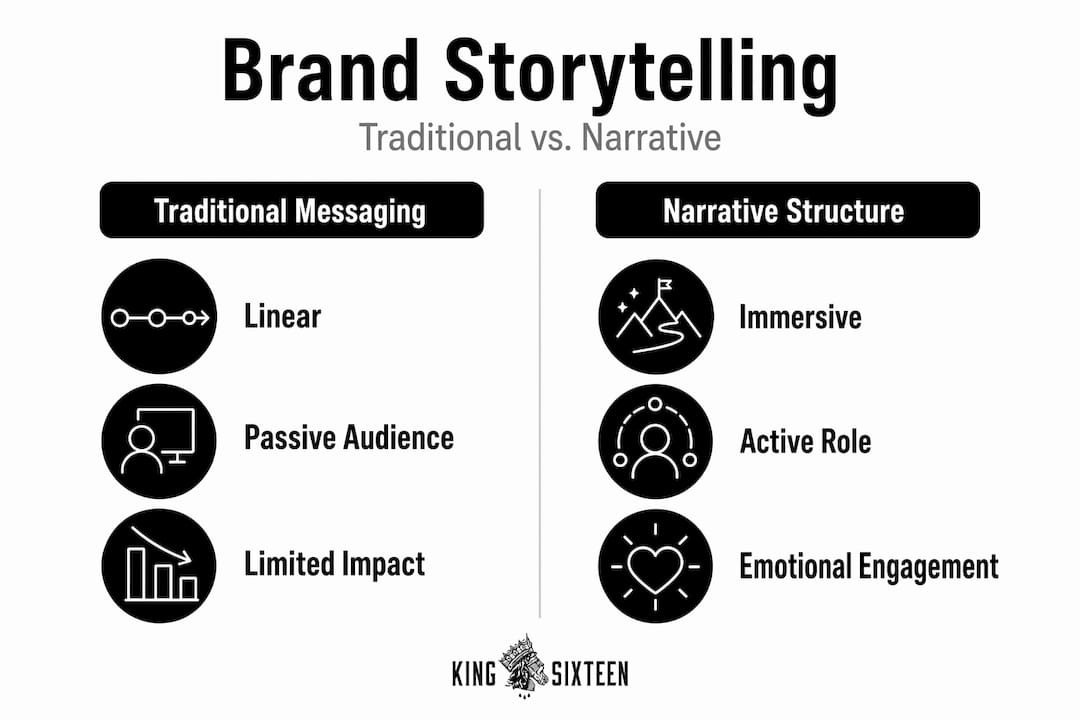
Traditional messaging vs. narrative storytelling
| Approach | Structure | Audience Role | Emotional Impact | Credibility Driver |
|---|---|---|---|---|
| Traditional messaging | Claim-based | Passive receiver | Low | Brand authority |
| Narrative storytelling | Arc-based | Active participant | High | Third-party proof |
| Experiential storytelling | Immersive arc | Co-creator | Very high | Live, felt experience |
The table above shows a pattern worth paying attention to: as story structure becomes more immersive, audience role shifts from passive to active, and emotional impact increases. This is not coincidental. Brand identity effectiveness research consistently shows that audiences who participate in a brand story retain it longer and advocate for it more frequently.
When you design brand activations, the narrative arc should inform every physical and digital element of the campaign, from the environment design to the guest journey sequence. Strong brand engagement strategies layer multiple proof points throughout the experience so the resolution lands with full credibility.
Pro Tip: Never lead with the brand as the hero. Position your audience as the protagonist facing a real challenge, and let your brand play the enabling role. This single structural shift dramatically increases emotional resonance.
Nuances and pitfalls: When classic storytelling templates misfit brands
The Hero's Journey is the most widely cited storytelling framework in marketing circles. It is also one of the most misapplied. The Hero's Journey works beautifully when a brand can point to a clear, complete transformation with a defined beginning and end. Most real brand relationships do not work that way.
The core limitation is structural. The Hero's Journey assumes clean closure: a hero faces a challenge, transforms, and emerges victorious. That arc implies a finished story. But many of the most valuable brand relationships are ongoing, community-driven, and intentionally open-ended. Applying a tidy transformation arc to those relationships can actually undermine authenticity.
Words By Peta's analysis points to a critical edge-case nuance: some storytelling templates, including the Hero's Journey, can misfit brands that rely on relational, community-centered change or require open-ended transformation. Critics argue that the Hero's Journey's "clean closure" assumption can push messaging toward overly tidy before-and-after narratives that audiences experience as unreal.
This is a real risk for established brands. Here is what audiences actually respond to with skepticism:
- Before-and-after claims that feel too perfect or fast
- Single transformation stories that erase the complexity of real customer journeys
- Narratives where the brand is the obvious hero and customers are passive beneficiaries
- Stories that end with a product purchase as the satisfying "resolution"
"Authenticity does not come from perfect narrative structure. It comes from honest tension and unresolved questions that mirror real life."
For relational and experiential brands, alternative storytelling structures often serve better. Consider focusing on belonging narratives (the audience is already part of something meaningful), ongoing change stories (the journey is continuous and the brand walks alongside you), or collaborative action arcs (audience and brand are co-creating the outcome together).
Trust-building content research shows that audiences are more likely to engage deeply with brands that acknowledge complexity and imperfection. This is especially true for luxury and premium brands, where authenticity carries more weight than polish.
Experiential marketing moments reinforce this point clearly. When you design live experiences, the absence of a tidy resolution can actually be a strategic asset. It keeps audiences in a state of active curiosity, which sustains engagement long after the event ends. Strong brand experience strategies account for this by designing campaigns with intentional open loops.
Story-living: Designing experiential campaigns that immerse audiences
The frontier shift in brand storytelling is not about perfecting your narrative framework. It is about moving from storytelling to what practitioners call "story-living." The distinction matters enormously for experiential campaign design.
Spinta Digital defines story-living as shifting from telling to designing experiences and participation so people can feel the narrative through belief, behavior, and belonging, rather than only consuming brand messages. This is not a subtle distinction. It changes the fundamental design question from "What story are we telling?" to "What story are we inviting people to live?"
Here is how you implement that shift in practice:
- Map the audience journey as narrative beats. Treat every moment of your activation, from arrival to departure, as a chapter in the story. Each physical environment, staff interaction, and sensory cue should advance the narrative arc.
- Give audiences roles, not just experiences. Story-living works when participants have agency. Design moments where guests make choices, interact with elements, or contribute something to the experience. This creates co-authorship.
- Build participatory proof points. Instead of showing testimonials on screens, engineer live moments where audiences witness or create outcomes. A product demonstration that guests control is more credible than any video testimonial.
- Design for memory formation. AI brand identity strategies research in 2026 confirms that multisensory environments dramatically increase recall. Smell, texture, sound, and spatial design are storytelling tools, not decoration.
- Create shareable narrative moments. When an audience member photographs or shares a moment from your activation, they are extending your story into their own network. Design those moments intentionally.
Story-living campaign types and audience impact
| Campaign type | Story element | Audience participation | Engagement depth |
|---|---|---|---|
| Immersive product launch | Resolution-focused arc | High interaction | Long-term brand recall |
| Community activation | Belonging narrative | Collaborative contribution | Advocacy and loyalty |
| Multi-sensory installation | Ongoing change story | Sensory and spatial agency | Emotional brand connection |
| Live demonstration event | Proof and evidence | Direct participation | Trust and purchase intent |
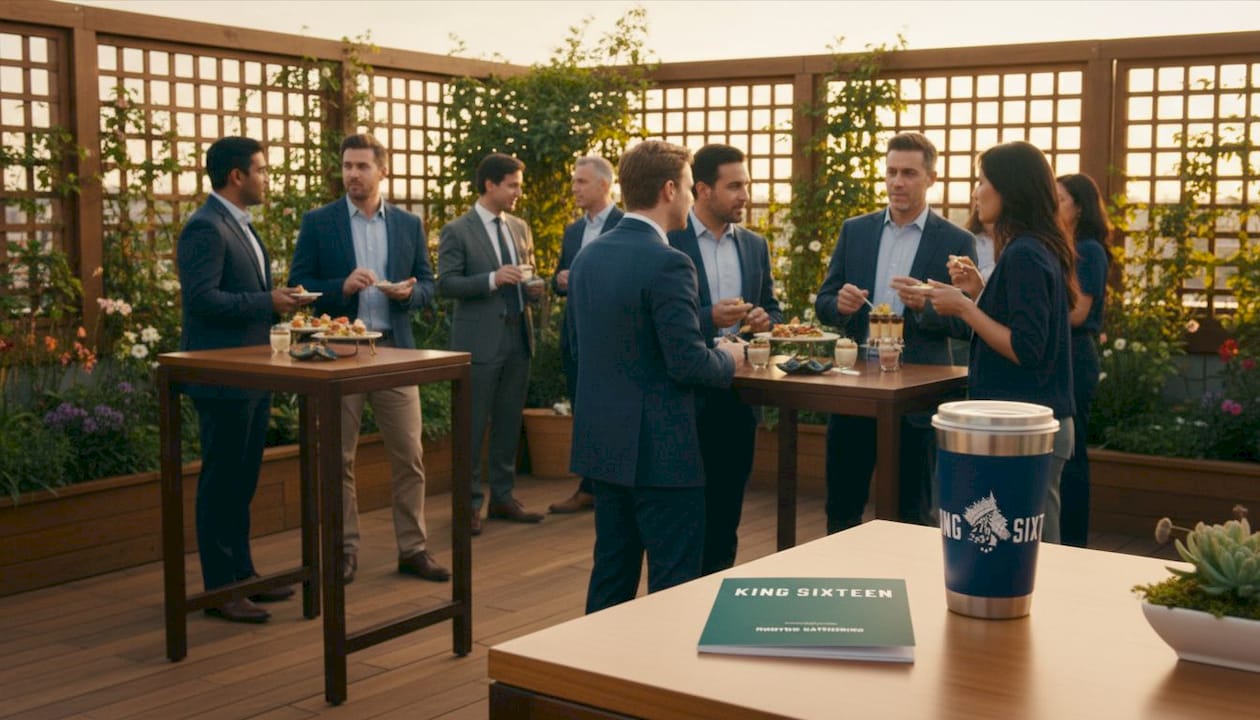
Brand experience engagement data consistently shows that participatory campaign formats outperform passive ones on both emotional connection and purchase intent metrics. When you apply experiential marketing strategies with story-living principles built in, the campaign stops being something audiences attend and starts being something they remember as having happened to them.
Pro Tip: Before finalizing any campaign design, identify at least three moments where the audience can make a meaningful choice or take a visible action. Those moments are your story-living anchors and they are what guests will talk about afterward.
What most brands miss: The real ROI lies in experience, not words
Here is the hard truth we see repeatedly: the brands that invest the most in perfecting their narrative frameworks often produce the least memorable campaigns. Why? Because they get so focused on the architecture of the story that they forget to design the felt experience of it.
You can have a flawless setup-tension-resolution arc, airtight proof points, and a beautifully documented brand narrative guide, and still produce an event that audiences walk away from feeling nothing. The story was told. It just was not lived.
The brands winning right now in experiential marketing are not the ones with the most polished storytelling decks. They are the ones designing environments where the narrative becomes inescapable. Where every spatial decision, every staff interaction, every sensory detail reinforces the same emotional journey. Where audiences are not observers but characters.
The ROI case for this approach is not theoretical. Experience-driven storytelling correlates directly with deeper brand advocacy, higher repeat engagement, and stronger social amplification. When someone participates in an experience rather than watching it, they internalize the story as their own. That is the most durable form of brand loyalty you can build.
Our perspective, built from activations with brands like Porsche, Audi, Ray-Ban, and Churchill Downs, is this: the best narrative framework in the world is a starting point, not a destination. The real work is translating that framework into experiential engagement strategies that create physical, emotional, participatory moments. Give your audience something to do, something to feel, and something to tell others about. That is where story becomes ROI.
How King Sixteen can help you activate your brand story
Translating a brand narrative into a campaign that audiences actually feel is a specific discipline. It requires equal parts strategic clarity and operational excellence, and most brands do not have both in-house.
King Sixteen designs and executes experiential marketing campaigns that turn your brand narrative into immersive environments, live moments, and participatory story arcs. Whether you need a full-scale product launch, a high-impact summit, or a custom fabricated brand installation, we handle the entire process, from concept and narrative design to staffing, fabrication, AV, and logistics. If you are ready to move beyond traditional brand messaging and into experiences your audience will carry with them, explore our event services or connect with our team to discuss your next campaign. We also offer specialized private event services for brands that need precision and confidentiality at the highest level.
Frequently asked questions
How can brand storytelling increase ROI in experiential marketing?
Brand storytelling makes campaigns emotionally resonant and memorable, which drives higher audience engagement and action after the event. The Umbrex Brand Narrative Arc Framework identifies proof and evidence as essential elements for campaign ROI, because credible resolution is what turns a good story into a persuasive one.
Should all brands use the Hero's Journey template for their stories?
No. Brands focused on ongoing relationships, community engagement, or evolving transformation often need more open-ended narrative structures. Words By Peta notes that the Hero's Journey's "clean closure" model can push brand messaging into overly tidy narratives that audiences find unconvincing.
How do you make brand stories credible and authentic?
Adding third-party proof and evidence, such as testimonials, live demonstrations, or independent data, gives your story's resolution real weight. The Umbrex Brand Narrative Arc Framework specifically recommends credible third-party validation to confirm that the story's resolution is real, not just claimed.
What is "story-living" in the context of experiential marketing?
Story-living is when audiences participate in an immersive campaign and become active characters in the brand narrative rather than passive observers. As Spinta Digital describes it, story-living allows people to feel the narrative through belief, behavior, and belonging, which creates far deeper brand connection than message-based storytelling alone.