Events are defined as one of the most direct revenue-generating channels available to B2B marketers, and the data proves it. 83% of marketers report that events generate steady revenue and accelerate sales cycles. That figure alone reframes why events drive revenue from a soft benefit into a measurable business outcome. The global business events sector generated $1.3 trillion in direct spending in 2025, a 12.2% increase since 2019. That scale reflects a market that has moved well past "nice to have." Events are now a core growth channel, and the organizations treating them that way are pulling ahead.
Why events drive revenue: the core mechanisms
Events create a type of buyer engagement that no digital channel can replicate. When a prospect walks into your space, joins your dinner, or attends your conference, they are making an active choice. That opt-in behavior signals purchase intent in real time, moving buyers from passive awareness into active evaluation. Your sales team gets live intelligence that no ad click or email open can provide.
The revenue impact shows up in three specific ways:
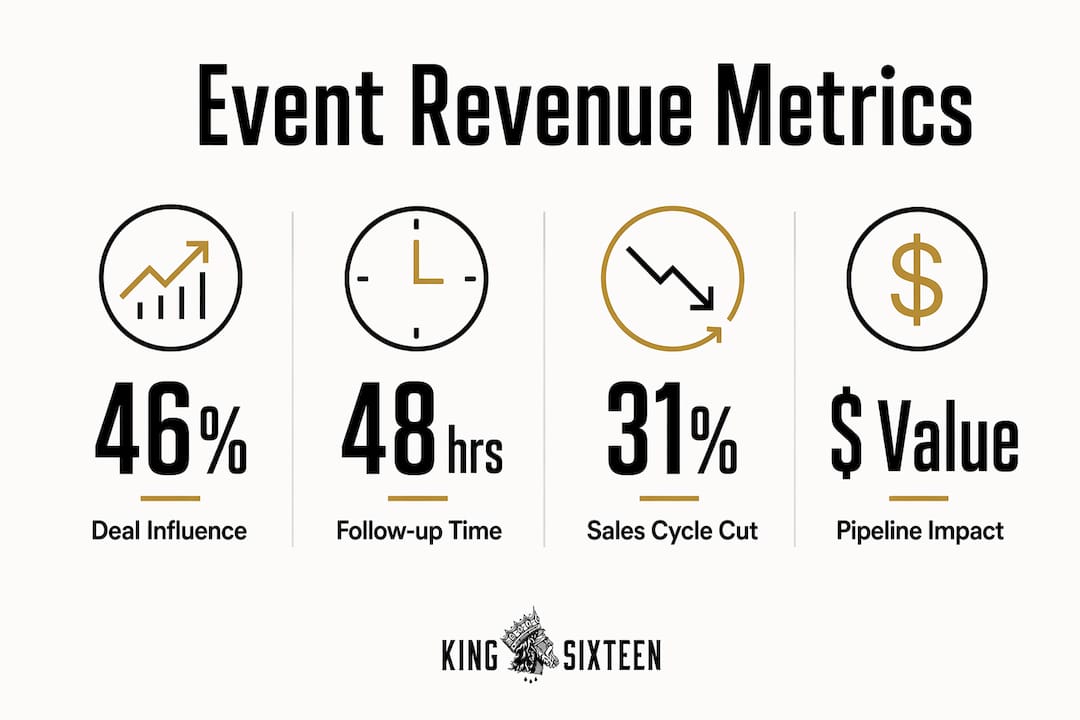
- Pipeline acceleration. 31% of marketing teams report a 20–30+ day reduction in sales cycle length directly tied to event participation. Shorter cycles mean faster cash and lower cost of sale.
- Deal size expansion. Face-to-face engagement builds trust faster than any digital touchpoint. Buyers who attend events are more likely to expand scope and commit to larger contracts.
- Intent signal capture. Conversations at events reveal where a buyer sits in their decision process. That intelligence, when captured and acted on, drives targeted follow-up that converts.
Different event formats serve different revenue goals. Executive dinners accelerate late-stage deals by creating intimacy with decision-makers. Conferences build top-of-funnel awareness and generate broad pipeline. Webinars nurture mid-funnel prospects at scale. The format you choose should match the stage of the buyer journey you are trying to influence.
Pro Tip: Map each event format to a specific pipeline stage before you plan the program. A dinner for a prospect already in negotiation serves a different purpose than a conference session for cold accounts. Mixing them without intention dilutes both.

How do you measure the revenue impact of events?
Most organizations measure events wrong. They count leads and attendance, then wonder why the CFO cuts the budget. Single-touch attribution undervalues event impact because it ignores every touchpoint that influenced the deal before the final close. Multi-touch attribution fixes this by distributing credit across all interactions, including the event that moved a deal from stalled to active.
The metrics that actually tell the revenue story are:
| Metric | What it measures |
|---|---|
| Pipeline influenced | Total deal value where an event touchpoint occurred |
| Deal acceleration | Days removed from the sales cycle after event participation |
| Net revenue retention | Expansion and renewal rates among event attendees |
| Account-based engagement | Decision-maker interactions captured at the event |
| Follow-up conversion rate | Meetings booked and deals progressed within 30 days post-event |
Event-influenced revenue measurement focuses on which decision-makers interacted at an event, capturing the full length of multi-touch buyer cycles. This approach gives you a realistic picture of how events contribute across a 90-day or 180-day deal. It also gives you the language to justify budget with executives who think in pipeline terms, not attendance numbers.
Pro Tip: Build post-event tracking and follow-up as a dedicated budget line item before the event happens. Teams that plan for ROI documentation from the start produce the data that funds next year's program.
Follow-up speed is the variable most teams underestimate. Leads are often lost if sales does not make contact within 48 hours of an event. The energy and context from a live conversation fades fast. Aligned sales and marketing operations, with clear handoff protocols and pre-built outreach sequences, are what separate programs that compound from programs that plateau.
What is Event-Led Growth and how does it compound revenue?
Event-Led Growth, or ELG, is a go-to-market strategy that treats events as a continuous pipeline engine rather than a series of isolated campaigns. The distinction matters. A one-off event produces a spike in activity. An ELG program produces compounding returns because each event feeds the next.
The ELG model works through a repeating cycle:
- Attract. Use content, community, and past attendee advocacy to fill your next event with the right buyers.
- Engage. Deliver an experience that surfaces buying signals and deepens relationships.
- Convert. Operationalize intent signals within 24 hours through targeted sales outreach.
- Advocate. Turn satisfied attendees into promoters who drive organic registrations for future events.
46% of high-performing marketers using ELG report that events drive 40%+ of their closed-won deals. Among ELG practitioners, 88% report steady revenue from events, compared to 77% for teams without an ELG approach. That gap widens over time as the flywheel builds momentum.
First-party data is the fuel that makes ELG work at scale. With third-party cookies largely deprecated, event data has become one of the most valuable sources of buyer intelligence available. Every registration, session attendance, and conversation is a signal you own. AI-driven content repurposing and automation extend the life of that data by turning event moments into ongoing content, follow-up sequences, and advocacy programs.
The infrastructure behind a mature ELG program includes:
- CRM integration that syncs event data automatically and tags accounts by engagement level
- Reusable event templates that reduce planning time and maintain quality across programs
- Automated post-event workflows that trigger outreach based on specific attendee behaviors
- A content library built from event recordings, panels, and conversations
Top event programs build these repeatable systems so that each event compounds the value of the last. The result is a revenue engine that gets more efficient with every program you run.
Best practices for executing revenue-driving event strategies
Execution is where most event programs lose their revenue potential. The strategy can be sound, but without the right operational discipline, buying signals go uncaptured and follow-up arrives too late. The teams that consistently convert events into revenue treat execution as a system, not a checklist.
- Align sales, marketing, and customer success before the event. Each team needs to know which accounts are attending, what stage those accounts are in, and what a successful outcome looks like. Misalignment at this stage produces generic follow-up that wastes the intelligence gathered on the floor.
- Capture intent signals within 24 hours. Operationalizing signals from event conversations within one business day accelerates deals and enables targeted outreach that feels personal, not automated.
- Design the attendee experience around the buyer journey. A prospect in early evaluation needs education and access to peers. A prospect in late-stage negotiation needs executive access and proof points. One event can serve both if the format is designed deliberately.
- Use production partners as strategic advisors. The physical environment of an event shapes how buyers feel about your brand. A well-produced space signals credibility and investment. A poorly produced one signals the opposite, regardless of your content.
- Plan for audience engagement tactics that generate data. Interactive sessions, structured networking, and live polls all produce behavioral data you can act on. Passive formats produce attendance numbers and little else.
Pro Tip: Brief your sales team the morning of the event with a one-page account list showing each attendee's deal stage, open opportunities, and one conversation starter. That preparation turns casual hallway conversations into pipeline moments.
Executives fund higher event budgets when events have measurable business outcomes tied to pipeline velocity and retention. The path to consistent investment is consistent documentation. Build the measurement framework before the event, not after.
Key Takeaways
Events drive revenue by compressing sales cycles, capturing real-time buyer intent, and compounding pipeline value through Event-Led Growth systems that connect each program to the next.
| Point | Details |
|---|---|
| Events shorten sales cycles | 31% of teams report 20–30+ day reductions in cycle length tied to event participation. |
| Multi-touch attribution is required | Single-touch models miss event influence; track pipeline influenced and deal acceleration instead. |
| ELG compounds over time | 88% of ELG marketers report steady revenue from events versus 77% without an ELG approach. |
| Follow-up speed determines ROI | Leads lose momentum fast; sales contact within 48 hours is the standard that protects pipeline. |
| Infrastructure makes it repeatable | CRM integration, automated workflows, and reusable templates turn events into a compounding engine. |
The revenue case for events is stronger than most teams realize
The most common mistake I see is organizations treating events as a cost center with a vague brand benefit attached. The budget gets approved, the event happens, attendance gets reported, and the conversation ends. That cycle produces diminishing returns and, eventually, budget cuts.
What I have found, working with brands that run events at a high level, is that the revenue case is almost always stronger than the internal narrative suggests. The problem is not the event. The problem is the measurement gap between what happened in the room and what shows up in the CRM. When you close that gap with multi-touch attribution and structured follow-up, the numbers change the conversation entirely.
The teams that get this right treat every event as a data collection opportunity first and a brand moment second. They know which accounts were in the room, what those accounts discussed, and what the next step is before the venue clears out. That discipline is what separates programs that justify their budgets from programs that fight for them every year.
Event data is now one of the most valuable first-party assets a marketing team can build. The organizations that invest in capturing and activating it consistently will have a structural advantage over those that do not. ELG is not a trend. It is the logical response to a market where buyer attention is scarce and trust is earned in person.
— Tyler
How Kingsixteen turns events into revenue programs
Kingsixteen designs and executes events built to produce outcomes, not just impressions. From immersive brand activations that generate demand at product launches to private events that accelerate late-stage deals, every program is built around the revenue goal first. Kingsixteen handles design, fabrication, staffing, AV, and logistics through a trusted vendor network, so your team stays focused on the buyer relationships that close deals. If you are ready to treat your next event as a pipeline asset, Kingsixteen is the partner built for that standard.
FAQ
Why do events drive revenue more effectively than digital channels?
Events create opt-in buyer engagement that surfaces real-time purchase intent signals no digital channel can replicate. That live intelligence, combined with rapid follow-up, produces measurable pipeline acceleration.
What is Event-Led Growth (ELG)?
Event-Led Growth is a go-to-market strategy that treats events as a continuous, compounding pipeline engine rather than isolated campaigns. ELG practitioners report 88% steady revenue from events versus 77% for teams without the approach.
How should you measure event ROI?
Measure pipeline influenced, deal acceleration, and net revenue retention rather than lead counts alone. Multi-touch attribution captures the full impact of events across long, complex buyer journeys.
How quickly should sales follow up after an event?
Sales should make contact within 48 hours of an event. Leads lose momentum rapidly, and intent signals captured in live conversations fade without fast, targeted outreach.
What event formats work best for revenue generation?
Executive dinners accelerate late-stage deals, conferences build top-of-funnel pipeline, and webinars nurture mid-funnel prospects. The right format depends on the buyer journey stage you are targeting.