In-person brand engagement is live, intentional interaction between a brand and its audience that builds trust, encodes memory, and accelerates pipeline faster than digital channels alone. It's the difference between a brand that's seen and one that's genuinely felt.
Why this matters for you, right now:
- More than 80% of event attendees prefer in-person experiences over virtual ones, and many say they trust brands more after a live event.
- Deals sourced from conferences often carry larger average deal sizes than those opened through digital outreach alone.
- Live activations, when designed correctly, function as content factories: one well-executed event generates social assets, sales enablement clips, earned media, and customer data simultaneously.
Kingsixteen works with brands like Porsche, Audi, Ray-Ban, and Churchill Downs to design and execute exactly these kinds of experiences. The rest of this guide explains how to think about, plan, measure, and brief in-person engagement so it drives real business outcomes.
Table of Contents
- Why in-person engagement is a strategic priority right now
- How psychology and multi-sensory design create lasting brand attachment
- What are the core elements every effective in-person engagement needs?
- How do you measure in-person brand engagement effectively?
- How to turn in-person moments into lasting digital assets
- What does a realistic planning timeline and budget look like?
- Common mistakes that undermine in-person engagement programs
- How Kingsixteen delivers measurable value for brand leaders
- Key Takeaways
- What success actually looks like after a well-run experiential program
- Kingsixteen builds in-person programs that produce real outcomes
- Useful sources and further reading
Why in-person engagement is a strategic priority right now
Digital channels are saturated. Email open rates are declining, paid social CPMs are rising, and the average professional is exposed to hundreds of brand messages before lunch. Attention is the scarcest resource in marketing, and digital formats are competing for the same shrinking pool of it.
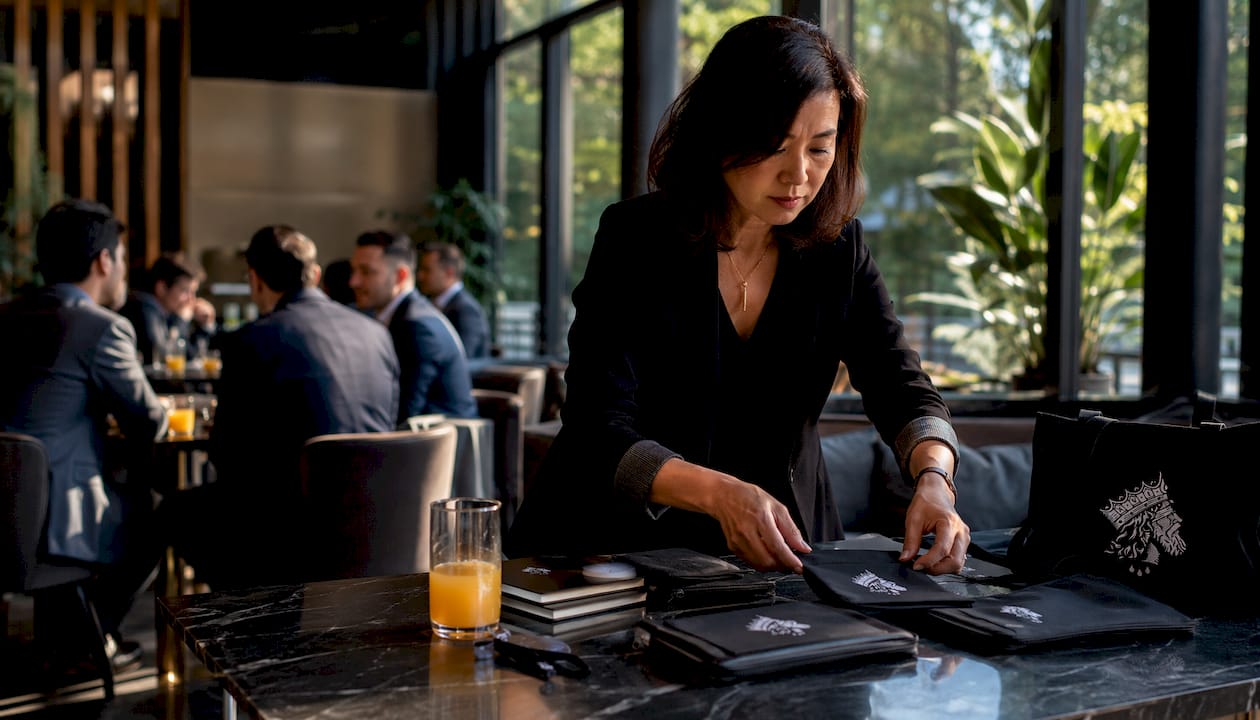
The engagement gap tells the story plainly: 61% of service and brand teams believe they are proactive in their customer engagement, while only 33% of customers agree. That 28-point gap isn't a communication problem. It's a format problem. Brands are broadcasting when buyers want interaction, and no amount of personalization tokens in an email subject line closes that distance.
In-person programs address the gap directly. When a buyer walks into a well-designed activation, they are no longer a passive recipient. They are a participant. That shift in posture changes how they encode the experience, how they feel about the brand, and how quickly they move through a sales cycle.
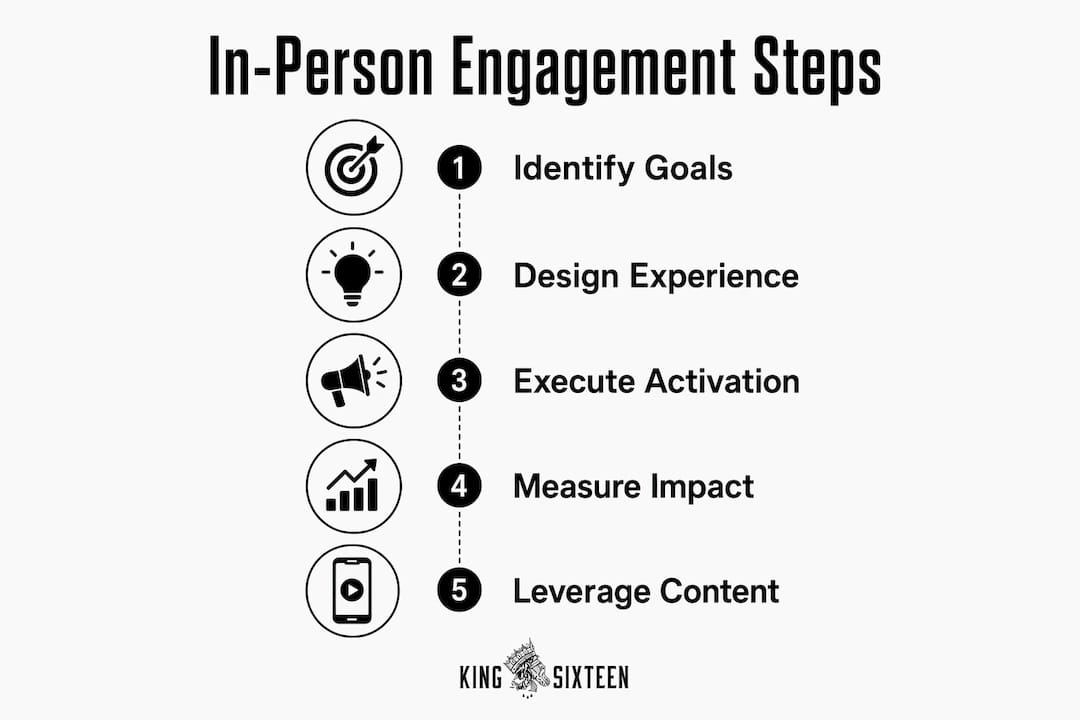
Revenue teams are noticing. Face-to-face requests are dramatically more successful than email outreach, and conference-sourced relationships close faster. For CMOs and revenue leaders, that means in-person programs belong in the demand-generation mix, not just the events budget.
The strategic case for in-person, in brief:
- Trust builds faster in physical space than through any digital channel.
- Attention is undivided in a well-designed environment.
- Relationships formed in person convert to pipeline at higher rates.
- Live moments produce content, data, and earned impressions that extend ROI well beyond the event itself.
- Brand engagement strategies that integrate IRL and digital consistently outperform single-channel programs.
Pro Tip: Favor in-person programs when you need to shift perception, accelerate a stalled deal, or launch something that requires emotional buy-in. Use digital to prime the audience before and amplify the moment after.
How psychology and multi-sensory design create lasting brand attachment
Memory is not formed by information alone. It's formed by experience, and experience is multi-sensory. When a brand engages sight, sound, touch, smell, and movement simultaneously, it creates a richer neural encoding than any screen-based interaction can produce. That's not a marketing claim; it's how memory consolidation works.
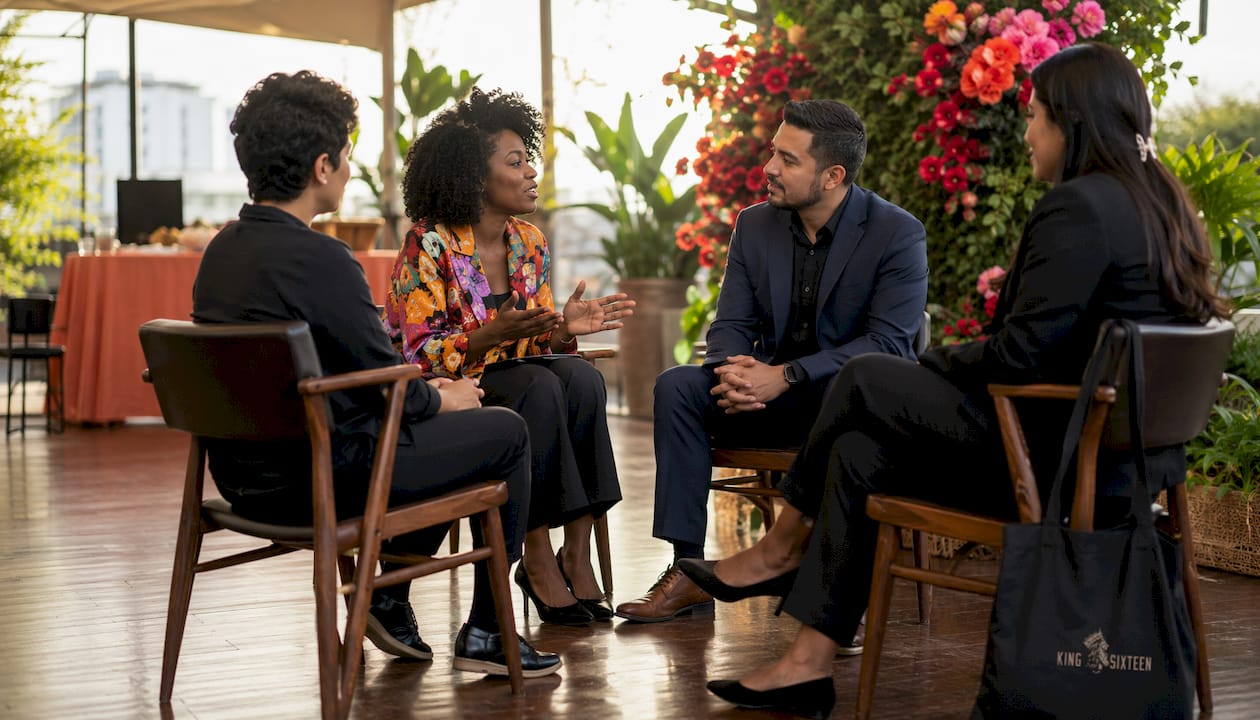
Onsite activations that are built around participation, rather than passive observation, drive measurably higher dwell time, more qualified conversations, and stronger recall. The mechanism is straightforward: when someone does something, they remember it. When they watch something, they often don't.
The sensory levers and what they do for your brand:
- Touch: Physical interaction with a product or material creates ownership psychology before a purchase decision is made.
- Sound: Curated audio environments set emotional tone and signal brand character without a single word of copy.
- Smell: Scent is the most direct route to emotional memory; a signature fragrance in a brand environment creates a recall trigger that travels with the attendee.
- Taste: Food and beverage experiences tied to brand narrative create positive association and extend dwell time naturally.
- Movement: Guided physical journeys through a space create narrative arc and give attendees a sense of progression and discovery.
Designing for social density amplifies all of these effects. When a space encourages attendee-to-attendee interaction, not just attendee-to-brand moments, the perceived authenticity of the experience rises sharply. People trust what they see other people doing. A crowded activation reads as credible. A sparse one, regardless of production quality, reads as a risk.
Activated merchandise takes this further. Live customization, co-creation, and personalization performed in real time convert a giveaway into proof of presence. The attendee didn't just receive something; they made something. That artifact travels home, gets photographed, and becomes social content and earned impressions long after the event ends.
Pro Tip: Design your activation so that the most photogenic moment requires participation to reach. Put the payoff behind an action, not in front of it.
What are the core elements every effective in-person engagement needs?
Every successful in-person brand experience shares the same structural bones, regardless of format, budget, or industry. Getting these elements right is not optional; missing any one of them is usually where programs fail.
The non-negotiables:
- Event thesis: A single, clear strategic statement that answers "why does this experience exist and what should the attendee feel, know, or do differently because of it?" Every design decision flows from this.
- Spatial flow: The physical journey through the space must be intentional. Entry, discovery, interaction, and exit are all designed moments, not accidents.
- Audience design: Who is in the room matters as much as what's in the room. Curate your guest list with the same rigor you apply to ad targeting.
- Staffing and training: Brand ambassadors and event staff are the human layer of your brand. Undertrained staff is the fastest way to break an otherwise excellent experience.
- Fabrication and brand continuity: Physical elements, from signage to furniture to merchandise, must be consistent with your broader brand identity. The 5 C's of branding (Consistency, Clarity, Connection, Character, Commitment) apply here as much as they do in any digital channel.
- Digital hooks: Every touchpoint should have a mechanism for data capture, content creation, or social sharing built in from the start.
- Measurement planning: Define your KPIs before the event is designed, not after. What you measure shapes what you build.
Fabrication deserves particular attention. The physical environment is your brand made tangible, and shortcuts show. A poorly built installation or mismatched brand colors signals to attendees that the brand doesn't care about details. Kingsixteen's custom fabrication work for brands like Fossil and the Natural Diamonds Council is built around brand continuity in event spaces, where every surface, material, and texture is a deliberate brand statement.
Repeatable formats (salons, labs, product clinics, pop-ups) aligned to stakeholder heat maps are what separate one-off events from programs that feed pipeline predictably. When you design a format that can run quarterly with the same structural logic but fresh content, you build audience expectation and brand equity simultaneously.
Pro Tip: Design your first activation as if it will run multiple times per year. A repeatable format reduces production costs over time and builds audience anticipation that a one-off never can.
How do you measure in-person brand engagement effectively?
Measurement is where most in-person programs lose credibility with finance and leadership. The answer isn't to measure everything; it's to measure the right things at the right intervals and connect them to outcomes the business already tracks.
The KPIs that matter most for brand leaders fall into two categories:
| KPI | Type | What It Tells You |
|---|---|---|
| Dwell time per zone | Short-term | Which experiences held attention longest |
| Qualified conversations | Short-term | Sales-ready interactions generated on-site |
| Meetings booked on-site | Short-term | Direct pipeline contribution |
| Content performance (views, shares) | Short-term | Reach extension from live assets |
| Pipeline influenced (90-day) | Long-term | Revenue impact of event relationships |
| Deal size vs. non-event cohort | Long-term | Value lift from conference-sourced deals |
| NPS / CSAT change | Long-term | Trust and sentiment shift post-event |
| Brand lift (aided/unaided recall) | Long-term | Awareness and perception movement |
Measurement checklist for data capture:
- Scannable badges or QR codes at every key touchpoint
- CRM sync within 24 hours of the event close
- Content tagging by campaign, persona, and funnel stage before the event launches
- Post-event survey deployed within 48 hours while recall is highest
- A dedicated UTM structure for all digital assets produced from the event
Attribution is the hard part. Last-touch models undervalue in-person programs because the conversion often happens weeks later through a different channel. Multi-touch attribution, even a simple one that credits the event for any deal where an attendee was present, gives a more honest picture. The engagement gap data (61% of brands believe they're proactive; only 33% of customers agree) is a useful internal benchmark: if your post-event NPS doesn't move, the experience didn't close that gap.
- Define three to five KPIs before the event brief is written.
- Assign an owner for each metric.
- Build data capture into the experience design, not as an afterthought.
- Report short-term metrics within one week; long-term metrics at 30, 60, and 90 days.
- Compare event-sourced pipeline to non-event cohorts to isolate the lift.
Pro Tip: Build your measurement playbook before you finalize the event design. If a touchpoint can't be measured, ask whether it belongs in the program at all.
How to turn in-person moments into lasting digital assets
A live activation that doesn't produce digital assets is a missed opportunity. The most effective in-person programs are designed as media channels from day one: every moment is planned to generate content that feeds social, email, sales enablement, and product marketing long after the event ends.
Treating IRL as a content factory means briefing your creative team before the event, not after. The shots you need, the quotes you want, the moments worth capturing, all of these must be planned into the run-of-show.
Content repurposing checklist from a single activation:
- Hero video (60–90 seconds) for paid social and owned channels
- Short-form reels (15–30 seconds) cut for Instagram, TikTok, and LinkedIn
- Quote cards from speakers, attendees, or brand moments
- Customer-generated content aggregated via a branded hashtag or photo activation
- Sales enablement snippets: short clips that show product in use or customer reactions
- Email recap with curated photography for post-event nurture sequences
- Long-form recap article or case study for SEO and thought leadership
The digital integration at events layer is where most brands leave value on the table. Content is captured but not tagged, or tagged but not distributed, or distributed but not connected to a campaign. A rapid edit workflow, where a social-native cut is ready within two hours of the key moment, extends reach while the event is still live and the audience is still engaged.
For teams planning digital campaigns that run alongside live activations, the content produced on-site should feed directly into the campaign's organic and paid channels within the same news cycle.
Pro Tip: Brief your creative team with a shot list that includes at least three "social-native" moments: vertical format, no text overlay needed, and a human face in frame. These outperform polished brand shots on every platform.
What does a realistic planning timeline and budget look like?
The most common mistake brand leaders make is underestimating lead time. A well-executed activation requires more runway than most internal calendars allow, and compressing the timeline almost always means compressing quality.
Typical lead times by phase:
| Phase | Minimum Lead Time | Key Decisions |
|---|---|---|
| Concept and strategy | 10 weeks out | Event thesis, audience design, KPIs |
| Design and creative | 8–10 weeks out | Spatial design, fabrication specs, content plan |
| Fabrication and production | 5–8 weeks out | Build, print, AV spec, staffing brief |
| Logistics and permits | 4–6 weeks out | Venue permits, shipping, vendor confirmations |
| Rehearsal and training | 1–2 weeks out | Staff training, run-of-show, tech checks |
| Execution | Event week | On-site management, content capture |
| Post-event follow-up | Within 48 hours | CRM sync, survey deploy, content edit |
Primary budget line items to plan for:
- Venue rental and related fees
- AV production (lighting, sound, screens, streaming)
- Custom fabrication and installation
- Staffing (brand ambassadors, production crew, security)
- Catering and beverage
- Permits and insurance
- Shipping and logistics
- Content production (photography, video, editing)
- Contingency (typically 10–15% of total budget)
The decisions made in the concept phase have the largest downstream cost impact. Changing a fabrication spec at week six costs three to five times more than changing it at week ten. Locking the event thesis, the spatial layout, and the content plan early is the single most effective way to control scope and protect budget.
Pro Tip: Allocate contingency before you finalize the line-item budget, not after. A 10–15% contingency fund is not pessimism; it's the difference between a program that delivers and one that cuts corners under pressure.
Common mistakes that undermine in-person engagement programs
Most in-person program failures are predictable. They come from strategy mismatch, poor measurement planning, or execution shortcuts that seemed reasonable at the time and weren't.
The most common mistakes:
- Treating events as hospitality, not strategy. A nice dinner with no thesis, no data capture, and no follow-up plan is a relationship expense, not a marketing investment.
- Inconsistent branding across touchpoints. When the event environment doesn't match the brand's digital presence, attendees notice, even if they can't articulate why.
- Ignoring audience design. Filling a room with warm bodies instead of the right people produces activity metrics, not pipeline.
- Undertrained staff. Brand ambassadors who don't know the product story or the event thesis are a liability, not an asset.
- No measurement plan. If you didn't define KPIs before the event, you can't prove ROI after it.
- One-off thinking. A single event rarely moves the needle on brand perception. Programs with cadence and clear audience alignment outperform one-off campaigns consistently.
Red flags to watch for in agency selection and internal approvals:
- No clear event thesis in the brief.
- KPIs defined as "awareness" with no measurement mechanism.
- No contingency line in the budget.
- Fabrication specs finalized after the venue is booked.
- Staff briefing scheduled for the morning of the event.
- No post-event follow-up plan in the run-of-show.
Working with a local agency partner who knows your market's venues, vendors, and permitting requirements reduces execution risk significantly, particularly for brands running activations in multiple cities.
Pro Tip: Include a scope-change protocol in every agency contract. Define what triggers a change order, who approves it, and what the cost implications are. This single clause prevents the majority of budget overruns.
How Kingsixteen delivers measurable value for brand leaders
Kingsixteen's model is built on a simple premise: strategy, design, execution, and measurement are one continuous process, not four separate handoffs. When those phases are managed by a single team with a shared thesis, the result is a program that holds together from concept to content library.
The service breakdown:
- Strategy and narrative: Event thesis development, audience design, stakeholder heat mapping, and KPI definition before a single design decision is made.
- Design and fabrication: Custom environments, installations, displays, and set pieces built to brand spec and designed for both live impact and content capture.
- Production and staffing: End-to-end event production, including run-of-show, brand ambassador recruitment and training, and on-site management.
- AV and logistics: Lighting, sound, screens, and technical production coordinated through a trusted vendor network built over years of high-profile work.
- Digital integration: Content capture planning, rapid edit workflows, and asset distribution tied to campaign UTMs and CRM data.
- Measurement: Post-event reporting against pre-defined KPIs, with pipeline attribution and content performance tracked at 30, 60, and 90 days.
The turnkey model matters because fragmented vendor relationships are where programs lose coherence. When the fabrication team, the AV crew, and the content team are all operating from the same brief and the same thesis, the experience holds together. When they're not, the seams show.
Kingsixteen's work with brands like Porsche, Audi, and the Natural Diamonds Council reflects a consistent pattern: experiential programs that are designed to produce pipeline, content, and measurable brand lift, not just a memorable evening.
Key Takeaways
In-person brand engagement drives trust, pipeline, and content simultaneously when it's designed as a strategic media channel, not a one-off event.
| Point | Details |
|---|---|
| Engagement gap is real | Only 33% of customers feel brands are proactive, versus 61% of brands who believe they are, highlighting a significant gap in perception. |
| Multi-sensory design drives recall | Participation-first activations produce stronger memory encoding than passive brand experiences. |
| Measure before you build | Define KPIs, data capture methods, and attribution models before the event design is finalized. |
| IRL is a content factory | One well-executed activation generates social assets, sales clips, and earned impressions across multiple channels. |
| Kingsixteen as strategic partner | Kingsixteen manages strategy through measurement in a single turnkey model for established brands. |
What success actually looks like after a well-run experiential program
The programs that deliver real results share a common pattern. Relationships that stalled in email threads move forward after a single in-person conversation. Sales cycles that were running at 90 days compress because the trust work was done in the room. Content produced at the event runs for weeks in paid and organic channels, extending the ROI well past the event date. And the brand, in the minds of the people who were there, occupies a different position than it did before they walked in.
Kingsixteen's role in that outcome is to make sure every element, from the spatial design to the post-event CRM sync, is working toward the same thesis. When it does, the results are measurable, repeatable, and worth the investment.
Kingsixteen builds in-person programs that produce real outcomes
If you're planning a product launch, brand activation, or conference and need a partner who handles strategy through execution in a single turnkey model, Kingsixteen is built for that brief. We work with established brands that need things done right, fast, and without margin for error.
Our experiential marketing programs are designed from day one to produce pipeline, content, and measurable brand lift, not just a well-produced event. From custom fabrication and AV to staffing, digital integration, and post-event measurement, we manage every element through a trusted vendor network so you don't have to coordinate a dozen separate relationships.
If you're ready to brief a partner or want to talk through what a program could look like for your brand, start the conversation with our team. We'll help you define the thesis, the format, and the KPIs before a single dollar is committed to production.
Useful sources and further reading
The following sources informed this guide and offer deeper reading on specific topics:
- Customer engagement strategy (Nextiva): The source for the 61% vs. 33% engagement gap statistic; useful for understanding the disconnect between brand perception and customer experience.
- In-person GTM strategy: A framework for revenue teams (Popl): Practical framework for revenue teams on how conference relationships translate to larger deal sizes and faster close rates.
- IRL Marketing: How Brands That Still Want To Matter Show Up (Virago Marketing): Comprehensive playbook on treating IRL activations as programs, not campaigns, with guidance on stakeholder heat maps and content factory design.
- What Are Onsite Activations? (Whitestone): Explains participation-first activation design and the role of social density in building perceived authenticity.
- The Rise of IRL Brand Activations (Whitestone): Covers the trend of activated merchandise and how live customization converts giveaways into social proof and earned impressions.
- The Ultimate Guide to Marketing In-Person Events (Shield Bar Marketing): Summarizes attendee preference data and trust-building outcomes from live events.
- What is customer engagement? (Salesforce): Covers the 5 C's of branding and their application to consistent customer engagement across channels.
- Customer engagement guide (Zendesk): Broad definition of customer engagement and the role of omnichannel touchpoints in building long-term relationships.
- Brand engagement strategies for experiential success (Kingsixteen): Kingsixteen's own perspective on bridging the engagement gap through in-person program design.
- The Real Benefits of Live Events for Brand Marketers (Kingsixteen): Summarizes the business outcomes from live events, including pipeline and content ROI.