End-to-end event management is the full ownership of every stage in an event's lifecycle, from the first concept conversation to the final post-event report. It's not just logistics. It covers concept development, budget control, venue sourcing, vendor coordination, on-ground execution, and post-event evaluation, all under one unified process. Event management encompasses catering, programming, marketing, traffic control, and securing venues, making it one of the most operationally complex disciplines in modern marketing. When done well, it gives brands a consistent, data-informed experience that a fragmented approach simply can't deliver.
The core components of end-to-end event management include:
- Concept development and event strategy — defining objectives, audience, and the experience you want to create
- Budget planning and cost control — allocating resources across every line item before a single vendor is booked
- Venue sourcing and logistical planning — identifying the right space and negotiating terms that protect your timeline
- Vendor coordination — managing catering, AV, decor, security, and every supplier in between
- On-ground execution — running the event day with a clear timeline and real-time problem-solving
- Technology integration — using registration platforms, event apps, and data tools to connect the attendee journey
- Stakeholder communication — keeping clients, sponsors, and internal teams aligned at every phase
- Post-event evaluation — measuring ROI, gathering data, and closing out with vendors and venues
What does end-to-end event management look like across the full lifecycle?
The lifecycle of a well-managed event follows a clear sequence. Each stage builds on the last, and skipping any one of them creates gaps that show up on event day or in the post-event report.
1. Concept development and event strategy
Every event starts with a brief. Before a venue is scouted or a vendor is called, the team needs to define what success looks like. That means setting measurable objectives, identifying the audience, and deciding on the format, whether it's a product launch, a multi-day conference, or an immersive brand activation. The strategy shapes every decision that follows.

2. Budget planning and cost management
Budget planning is where strategy meets reality. A detailed budget maps every anticipated cost: venue fees, production, staffing, catering, AV, marketing, and contingency reserves. Event managers create and manage budgets to allocate financial resources appropriately across all event elements. The goal isn't just to stay on budget. It's to build a budget that reflects the actual scope of the event so there are no surprises at invoice time.
Pro Tip: Build a contingency line of sufficient size in your total budget before you finalize any vendor contracts. Unexpected costs in production and logistics are the rule, not the exception.
3. Venue sourcing and logistical planning
Venue selection involves more than finding a space that fits the headcount. Contract negotiation, load-in schedules, exclusivity clauses, and vendor access policies all affect how smoothly the event runs. Logistics planning covers transportation, accommodation for out-of-town guests, and the physical flow of attendees through the space. Getting these details locked early prevents the kind of last-minute scrambling that derails otherwise well-planned events.
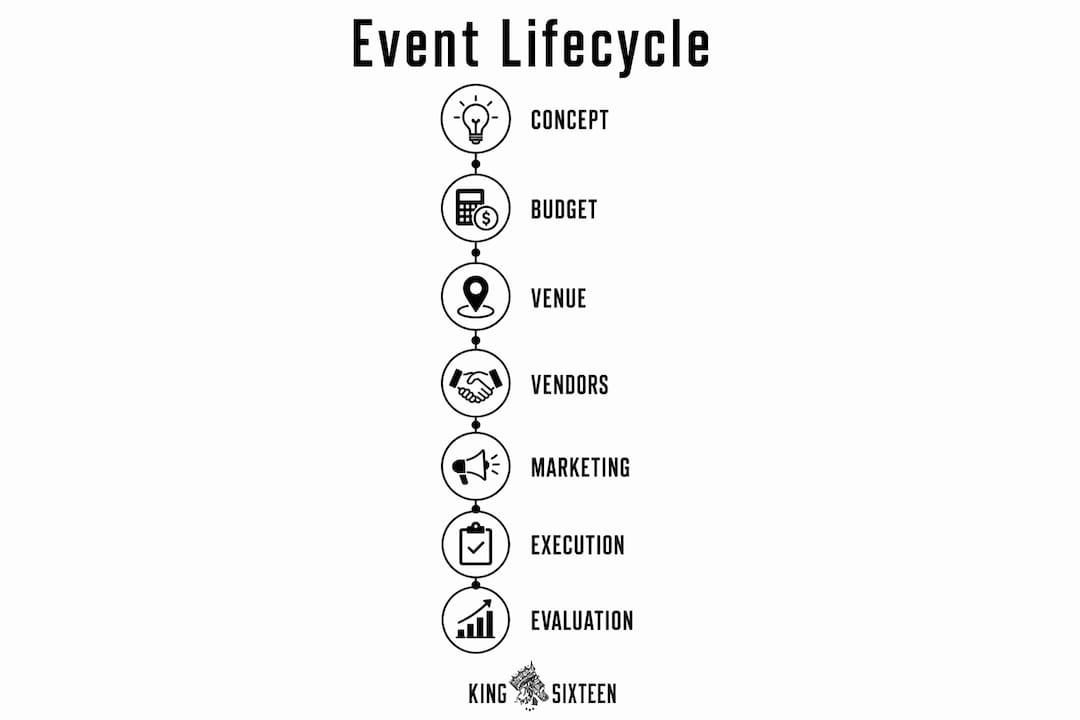
4. Vendor coordination and production management
Most events involve a web of vendors: caterers, AV technicians, decorators, security teams, photographers, and more. Vendor management means liaising with each supplier, managing contracts, and keeping everyone on the same schedule. The coordination layer is where experienced event teams earn their value. A single miscommunication between an AV crew and a venue operations team can cascade into a two-hour delay.
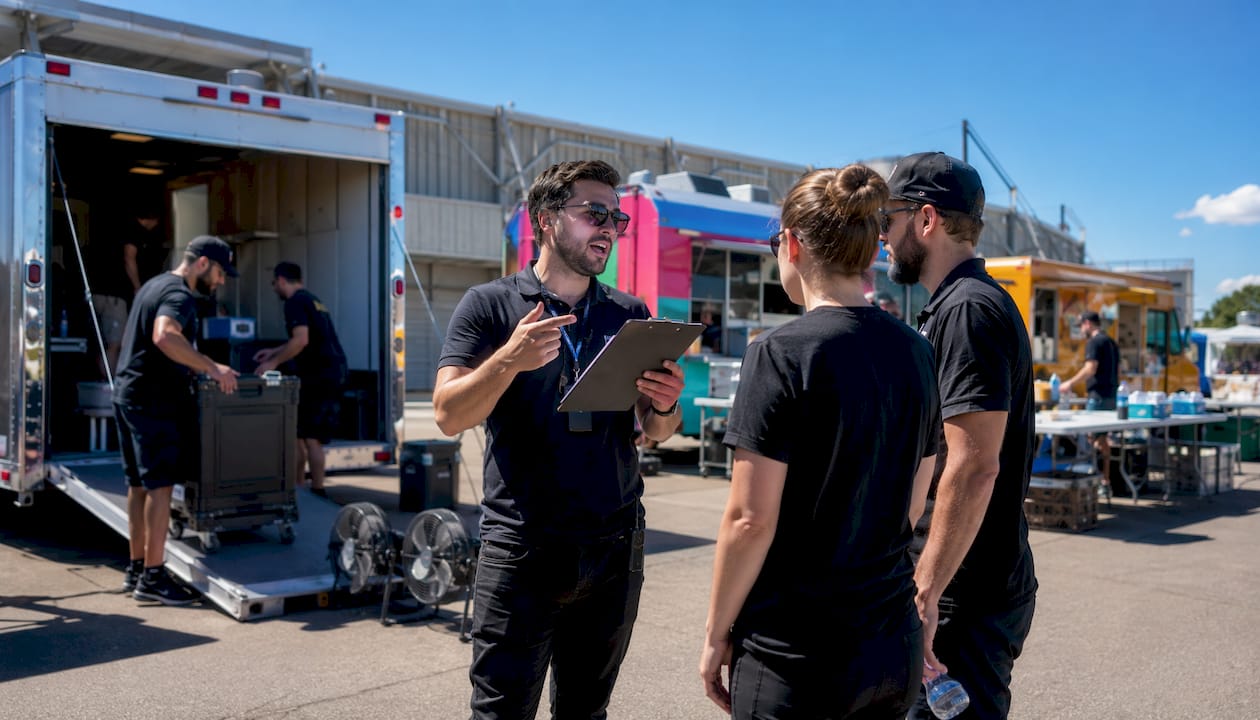
For a closer look at how staffing fits into this coordination layer, the event staffing process is worth understanding in detail.
5. Marketing and promotion
Marketing is not separate from event management. It's embedded in it. Promotion strategies, email campaigns, social content, and paid media all need to be planned and executed in parallel with logistics. Integrated event marketing drives registration, builds anticipation, and sets attendee expectations before anyone walks through the door.
6. Event day execution and risk management
On event day, the plan meets reality. A detailed run-of-show keeps every team member, vendor, and stakeholder aligned to the same timeline. Risk management means identifying potential failure points in advance and having contingency plans ready, whether that's a backup AV system, a weather protocol, or a guest flow adjustment. The teams that handle event day best are the ones that have already rehearsed the problems.
The numbered sequence of on-ground priorities:
- Confirm all vendor arrivals and setup completion against the run-of-show
- Brief all on-site staff on their roles, escalation paths, and emergency contacts
- Conduct a full technical rehearsal before doors open
- Assign a dedicated point of contact for each vendor category
- Monitor real-time attendance and adjust flow as needed
How post-event evaluation drives smarter future events
Post-event evaluation is the phase that most event teams underinvest in, and it's where a significant amount of strategic value gets left on the table. The data collected after an event, registration rates, attendee behavior, session engagement, and revenue contributions, tells you whether the event actually achieved its objectives.
The closure phase includes more than reporting. It covers vendor settlements, final invoicing, venue handover documentation, and team debriefs. Each of these steps closes the loop on commitments made during planning. Skipping them creates financial and operational loose ends that compound across future events.
The post-event data you should be capturing:
- Registration and attendance rates versus projections
- Session attendance and dwell time by content track
- Attendee engagement scores from app interactions or live polls
- Net Promoter Score or post-event survey results
- Pipeline contribution and lead quality for B2B events
- Budget versus actuals across every cost category
Event data collected at this stage feeds directly into the strategy for the next event. Teams that treat post-event reporting as a formality miss the compounding benefit of building a data-informed event program over time. Marketing analytics applied to event performance data can sharpen targeting, improve budget allocation, and strengthen the case for future investment.
End-to-end event management vs. event consultancy
These two terms are often used interchangeably, but they describe fundamentally different scopes of work.
Event consultancy is advisory. A consultant helps you define strategy, select a format, and build a planning framework. The advice is valuable, but the execution stays with your internal team or other vendors. Consultancy typically covers the front end of the lifecycle: concept, strategy, and planning guidance.
End-to-end event management owns the full lifecycle. That includes everything a consultant advises on, plus the execution, vendor relationships, on-site management, and post-event closure. The team that planned the event is the same team running it on the day and closing it out afterward.
Key distinctions at a glance:
- Scope: Consultancy is advisory; end-to-end management is operational and executional
- Accountability: Consultants advise; end-to-end managers are responsible for outcomes
- Vendor relationships: Consultants may recommend vendors; end-to-end managers contract and manage them directly
- Post-event: Consultancy rarely extends past planning; end-to-end management includes reporting and closure
- Risk ownership: With consultancy, execution risk sits with the client; with end-to-end management, it sits with the agency
For brands running complex, high-stakes events, the integrated model reduces the coordination burden significantly. There's no gap between the strategy and the team executing it.
Why modern brands rely on end-to-end event management
Event complexity has grown. Hybrid formats, multi-vendor productions, real-time data capture, and brand consistency across every touchpoint have made fragmented event management a liability. Professional event management reduces stress and errors, freeing clients to focus on their core business functions while the event runs without disruption.
Event management platforms that unify registration, communication, logistics, and reporting in one system replace the disconnected tools that create data gaps and inconsistent attendee experiences. When all of that data lives in one place, teams can make real-time decisions instead of chasing information across spreadsheets and inboxes.
The reasons brands choose the end-to-end model:
- Budget control: One team manages all vendor contracts, reducing cost leakage and improving negotiating leverage
- Brand consistency: A single team owns the creative vision from concept through execution, so nothing gets lost in translation
- Risk reduction: Contingency planning and on-site problem-solving are handled by the same people who built the plan
- Data integration: Attendee data flows through a connected system, enabling post-event analysis that actually informs strategy
- Stakeholder alignment: One point of contact manages communication across all parties, reducing confusion and delays
- Scalability: The same operational model works for a 50-person product launch and a 5,000-person conference
For a deeper look at how this approach works in practice, end-to-end event planning covers the operational detail that makes the difference between a good event and a great one.
Key Takeaways
End-to-end event management requires unified ownership of every lifecycle phase, from concept through post-event reporting, to deliver consistent results and real strategic value.
| Point | Details |
|---|---|
| Full lifecycle ownership | End-to-end management covers concept, execution, and post-event closure under one team. |
| Post-event data is strategic | Registration rates, engagement scores, and budget actuals inform every future event decision. |
| Management vs. consultancy | Consultancy advises; end-to-end management owns execution, vendor relationships, and outcomes. |
| Technology connects the journey | Unified platforms replace disconnected tools and capture attendee data across every touchpoint. |
| Risk management is built in | Contingency planning and on-site problem-solving are handled by the team that built the plan. |
Work with a team that owns every detail
At Kingsixteen, we don't hand off the plan and wish you luck. We own the full process, from the first concept brief to the final vendor settlement, for brands that need things done right and done well. Whether you're producing a product launch, a multi-day conference, or an immersive brand activation, our experiential marketing team brings the operational depth and creative vision to make it land. If you're ready to stop managing the chaos and start building experiences that move people, let's talk.